A satisfying night’s sleep depends on more than just a comfortable mattress; surrounding temperature also plays an important role in sleep quality. A good ceiling fan will turn your bedroom into a cozy sanctuary and improve your interior design.
In this article, let’s explore the top ceiling fans for bedrooms that provide exceptional air circulation, silent operation, and elegant designs to satisfy various business demands.
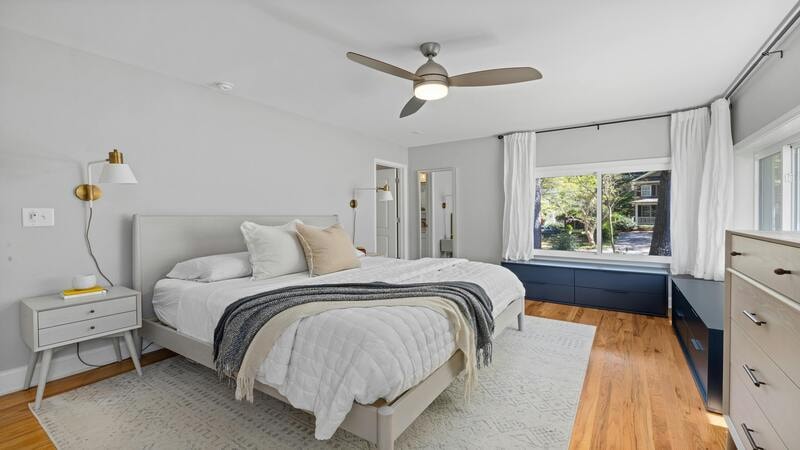
The choice of suitable ceiling fans for bedroom areas goes far beyond simple appearance. A well-selected ceiling fan performs many important functions that directly affect occupant comfort and satisfaction.
Unlike air conditioning systems that only reduce air temperature, ceiling fans provide both air conditioning and a wind-chill effect that makes people feel up to 4°F (ca. -16°C) colder but without really altering the room temperature.
Before purchasing a new ceiling fan, consider a few key factors. The first important factor is energy conservation, as ceiling fans that cut power consumption help hotels, apartments, and outdoor spaces save energy and reduce running expenses.
Another important consideration is noise level, which directly affects visitor comfort and sleep quality. Choosing a quiet motor fan can be helpful in this case.
Features like remote control fans or three-blade ceiling fans with light fixtures can also improve the functionality and style of your space.
Choosing fans with suitable ratings may help ceiling fan manufacturers focus on environmental certifications, such as ENERGY STAR or LEED, which contribute to broader sustainability goals while potentially qualifying for tax benefits or energy rebates.
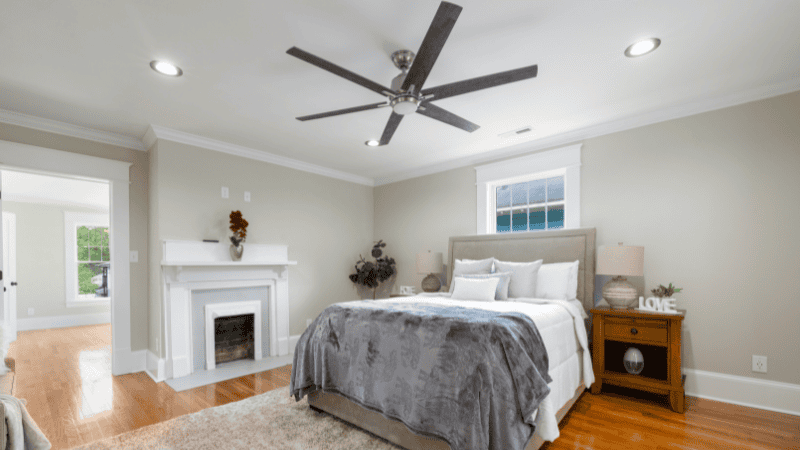
When looking to find a perfect ceiling fan for tall ceilings or smaller rooms, you must focus on some key features of these fans. Let’s get into details:
A quiet fan motor is essential for bedroom ceiling fans, as any noise can disturb sleep. DC motors have a clear edge over AC motors in this aspect.
Direct response motor fans are up to 70% more efficient and run absolutely silent and humming-free, often below 35 decibels at low speeds, similar to a whisper.
Direct current motors perform better because their technology removes the humming sound in traditional motor fans.
This quiet operation is especially important in hospitality, as noise complaints can affect guest satisfaction and repeat bookings.
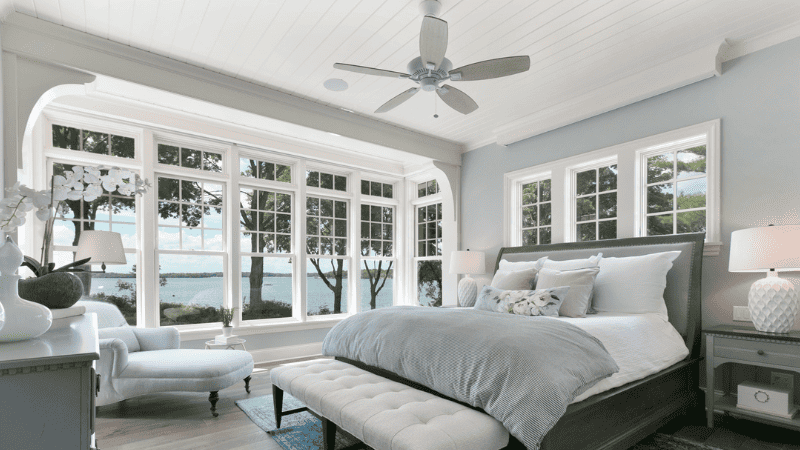
Energy-efficient ceiling fans save money over time. They reduce operational costs significantly. Ceiling fans with the ENERGY STAR® certification use 40-60% less energy than regular models.
This leads to significant savings when used in many units in commercial or multi-family homes.
Remote controls are now common in premium models. They let users change settings easily. This keeps everyone comfortable. Wi-Fi ceiling fans work with Amazon Alexa, Apple HomeKit, and Google Assistant.
They offer benefits for developers of smart buildings and hotels. This technology integration is a valuable comfort.
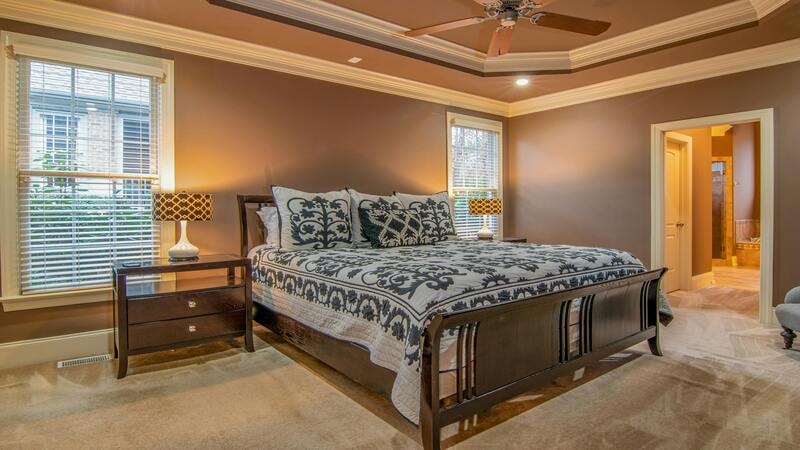
Choosing the right blade size is important. It helps with air circulation and power saving in bedrooms. Industry standards suggest certain blade diameters for different room sizes.
Blade count impacts performance and looks. Traditional designs had four or five blades for most fans. Compared to other fans, modern high-efficiency models use as few as three-blade fans. These blades have aerodynamic shapes. They maximize air movement and minimize energy use.
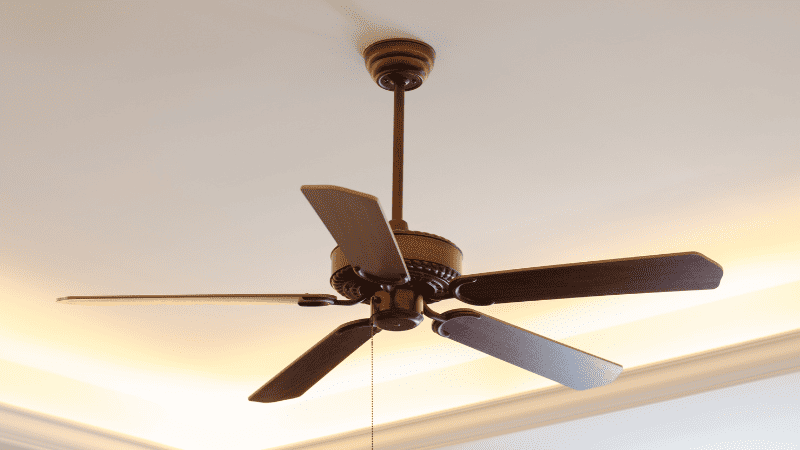
Dual-function ceiling fans have an integrated light system. They are great for new buildings and renovation projects.
They combine two important fixtures in one spot. This integration lowers installation costs. It also cuts down on maintenance needs.
Modern lighting has changed a lot. LED technology is now standard in ceiling fan lighting kits. Some advanced models have dual lighting systems.
They include both ambient and task lighting in one fixture. This adds functionality without needing more ceiling penetrations.
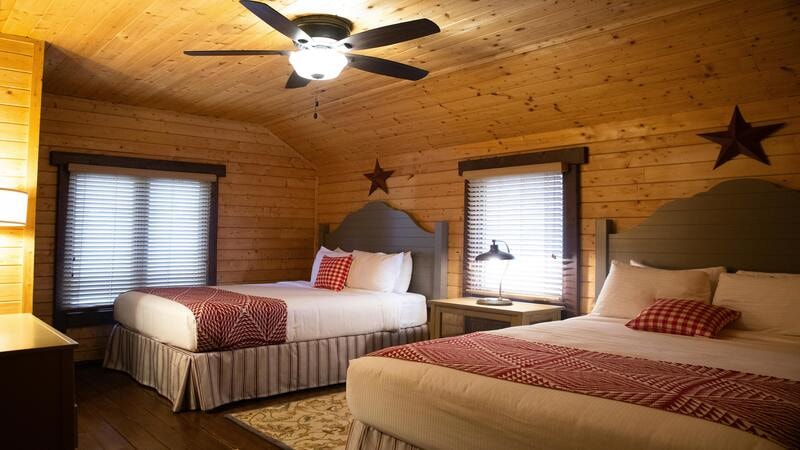
Ceiling fans have a strong visual impact. This is especially true in stylish hotels or luxury homes. Today’s market has many styles.
There are sleek, modern designs with hidden blades. There are also traditional styles with ornate details and high-quality wood finishes.
Custom finish options are now easier to access for larger orders. Property developers can match specific color schemes or add branded elements.
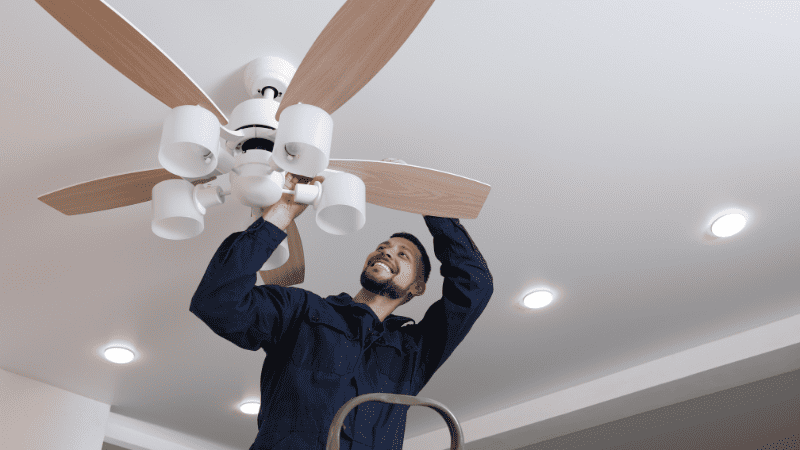
Quality ceiling fans can work in both directions. This feature helps save money and keeps people comfortable all year. In summer, air moves down when fans rotate counterclockwise.
On the highest setting, the fan provides maximum airflow for hot summer days. This creates a cooling wind-chill effect. It can cut cooling costs by about 8% for each degree adjusted.
In winter, change the fan’s blade direction to clockwise. It creates an updraft. This updraft sends warm air from heating systems back down.
This recirculation boosts heating efficiency by 15% in entire rooms with standard ceiling heights. This leads to significant savings for properties in areas with long heating seasons.
Advanced models have versatile speed settings in remote controls or smart home systems. This makes adjustments easier. It also increases the chances of using this energy-saving feature.
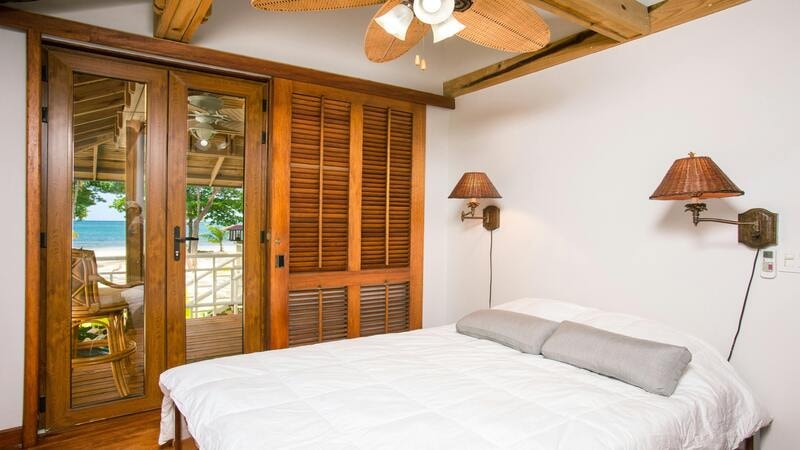
Quiet operation, suitable size, and compatible design should be your top priorities when choosing a bedroom ceiling fan. Here is a list of the best types based on different needs:
When choosing a ceiling fan for your bedroom, consider these features of low-profile fans:
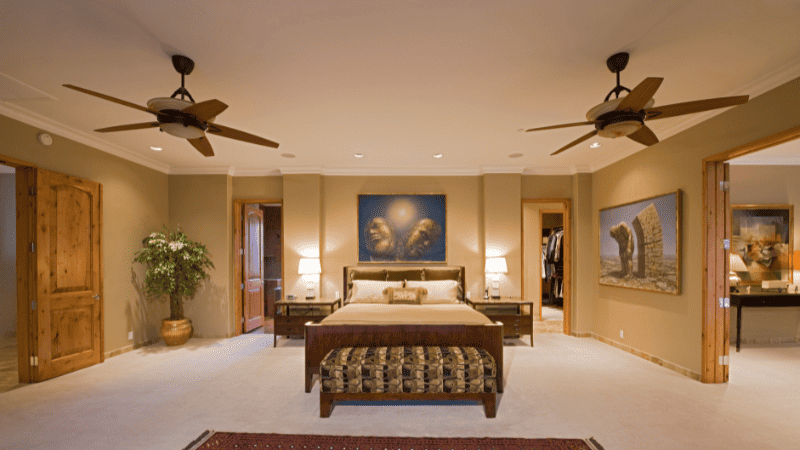
For a classic and versatile choice, you must consider these:
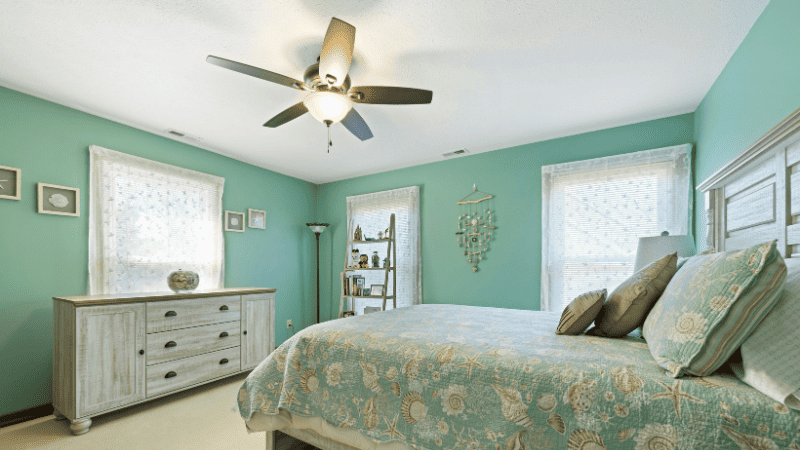
If modern style and efficiency are priorities, look to these:
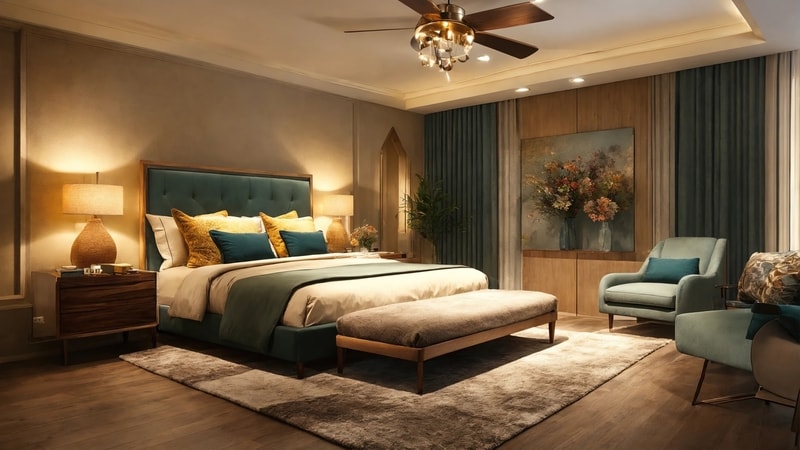
These fans are perfect for those who want maximum control and ease:
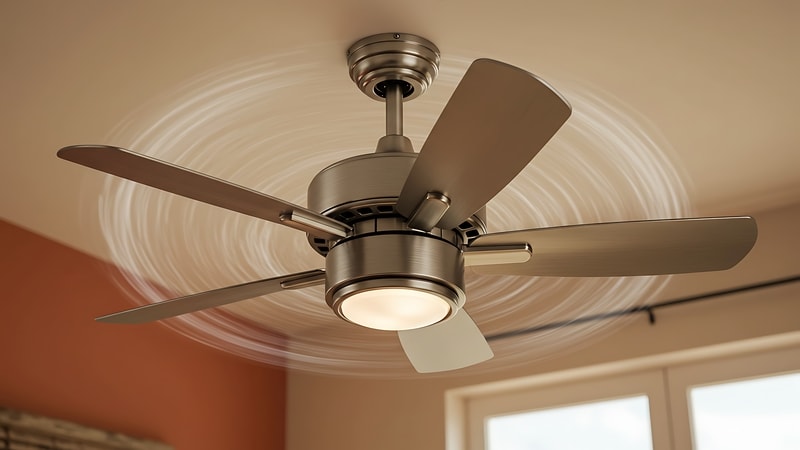
These are perfect for spaces when you need both light and air circulation:
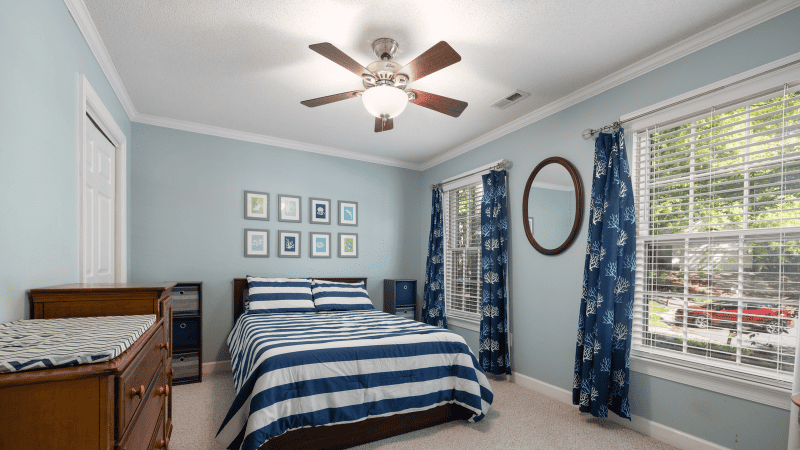
Choosing the right ceiling fan for your bedroom is important. It affects comfort and looks. A good fan helps with airflow.
It cools you down while enhancing the look of your room. Think about the room’s dimensions, ceiling height, and your own tastes to make an educated choice.
| Bedroom Size (Square Feet) | Recommended Blade Span (Inches) | Recommended Ceiling Height (Feet) | Key Considerations |
|---|---|---|---|
| Up to 75 | 29-36 | 8 or more | Compact design, low noise, hugger fan if ceiling is low. |
| 75-150 | 36-44 | 8 or more | Adequate airflow, integrated lighting, and style compatibility. |
| 150-225 | 44-52 | 8 or more | Increased airflow, motor power, and remote control options. |
| 225-400 | 52-56 | 9 or more | High CFM, powerful motor, longer downrod for high ceilings. |
| 400+ | 56+ | 10 or more | Very high CFM, industrial or large-scale design, multiple speed settings. |
This table helps you choose the right ceiling fan size. It is based on room dimensions. The ideal fan for your room depends on a number of other aspects, too, including motor power, airflow efficiency, and room dimensions.
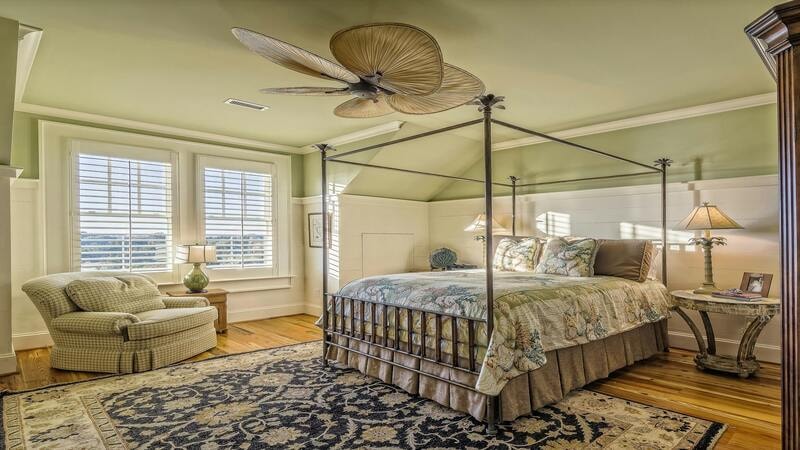
For bulk orders of ceiling fans, a number of considerations need to be made to enable an effortless and economical buying process. Pricing is a key factor.
Suppliers sometimes provide discounts for bulk purchases, so be careful to bargain for advantageous conditions and enjoy the perks of these savings. Cutting costs should not reduce product quality.
That’s why choosing the right supplier with a good reputation also matters. Reviews, certifications, and feedback from previous clients are crucial in establishing reliability.
Logistics and shipping matter a lot. Efficient handling and delivery of big orders is necessary to prevent delays or damaged items.
Last but not least, if certain designs, proportions, or features need to be altered, this should be made clear. The supplier must understand these requirements and help customers get modified models, so proper communication is a must.
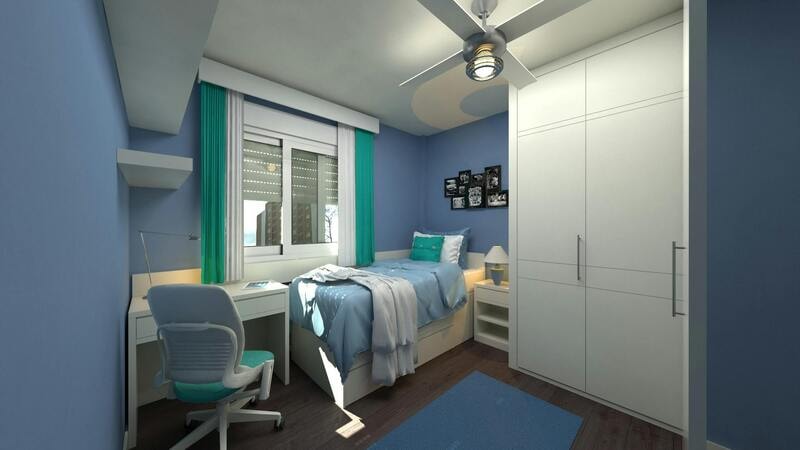
Selecting a fan may be difficult for both commercial and domestic places due to the variety of sizes, designs, and power levels available.
Planning an installation early is important. It makes sure the fans will fit. It also ensures they work as needed. Here are the main factors to consider.
The size of the building matters most when choosing a fan. To choose a fan, first calculate the square footage that needs cooling. Measure the length and width of the areas. Then, multiply these two numbers to find the coverage area.
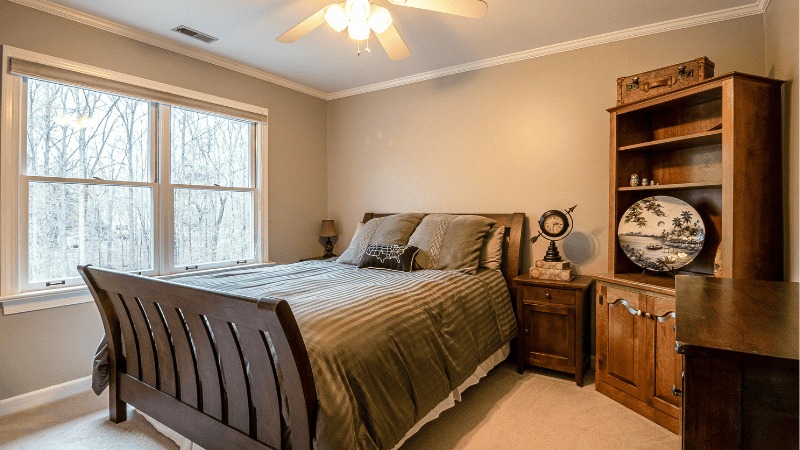
Once you know the coverage area, look at the airflow rates of each fan. Airflow volume is measured in cubic feet per minute. This is often abbreviated as CFM.
A higher value means the fan works harder. This cools the surrounding area more. Many factors affect a fan’s CFM. It takes balance to create good airflow.
Fans with more blades, like four-blade ceiling fans or five-blade fans, usually move more air. Fewer blades mean less airflow. More blades mean more strain on the motor. This also leads to more noise.
A bigger motor can hold more fan blades. More blades and greater pitches can boost airflow. The pitch is the angle of the fan blades. A higher pitch usually means a higher CFM.
The sweep of a fan is the diameter of its blades. The size of the circle is what the blades make when they spin. A larger sweep creates wider vertical air columns. This leads to higher CFMs.
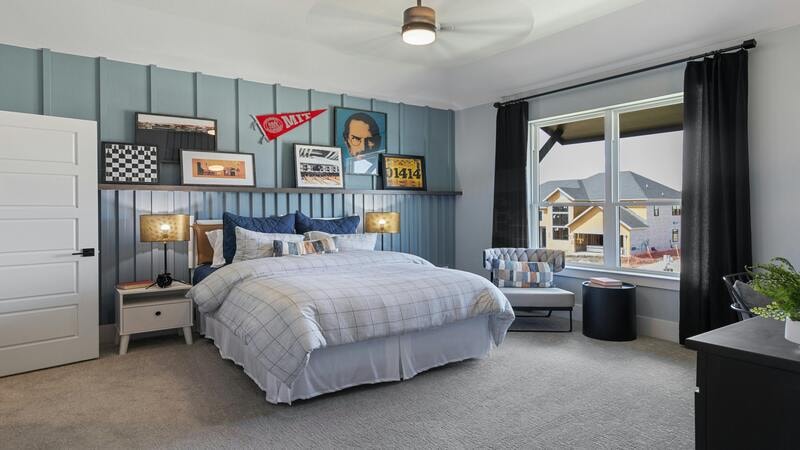
Buying a fan with higher airflow rates is usually better. Every building has size limits. These must be considered. A fan that is the wrong size may not fit in a facility. A larger fan may not fit in a smaller room, so always measure your room space.
Check the ceiling height before choosing a fan. You can start by taking the ceiling’s square footage measurements.
Divide it by the size of a fan. This works in a clear and open space. You must consider the fan’s minimum horizontal clearance. The gap between the tips of neighboring fan blades, obstacles, and surrounding walls must be this much.
Not only do ceiling fans serve practical purposes, but they also add aesthetic appeal to your bedroom.
When it comes to master bedrooms, choosing fans with reversible blades provides additional design versatility, enabling seasonal adjustments or simple upgrades to be easy when it comes to updating the decor of your bedrooms.
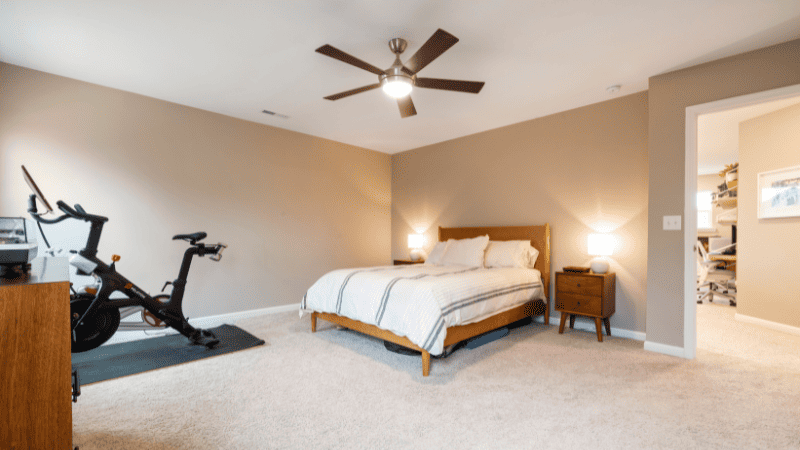
The amount of energy used has a direct effect on both the running cost and the environmental footprint. DC motor ceiling fans use 65-70% less energy than AC ceiling fans. A CFM rating of more than 75 indicates ceiling efficiency.
Some technical features should also be taken into note based on the performance you want when choosing a ceiling fan.
Many fans feature a reverse mode that pulls warm air from the ceiling to the floor below, which is helpful in the cold, but not in summer.
So consider this while installing a ceiling fan according to your climate. Some fans have speed settings.
Users can change the air circulation in the room, but some don’t have this. So it is best to understand these technical aspects before choosing a ceiling fan for your bedroom.
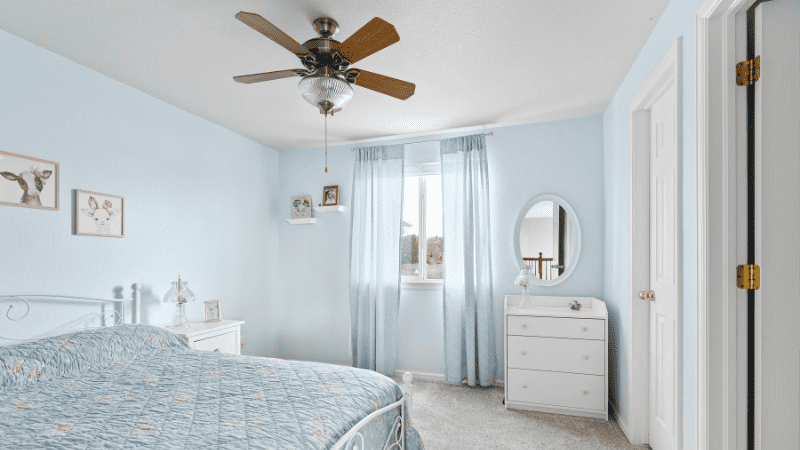
Ceiling fans are an excellent choice for those seeking both style and comfort; however, they necessitate a proper installation process and maintenance to ensure their longevity and functionality.
Many interior designers recommend ceiling fans as both functional and decorative elements, so regular maintenance is also crucial. Here are some basic steps to assist you.
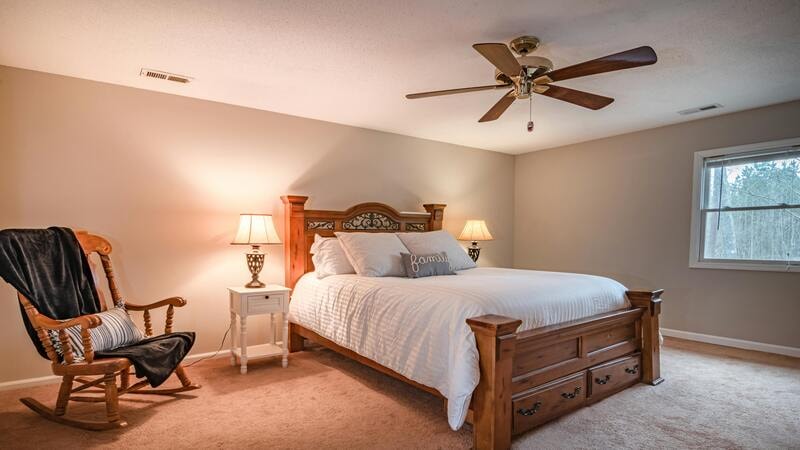
First off, turn the electricity down at the wall switch for safety. Then assemble the motor, light kit, and fan blades. Attach the mounting bracket to the ceiling electrical box firmly.
Then connect the fan’s wires to the ceiling wires. After that, use wire nuts to fasten the fan to the ceiling.
Then, hang the fan on the bracket and fasten it with screws. You must attach the blades and light kit as directed. Lastly, reinstate the power and verify the proper functioning of the fan and light.
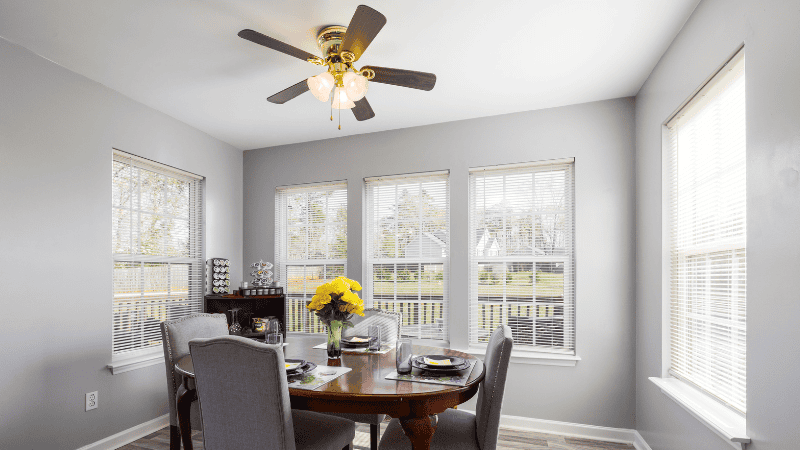
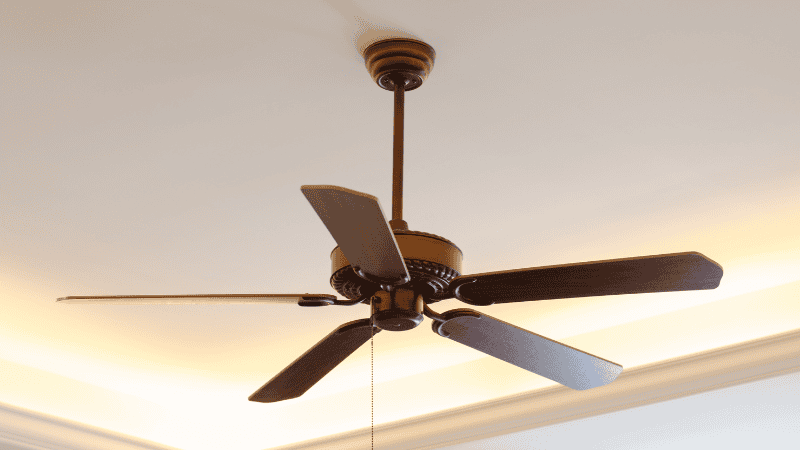
Choosing the ideal ceiling fans for your bedroom requires striking a balance between efficiency, elegance, and comfort.
Quiet motors and integrated designs are among the favorite features of modern ceiling fans. It helps you sleep better and looks good in your space.
Your bedroom may become a peaceful and cozy place with the correct ceiling fan choice, regardless of your preferences for saving energy and smart home integration.
In the end, the ideal option is the one that suits your tastes and creates a calm environment in your bedroom.
Finding the best ceiling fans for your bedrooms can be a challenge. But don’t worry— Risun Crop can help you with it by providing you with a wide range of ceiling fan products with complete one-stop fans for those who are looking to enhance their bedroom environment.
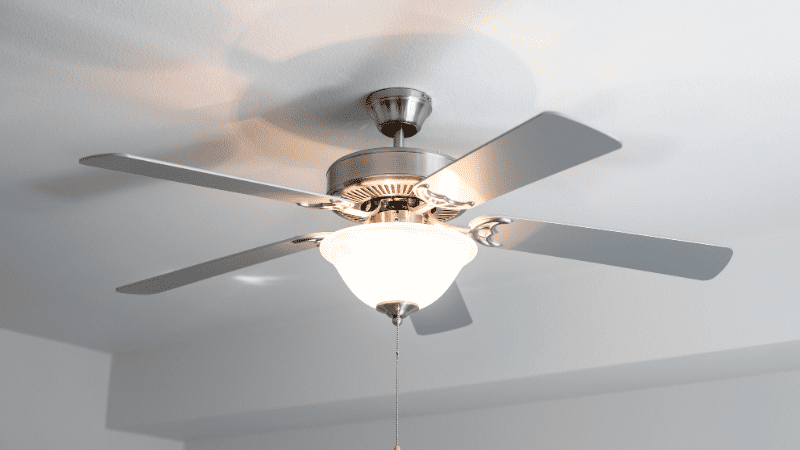
Q1: What is the best size ceiling fan for a standard bedroom?
For a typical bedroom (approximately 76-144 square feet), a ceiling fan with a blade spread of 36 to 42 inches is normally suggested. If the room is bigger, up to 50 inches may be suitable.
Q2: Are ceiling fans with lights better than non-light models?
Ceiling fans with LED lights are an excellent replacement for traditional fan models in the house. Their primary role is to offer appropriate airflow while also replacing conventional ceiling lights.
Q3: Do DC motor fans save more energy than AC motor fans?
Yes, DC motor fans are usually more energy-efficient than AC motor fans, using up to 70% less energy for the same airflow, making them a more environmentally friendly and cost-effective option.
Q4: What is the ideal CFM (airflow efficiency) for a bedroom?
For optimum circulation and cooling in a bedroom, a ceiling fan with a CFM rating of 4,000 to 5,000 is typically regarded as acceptable, 5,000 to 6,000 is better, and more than 6,000 is ideal.
Q5: How to install a ceiling fan in a bedroom with a low ceiling or vaulted ceiling?
When placing a ceiling fan on a vaulted ceiling, ensure that it is positioned appropriately for the best airflow. To ensure the best circulation, keep the blades at least 18 inches away from the nearest wall.
Flush-mount the fan in the middle of the room, 8-9 feet above the floor, to ensure uniform air distribution.
Choosing the right chandelier fan can change the whole room. You get comfort, real airflow, and a light you enjoy every day. In this guide, you’ll learn the essentials—size, look, airflow (CFM), motor type, and efficiency, so you can pick a fan-light that fits your space without guesswork.
Want your room to feel cooler and look better at the same time? Let’s walk through it step by step and make this easy for you.
A chandelier fan (often called a fandelier) is simply a ceiling fan built into a chandelier. You get airflow and light from one spot, which is great when you want comfort and style together.
You can use one in living rooms, dining rooms, bedrooms, entryways, and offices. If you’re placing it in a bath, porch, or patio, choose a Damp/Wet/Marine rated model so it lasts.
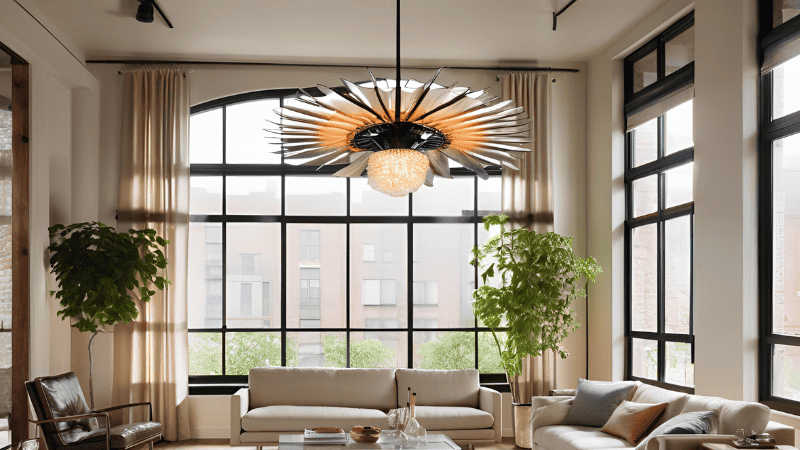
Chandelier fans provide the maximum wind and light and may be installed in any room for elegance and convenience.
For homes and for business spaces, one fixture keeps the ceiling tidy and looks more finished. Your room feels designed, not crowded.
Different sizes of ceiling fans on the market are used with chandeliers. Match the blade span and tested CFM to your room, and pick the right mount or downrod for your ceiling height. I’ll show you simple size guides below so you can choose with confidence.
One fixture, two jobs: you stay cool and your room looks great. If you run a salon, hotel, or office, that centerpiece helps your brand feel more polished the moment people walk in.
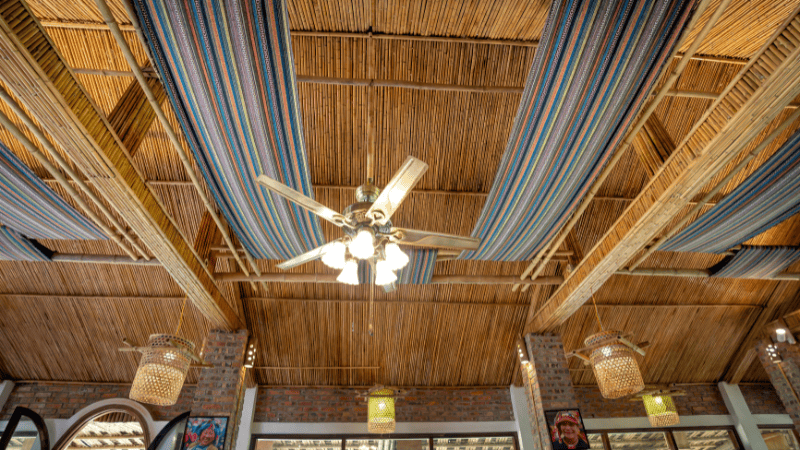
You’ll find crystal, classic, modern, rustic—there’s always a finish that fits your look. Pick the style you love and we’ll make sure it also moves enough air.
Use them almost anywhere indoors. For humid or outdoor spots, switch to a model with the right rating so the finish and motor stay in good shape.
Here’s a quick style map. Choose what you like, then check weight, glare, and cleaning so daily use stays easy.
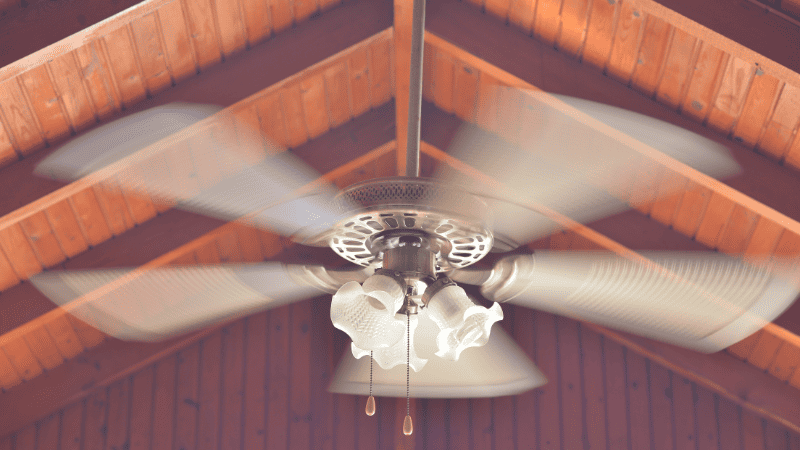
Classic: metal frame with glass or crystal. If it’s heavy, make sure your ceiling box is rated for the load. Crystal looks amazing, but needs light dusting.
Rustic: warm wood tones and soft light. Go with 3000K LEDs and frosted lenses to avoid harsh glare.
Modern: clean lines, slim body, often with quiet DC motors. Great when you want a simple look.
Traditional: candelabra style with updated LED kits. Add dimming so you can go from bright to cozy in one click.
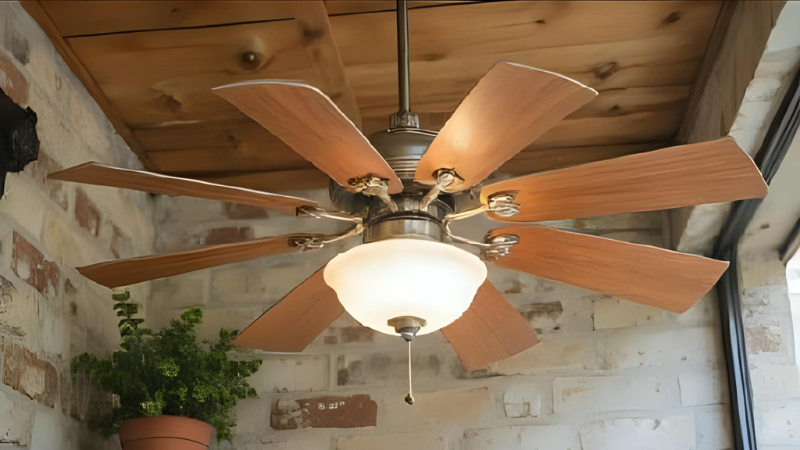
For your business, think comfort, durability, and brand fit. Match span/CFM to the room, pick DC motors for low noise, keep lighting consistent (lumens, CCT, CRI), and confirm Damp/Wet/Marine ratings where needed.
Instead of lists, check the supplier basics: MOQ, lead time, 3–5 year warranty (motor + LED), UL/ETL or CE/RoHS, spare parts, and ODM/OEM options (finish, blade, downrod, smart module). That’s how you avoid delays later.
Search for the best ceiling fan manufacturers in the world before getting your inventory。
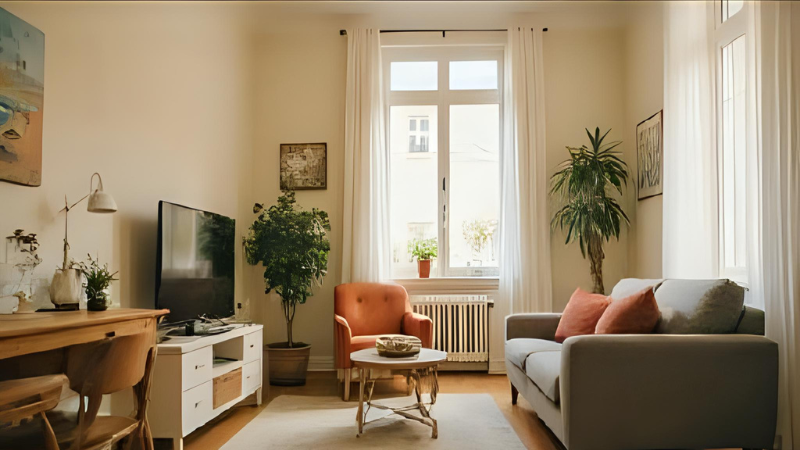
The size of the room will also determine the appropriate size of the chandelier fan.
For small-sized rooms, a 36-44 inch fan will be utilized, for medium-sized rooms, a 44-52 inch fan will be utilized, and large-sized rooms, such as large dining halls or meeting rooms, can utilize a 52-inch and above fan.
The chandelier’s position, which is usually placed in the middle of the room to receive maximum airflow and light, will also be utilized. The types of bulbs used in chandeliers are also worth considering. Different bulb sizes, shapes, and codes are on the market, so select wisely according to your needs.
Room Size vs Blade Span & CFM:
| Room Size (ft²) | Suggested Span | Target CFM | Notes |
|---|---|---|---|
| ≤100 | 29–36″ | 2,000–3,000 | Small bedroom/office |
| 100–150 | 36–44″ | 3,000–4,500 | Standard bedroom |
| 150–300 | 44–52″ | 4,500–6,000 | Living/dining |
| 300–450 | 52–60″ | 6,000–8,000 | Large room |
| 450+ | 60–96″ | 8,000–12,000+ | Loft/great room |
Think about what type of style would suit the interior of your business.
New chandelier fans have fewer frilly features and clean lines and are ideal for modern rooms, but crystal or antique chandelier fans will introduce an air of elegance to older or higher-end interiors.
LED light bulbs are designed to be energy efficient, emitting more lumens per watt for less power consumption and less expenditure than conventional lighting.
Dimming and home automation may be built in to further enhance and create ambiance, and the level of light can be adjusted by day or even to match your mood.
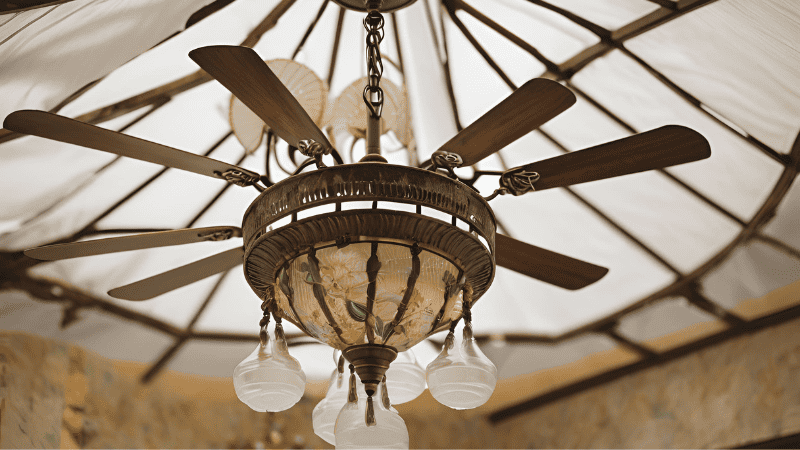
To make your work easier, choose chandelier fans with smart features like Wi-Fi control, voice control functionality, or application connectivity.
They allow you to remotely control and keep track of the fan, making it the perfect choice for commercial use where it is necessary to have an easy time regulating airflow dynamics and luminous intensity.
Utilizing these in mind, you will find you can choose the ideal chandelier fan that will add coziness and elegance to your business environment.
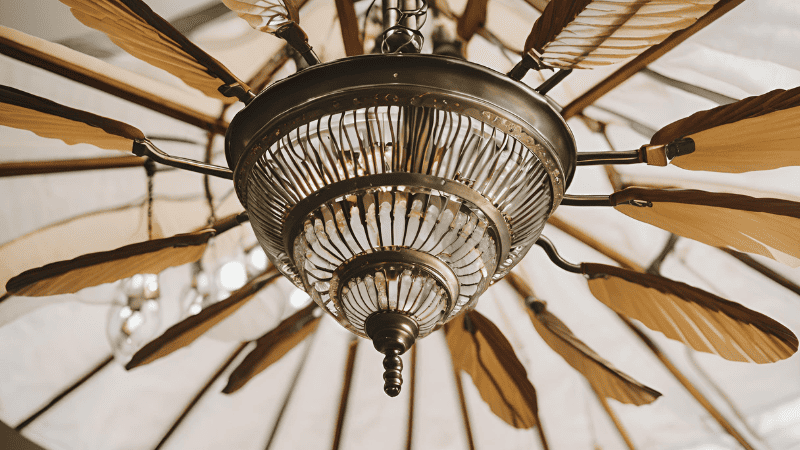
Selecting the best chandelier fan for each room is necessary for obtaining the right sort of equilibrium between functionality, practicality, and aesthetic appeal.
For dining rooms, use dramatic and high-end designs, which would also be a room centerpiece. They are usually equipped with crystal or high-end components with better power in airflow.
Good examples are those with very high diameters (52 inches and above) in an effort to deliver maximum airflow. As an added feature, Dimmable LED light bulbs are perfect for delivering the ambiance.
During dinner, you would like neater but not as space-intrusive fans that do not take up space in the room. They might perhaps be capable of circulating sufficient air.
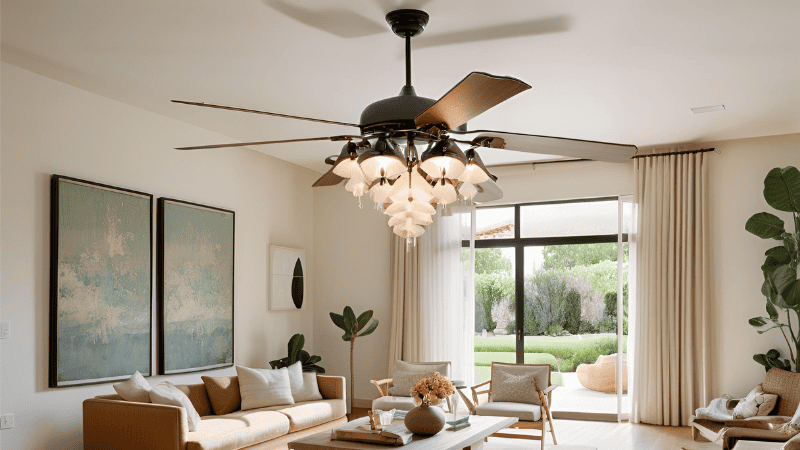
The fans should be quiet and power-efficient so they won’t bother you during dinner or conversation.
Quiet and power-efficient motors and appropriate sizes, usually 44-52 inches, are better characteristics for small dining table rooms.
For the kitchen, choose a smooth, light-powered chandelier fan that does not interfere with cooking equipment.
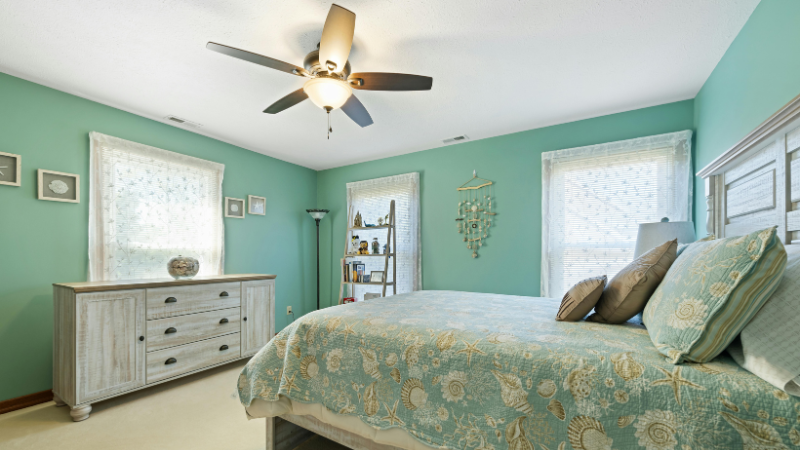
For bedrooms, choose whisper-silent units with adjustable lighting for an intimate, warm atmosphere. Fans come reversible motor so that you can reverse air circulation when you need to warm or cool.
Ideal fan sizes for bedrooms differ by room size—approximately 42 inches for small spaces and 52 inches for spacious bedrooms.
For luxury rooms, incorporate statement luxury crystal chandelier fans or gold-plated appliances. These tend to prefer to include smart automation, adaptive thermal management, and high-grade conductive materials.
Chandelier fans featuring integrated masterpieces of modern design can help provide luxury interior design with elegance and enhance its uniqueness.
| Chandelier Type | Style | Best For | Material | Lighting Effect |
|---|---|---|---|---|
| Crystal | Elegant & luxurious | Formal spaces | Glass & metal | Bright & sparkling |
| Modern | Minimalist & sleek | Contemporary homes | Metal & acrylic | Soft & subtle |
| Rustic | Natural & cozy | Farmhouse decor | Wood & iron | Warm & inviting |
| Industrial | Bold & edgy | Loft & urban settings | Metal & exposed bulbs | Strong & Focused |
| Candle-Style | Classic & vintage | Traditional interiors | Metal & candle-like lights | Soft & ambient |
Proper installation and periodic service of your chandelier fixture and fan are key in relocation to keep them in service longer and operating at their best capacity.
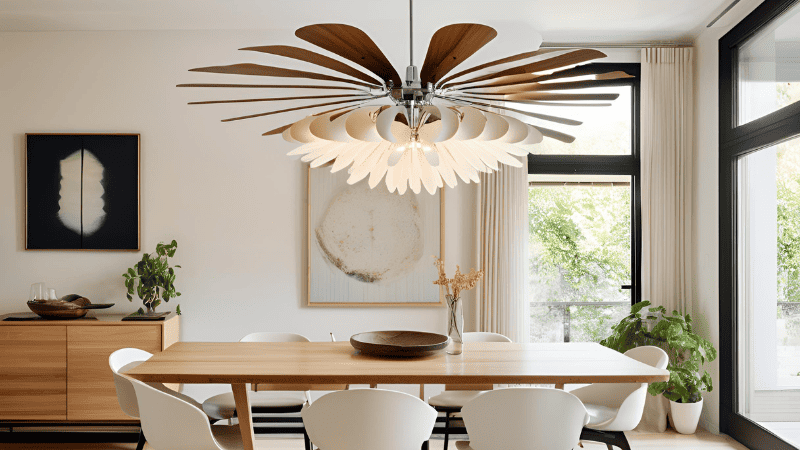
Chandelier fans have the added bonus of air conditioning and light and are a brilliant and well-earned investment for modern homes across all sorts of industries.
B2B purchasing markets and companies are steadily finding value-driven and multipurpose products such as chandelier fans.
Luxury homes, corporate complexes, and hospitality groups all find increasing demand for fashionable and power-saving options.
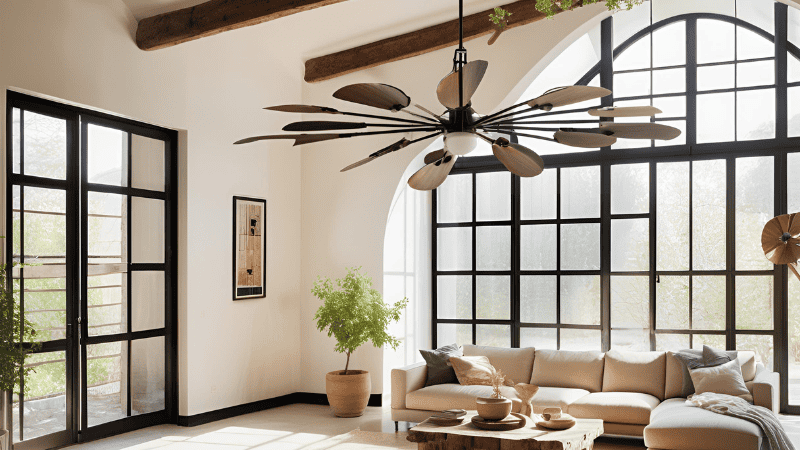
For business sales in commercial, hospitality, and property, there are favorable profit margins on cross-selling and repeat bulk orders of chandelier-style fans.
Purchasers from chandelier and ceiling fan suppliers prefer bulk discounts, wholesale prices, and product tailoring.
These strategies allow them to fulfill specific market demands while creating potential sales and niche products with intelligence and energy efficiency.
Commercial Order Standards for Chandelier Fans:
| Term | Practical Standard |
|---|---|
| MOQ | 50–200 units (by model) |
| Lead time | 15–30 days after deposit |
| Warranty | 3–5 years (motor + LED driver) |
| Certifications | UL/ETL, CE/RoHS; Damp/Wet/Marine rating |
| Docs | Install guide, parts list, packaging spec, airflow/light data |
| ODM/OEM | Finish, blade, downrod, logo, smart module |
Knowing chandelier fans’ advantages and market trends, let’s discover how they can benefit your business or home spaces. To know more, go through our complete article on Top Fan Ideas to Elevate Patios & Commercial Spaces’ Style and Comfort.
Don’t delay this investment and outshine your business by using these fashion-forward, functional lighting solutions for your next renovation or project.
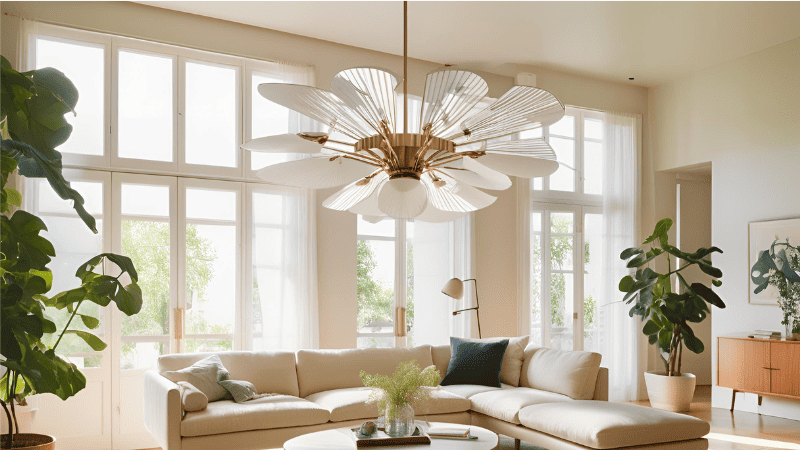
We at Risuncorp have years of experience providing industry-leading chandelier fans, ceiling fans, and lighting fixture solutions. Our solutions are a perfect blend of fashion, energy efficiency, brand name, and home automation, ideal for homes and offices.
Need samples or a fast quote? We support ODM/OEM, flexible MOQ, 15–30 day lead times, and warranties. Ask for airflow data, IES files, and a layout—we’ll help you get it right the first time. Contact us or buy from our catalog today.
Q1: What size chandelier fan do I need?
A: Use the size table as your start. Then check the tested CFM. Big rooms want 52–60″ or more. Small rooms don’t.
Q2: Can I hang one on a sloped ceiling?
A: Yes. Use an angled-mount kit and the right downrod. Keep the fan 8–9′ above the floor.
Q3: Which color temperature works best?
A: Most homes feel right at 2700–3000K (warm) or 3000–3500K (warm-neutral). It’s easy on the eyes and kind to skin tones.
Q4: Are DC motor chandelier fans quieter?
A: Usually, yes. DC motors are efficient and offer finer speed control.
Q5: Do I need a damp or wet rating outdoors?
A: Covered porches use Damp. Exposed patios need to be wet. Near the coast, choose Marine.
The way you light your salon changes everything: how your stylists perform, how clients feel, and how your brand shows up online. Good lighting isn’t just décor; it’s a working tool so that colors look true and cuts stay consistent.
In this guide, you’ll get clear ideas you can use right away, what to install, where it goes, and why it works, so you can pick fixtures that fit your space and your budget.

Lighting shapes how your place runs and feels. When the base layer is smooth and shadows are controlled, clients relax, stylists move faster, and the space feels intentional.
With quality task lighting, your team sees true hair colors, which means shades match on the first try and detail work gets easier.
If the light is off, tones can shift—so what looks fine indoors may look wrong in sunlight. That’s when redo requests show up.
Go 3000K warm in reception so it feels cozy, 3500–4000K neutral at stations so it’s bright, not harsh, and 5000–6500K daylight where you color so results match outdoors.
Mix those zones and you’ll get a salon that feels welcoming yet stays precise where it counts—so you attract the right clients.
Better lighting means fewer redos, less eye strain, and photos that need fewer edits—so your posts perform better and your brand looks premium.
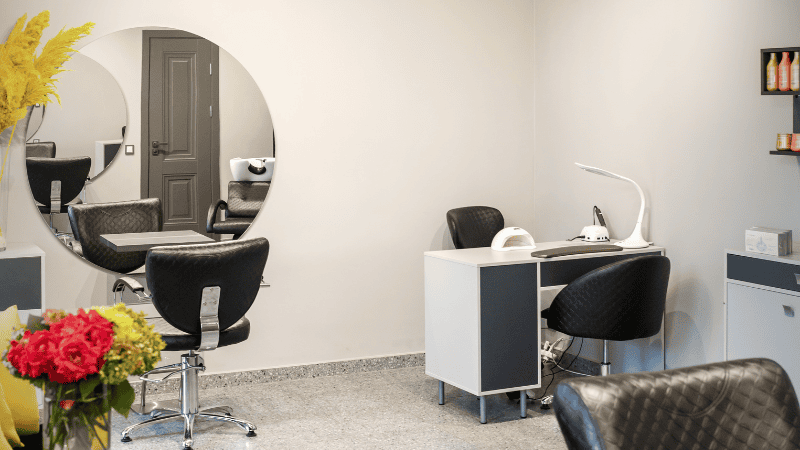
For owners, lighting is an ROI lever: better visual ergonomics sustain stylist productivity; accurate task lighting prevents color corrections; and consistent color temperature supports a premium brand feel across photos, mirrors, and daylight.
High-CRI, shadow-free mirror lighting makes every after-shot pop—fewer edits, more shares, higher organic reach. Build lighting that serves both work and marketing.
You need lighting that works hard and looks like your brand. Functionally, control shadows, keep glare low, and specify CRI ≥90 at stations. Aesthetically, pick fixtures that match your vibe—industrial, modern, or luxe—and keep one CCT per zone.
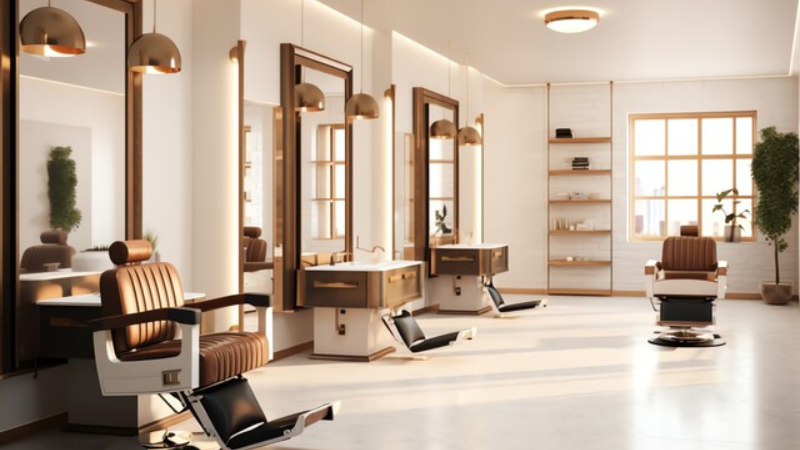
At stations, add vertical light around mirrors (side strips + soft overhead) so faces aren’t shadowed and detail work gets easier.
Even low-glare illumination reduces eye strain, which means your team can work longer comfortably.
When the base layer is smooth, hair texture and tone read clearly—no hot spots, no dark patches.
Map zones—reception, stations, color bar, shampoo, retail—with purpose-built light levels so your team flows naturally.
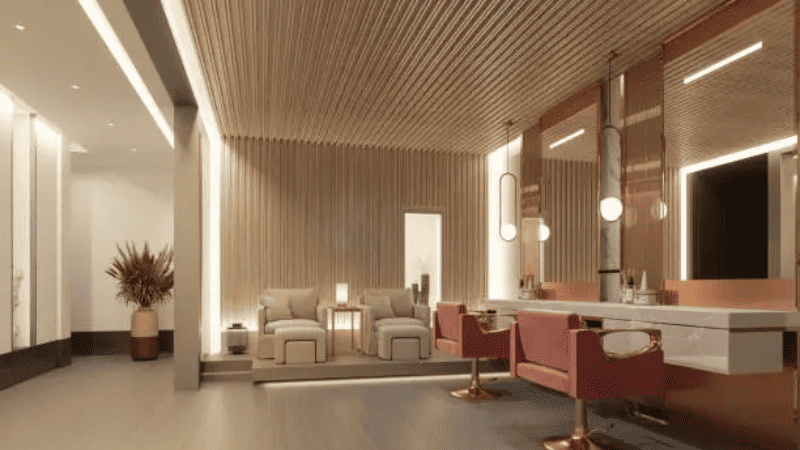
Fixture form factor communicates your brand—sleek tracks for modern, brass accents for luxe, caged metal for industrial.
Warm where clients wait, neutral where you work; that simple CCT split keeps mood and precision in balance.
Use accent beams to sculpt textures on feature walls, your logo, or retail displays.
Tie it together with dimming scenes, so the space feels intentional throughout the day.
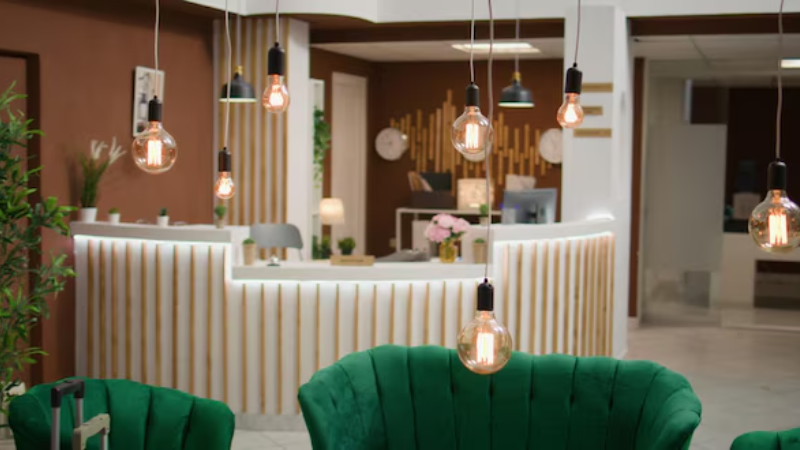
Lighting has a significant role in giving functionality and ambience to a salon or a barbershop. Effective use of lights enhances the stylists’ working conditions and makes the salon appealing to the customers.
Panels or tracks set your base layer (aim 300–500 lux) so people move comfortably. LEDs save power; choose quality drivers and optics so the light looks even.
However, before switching to LED bulbs, weigh the pros and cons.
Put vertical light at face level (mirror LEDs or side sconces) plus a soft overhead fill. For color work, use CRI ≥90 so tones stay true in photos and daylight.

Accent Lighting illuminates certain areas, such as product displays, artwork, or highlight walls. Pendant lights and wall sconces create visual interest and lead the eye to seasonal products.
Feature lighting gives the brand a strong visual appeal that makes the brand memorable and top-of-mind. Feature wall lights, decorative items, and neon signs add an extra dose of character and a one-of-a-kind personality to the ambiance.
Industrial Lighting is ideal for modern and old-world salons. The utilitarian aesthetic of bare bulbs, metal fixtures, and rough materials gives the salon an urban, edgy appearance. Industrial fixtures are fashionable and robust.

Natural light offers an open, fresh, and warm ambiance. It enhances the accuracy of the hair colors and the ease for the customers. Natural lights from large windows, skylights, and surrounding workstations lower the usage of artificial lights and electricity.
Sheer or frosted drapes ensure privacy but temper harsh sunlight, creating the perfect balance between natural and artificial lights.
| Lighting Type | Primary Use | Examples | Best Zone |
|---|---|---|---|
| Ambient | Background illumination | LED panels, tracks | Whole salon, waiting |
| Task | Precision & detail | Mirror LEDs, spots | Styling, coloring |
| Accent | Highlight features | Sconces, pendants | Retail, brand wall |
| Feature | Branding & mood | Neon, chandelier | Reception/IG corner |
| Industrial | Trend aesthetic | Bare bulbs, metal | Barbershops/loft |
| Natural | Daylight feel | Windows, skylights | Whole salon |
Appropriate lighting enhances the beauty and practicality of different salon settings to produce an unbroken client experience.
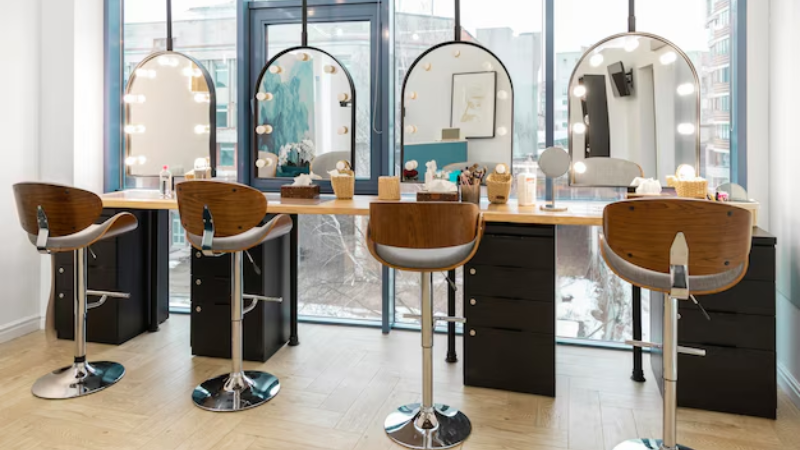
Use vertical, even light around the mirror (side strips + overhead fill) to remove nose/chin shadows. Target 700–1,000 lux, CRI ≥90, and neutral 3500–4000K.
Softer 2700–3000K, 200–300 lux with layered table lamps/pendants; keep glare low for phones and reading.
500–800 lux on shelves with tight beam spots or under-shelf strips; warmer CCT for wood/earthy packaging, neutral for cosmetics/haircare.
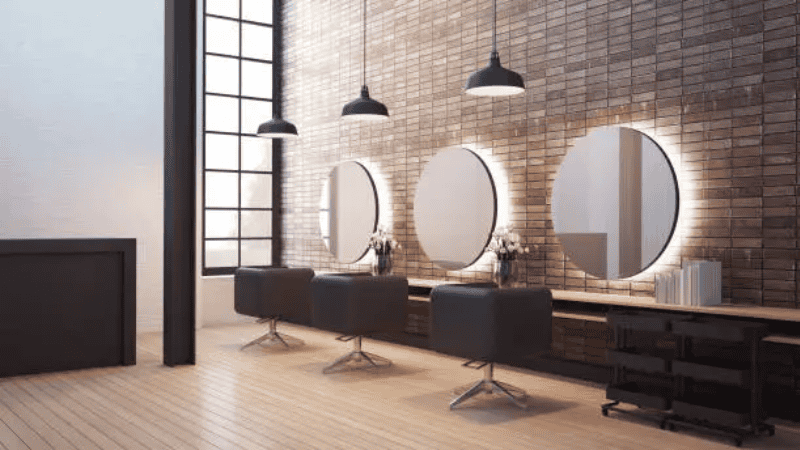
Diffused panels at 3000–3500K; add a dimmable task source at the mirror for consults. Acoustic fixtures can double as light + sound control.
Placing lights strategically throughout the salon spaces improves working conditions and makes customers happier, giving them a bright, modern, and functional space.
Having the appropriate type of lighting within your salon or barbershop has both functional and aesthetic purposes.
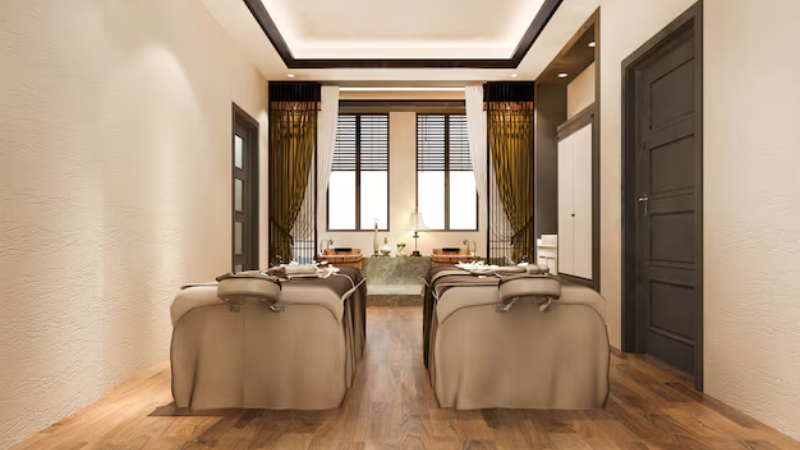
Functionality First: Task lighting offers accuracy where styling stations are involved, but is used to produce brand and decoration.
Energy Efficiency: Select eco-friendly and economical LEDs that save future energy spending through constant illumination.
Color Temperature: Select the Kelvin range appropriate to the mood; warm lights (2700K-3500K) create a relaxed mood, but cool lights (4000K-6000K) bring precision to fine styling work.
Adjustable Options: Add adjustable and dimmable lights to accommodate different needs and provide a flexible and well-lit salon for customers and stylists.
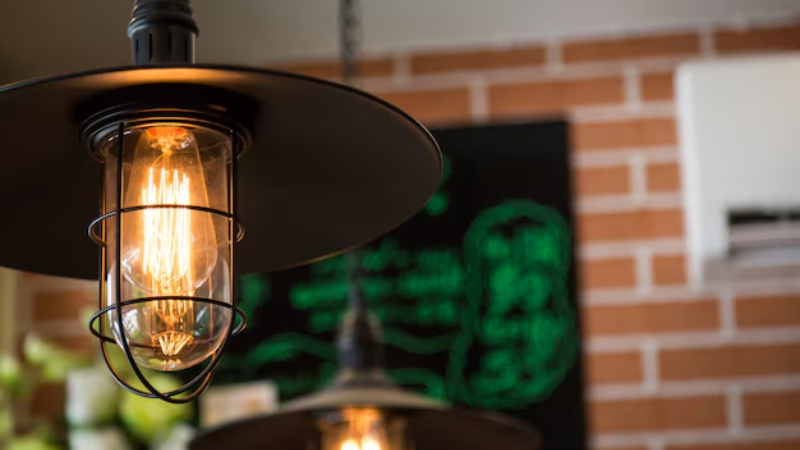
Applying the proper color temperature enhances the hair salon’ environment and the accuracy of styling operations, producing a comfortable and efficient working atmosphere for stylists and customers.
Warm White provides a warm welcome ambiance ideal for waiting areas. Dimmable pendant lights or soft-glow LED lights also warmly welcome customers.
Neutral White offers balanced brightness, ideal for styling stations and track fixtures. It mimics natural daylight to maintain sharp vision under warm conditions. LED track lights or panel lights ensure uniform brightness distribution to avoid shadows.
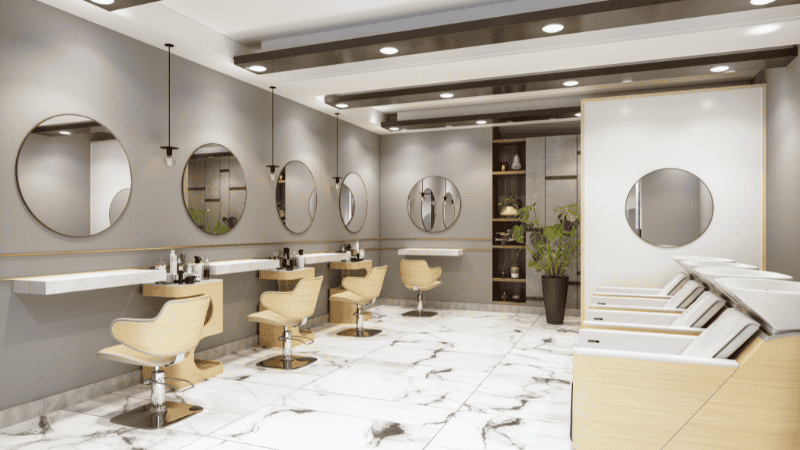
Cool White best fit for color-sensitive operations such as dyeing hair and makeup. It mimics natural daylight to create precise color tones.
| Kelvin Range | Light Color | Effect | Best Zone |
|---|---|---|---|
| 2700–3000K | Warm | Cozy, spa-like | Waiting, reception |
| 3500–4000K | Neutral | Balanced, accurate | Styling stations |
| 5000–6500K | Daylight | High precision | Color bar, makeup |
CRI (Color Rendering Index) measures the ability of a light source to render colors like natural light. High CRI (90+) is essential for salons to ensure natural-toned and accurate color rendering to prevent dye-and-style mismatches.
CRI vs Color Accuracy:
| CRI | Accuracy | Impact in Salon |
|---|---|---|
| 70–80 | Basic | Color shifts; not recommended |
| 80–89 | Good | Ok for halls; risky for coloring |
| 90+ | High | Ideal for precise hair color |
Purchasing the right lights for a salon or barbershop is a thoughtful process of purchasing them in bulk. The following are the most important aspects to consider when purchasing salon lights.
Bulk buying reduces the cost of salon light fixtures and offers consistent salon lighting. Shop from retailers that sell only salon or commercial lights and offer bulk discounts with minimum orders.
The ideal way to source efficient and high-powered lights is from a good supplier. Choose highly rated, warranted, and experienced ones. The ideal sources are trade events, some marketplaces, and direct manufacturers.
Plan the budgets for bulk orders to avoid overspending. Shop for the best deals, but settle for the best possible quality. Negotiate bulk discounts for bulk orders.

Accurately placed lights bring styling, precision-focused lighting, and comfort to customers’ shopping experience and emphasize important areas for brand identification and retail.
| Salon Zone | Lighting Strategy |
|---|---|
| Styling Stations | Task lighting is placed close to the mirrors to ensure uniform illumination. Overhead LED panels, track lights, or vertically placed lights eliminate harsh shadows and improve visibility. |
| Shampoo and Wash Areas | Diffuse soft overhead lights around wash stations to create a relaxing atmosphere. Use recessed lights or dimmable pendants to avoid overhead glare. |
| Reception and Waiting Areas | Ambiance through warm lights to welcome. Pendant lights, chandeliers, or wall sconces are added to the ambiance, with the decor and artwork having accent lights. |
| Retail Product Displays | Accent lighting highlights retail displays and shelf displays. Adjustable LED under-shelf strip lights or spotlights create greater visibility and sales. |
| Exterior Signage and Branding | Bright exterior lighting is clearer to view and more pedestrian-attractive. LED backlit signs, gooseneck lights, or illuminated store windows reinforce the brand. |
| Factor | What You Should Look For |
|---|---|
| MOQ | Flexible for small/medium rollouts |
| Lead Time | 15–30 days typical |
| Warranty | 3–5 years (LEDs + drivers) |
| ODM/OEM | Custom lengths, finishes, logos |
| Certifications | CE/RoHS, UL/ETL where needed |
| After-Sales | IES, wiring guides, spare parts |
Keep costs transparent for planning and upsells. Use this range to brief your team and clients.
| Type of Light | Approximate Price Range ($) |
|---|---|
| Wall Lights | $25 – $120+ |
| Path/Accent Lights | $20 – $90+ |
| Flood/Panel Lights | $30 – $180+ |
| Spotlights | $25 – $110+ |
| String/Decorative | $15 – $60+ |
| Up/Down Lights | $35 – $140+ |
| Industrial Fixtures | $40 – $200+ |
Note: Price varies by wattage, optics, finish, and certifications. Bulk orders drive unit cost down.

Smart becomes standard. Scenes for color/cut/makeup, occupancy dimming after hours, and app control across multi-site groups.
Sustainability matters: low-VOC finishes, recyclable housings, and high-efficiency drivers. Industrial & vintage are strong aesthetics—just pair them with modern optics to control glare.
Industrial-themed lights are a crucial part of the barbershop’s modern decor. Industrial lights combine rough looks with powerful working lights.
Below are some of the best industrial lights used to create atmosphere and functionality within the barbershop.

Revealing Bulbs
Edison bulb lights create a warm, nostalgic atmosphere that gives barbershops an old-world charm.
They are ideal for hanging wall sconces, open bulb chandeliers, or ceiling pendants, bringing character to modern and vintage-themed environments.
Explore our complete guide on choosing the perfect chandelier, bulbs, or other ceiling lights and pendants.
Black Metal Pendant Lights
Sleek black metal pendant lights contribute to the industrial look. With a discreet but eye-catching appearance, a contemporary urban feel, and a minimalist style, they are perfect for overhead lighting above workstations, waiting areas, or receptions.
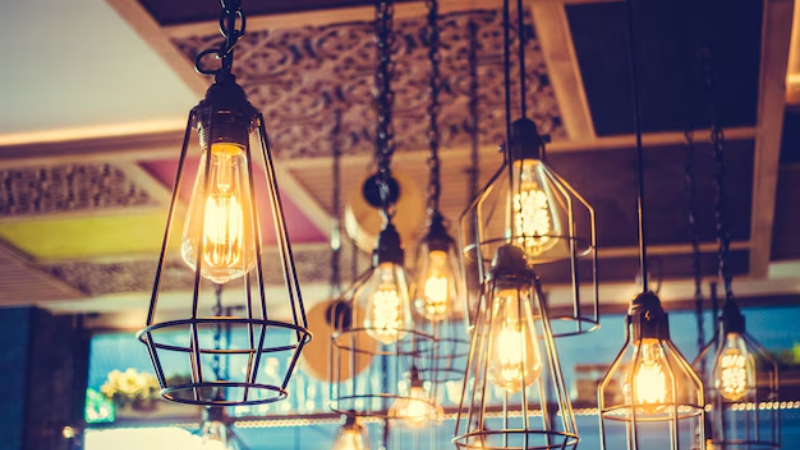
Industrial-Style Track Lighting
Track lighting offers an efficient method of lighting the barber stations with a rough industrial look. The lights’ capability to produce zero shadows makes them ideal for use in a professional environment.
Rustic Wall Sconces
Sconces that leave the bulb exposed to view, metal with an aged appearance, or cage fixtures create a nostalgic and utilitarian appearance to the barbershop’s interior decor.
The fixtures are placed along the walls and corners to create a warm, old-time appearance for the store. To create a warm ambiance, rustic sconces are best placed near the mirrors, the front doorway, or waiting areas.

Thoughtfully designed lights really made salons and barbershops more beautiful and the customers happier. The following are some successful case studies that prove that thoughtful lighting does matter:
Vintage industrial lights made trendy barbershops with a robust but functional atmosphere. Case studies prove that well-placed lights promote brand recognition, organize workflow, and attract more customers.
Personalized salon lighting has enhanced customer satisfaction by utilizing high-CRI LEDs that guarantee the precise matching of the desired color and properly lit waiting areas that are more convenient for customers.
Smart lighting also supports reduced electricity consumption and more control over the ambiance.

Especially crafted light fixtures benefit companies by solving certain functions, from designing Instagram-worthy feature walls to installing adjustable lights for multi-functional use.
The case studies indicate how investing in the right lighting design boosts the aesthetic look and efficiency.
Sourcing the best lights requires finding the best supplier. This is what to look for:
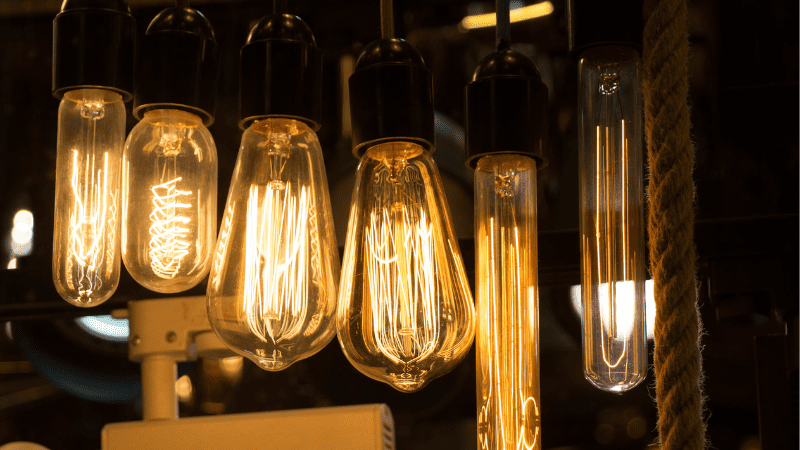

Once you are learning to brighten your salon, consider implementing task lighting to brighten workstations, ambient lighting to warm the ambiance, and accent lighting to generate brand appeal.
The balanced system will simplify the workflow and generate an aesthetic appeal to your salon. You can also learn about toe kick lights to enhance your space atmosphere and your customers’ experience. We examine how lighting, furniture, and layout work together to create your dream space.
As your B2B partner, Risuncorp supports ODM/OEM, flexible MOQ, 15–30 day lead times, and 3–5 year warranties. Ask our engineers for IES files, sample kits, and a project-specific layout—or request a tailored quote today.
We don’t sell salon lights exclusively; we also sell indoor and outdoor lighting fixtures, bulbs, and ceiling fans to create the perfect atmosphere. Contact us now and get our latest catalog of salon lights and schedule a perfect and free consultation with our experts.
Q1: What is the best lighting for coloring hair?
A: Use 5000–6500K daylight with CRI ≥90 at the color bar so tones match outdoor photos.
Q2: Why is CRI important for salons?
A: CRI measures color accuracy. At CRI 80, reds and blondes shift; at CRI 90+, hues look true, reducing corrections.
Q3: What Kelvin should I use at styling stations?
A: Keep stations at 3500–4000K neutral white to balance precision and comfort.
Q4: How do I avoid shadows on the face?
A: Add vertical light on both sides of the mirror and a soft overhead fill; avoid a single downlight over the head.
Q5: Do I need dimmers or scenes?
A: Yes. Dimming lets you tune contrast for different services; scenes ensure repeatable results across stylists and days.
Outdoor lighting is more than brightness; when you choose the right fixtures, you improve safety, strengthen security, and elevate curb appeal across homes, businesses, and public spaces. For your projects, the lighting you specify today determines long-term cost and performance tomorrow.
This guide helps you select the best outdoor lighting for your yard, garden, deck, or campus walkway—and gives you the B2B details you need: IP/IK ratings, certifications, efficiency math, stocking advice, and real results you can present to clients.
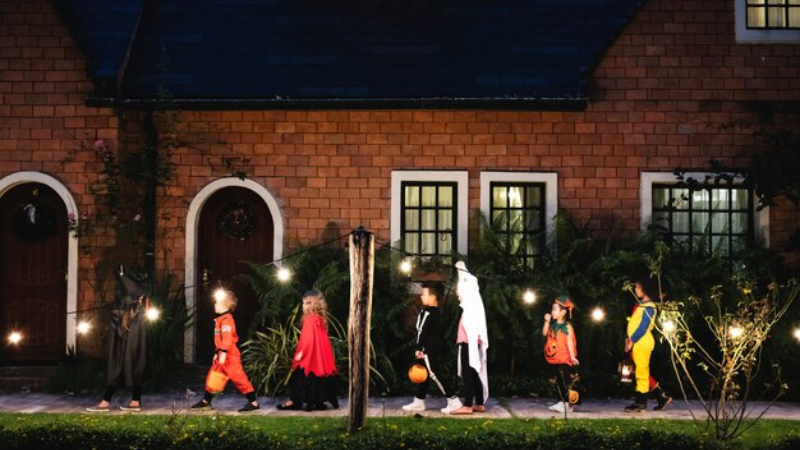
The first win is site safety. With correctly placed wall and path lights, your visitors navigate stairs, ramps, and parking aisles with confidence, reducing trip risks and improving overall flow at night.
Your second win is security. Motion-sensor flood lights deter trespassers, while consistent illumination at entrances removes shadowed hiding spots and helps cameras capture clearer images.
A third benefit is curb appeal. Uplighting on trees and façades creates a welcoming arrival, and consistent color temperature across zones raises perceived quality and long-term property value.
There are many factors to consider before selecting an outdoor light. Below are the key factors you should consider:
For general exterior use, specify IP65+; choose IP66/67 for exposed coastal or pressure-washed areas. Where vandal risk exists, select IK08–IK10 housings. Powder-coated aluminum, stainless hardware, and tempered glass last longer in harsh climates.
Your operating cost depends on watts and hours. Replacing a 100 W halogen with a 25 W LED cuts energy by ~75% and reduces heat load, extending component life. For large deployments, target ≥120 lm/W to maximize savings without sacrificing brightness.
To lower lifetime cost, look for quick-connect terminals, hinged gear trays, and modular LED boards/driver assemblies. You’ll shorten service calls and keep sites online with less disruption.
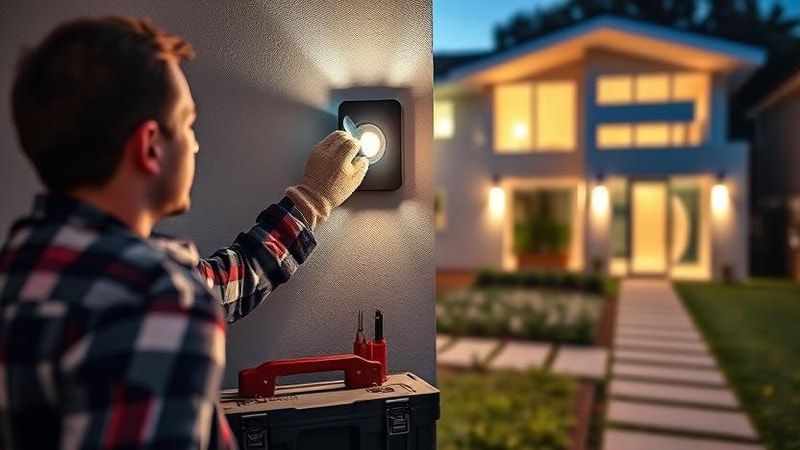
Choose the right optics for the task: wide floods for lots and yards, narrow spots for accents, and asymmetric distributions for pathways and façades. Keep site-wide color temperature consistent for a cohesive look.
Warm white 3000 K complements homes, hotels, and landscaping; neutral 4000 K fits mixed-use areas; 5000–6000 K supports security and parking. A CRI ≥80 keeps colors natural for signage and materials.
Beyond price, verify driver quality, surge protection (4–6 kV), thermal design, and spare parts availability for at least five years. Strong warranties and responsive support reduce your downtime risk.
| Fixture Type | Typical Wattage | Hours/Year | kWh/Year | Cost @ $0.15/kWh |
|---|---|---|---|---|
| Halogen Flood | 100 W | 3,000 | 300 | $45.00 |
| LED Flood | 25 W | 3,000 | 75 | $11.25 |
| Estimated Saving | — | — | — | $33.75 |
Your savings scale linearly with runtime and electricity rates; multiply by the number of fixtures across your portfolio.
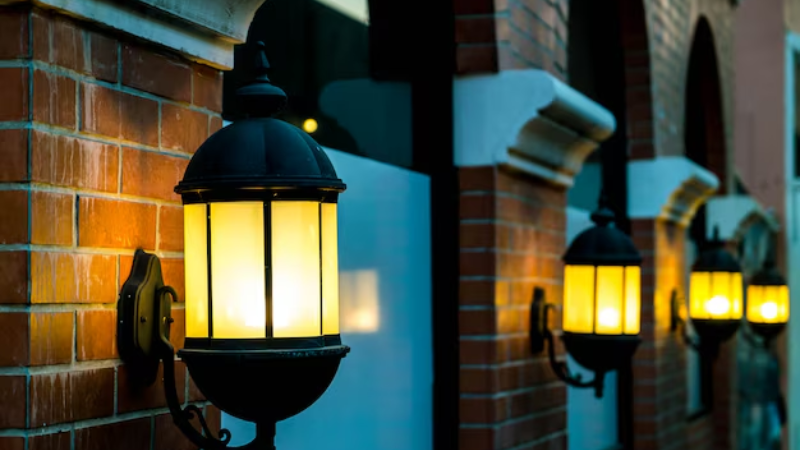
Ingress & impact. Match IP65–IP67 to weather exposure and IK08–IK10 where impact resistance matters (public parks, campuses, garages).
Electrical & safety. For North America, look for UL/ETL and FCC where applicable; for Europe, CE/RoHS. Ask suppliers for LM-79 photometry, LM-80 LED data, and TM-21 lifetime projections, plus IES files for design software.
Environmental. In coastal or industrial sites, request salt-spray test reports and corrosion-resistant finishes to protect your investment.
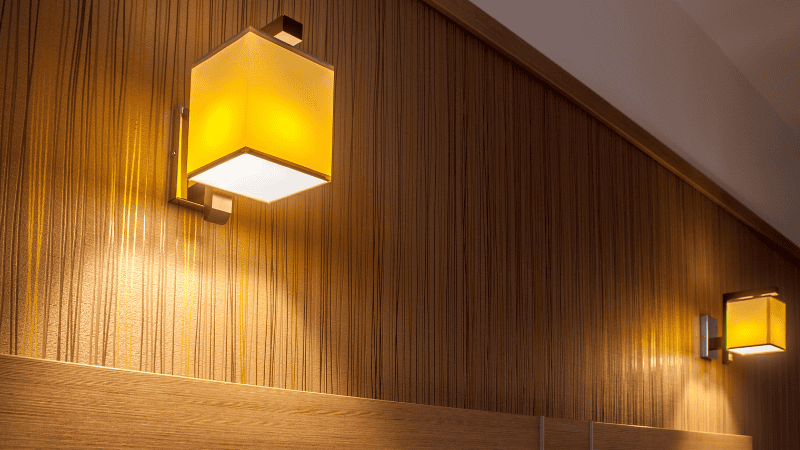
The choice of the best outdoor lighting is a very important decision that must be based on purpose, aesthetics, and efficiency. Here are the most popular outdoor lights and their distinct characteristics.
Wall lights.
Great for your entrances, garages, and corridors. Choose IP65 LEDs with photocells or motion sensors to reduce idle energy and improve safety around doors.
Path lights.
Ideal for walkways, driveways, and gardens. Solar path lights switch on at dusk without wiring; for uniform looks, standardize height and CCT across runs.
Flood lights.
While their wide beams are great for lighting up large areas like courts and lots, for commercial use, look for more. The best flood lights prioritize an IP66 rating to beat the elements, 6kV surge protection to handle power issues, and smart scheduling to save you money.

Spotlights.
Narrow optics let you highlight trees, sculptures, and signage. Add glare shields and adjustable heads for precise aiming with minimal spill light.
String lights.
Perfect for patios and restaurants. Choose commercial-grade cables, sealed connectors, and flame-retardant sleeves; LED “Edison” styles deliver ambience at low power.
Up/Downlights.
They use asymmetric optics to highlight walls and architectural features, giving you a really professional finish. Just be sure to test your downlights on stone or metal surfaces to make sure the color and light are exactly what you want.
Post lights.
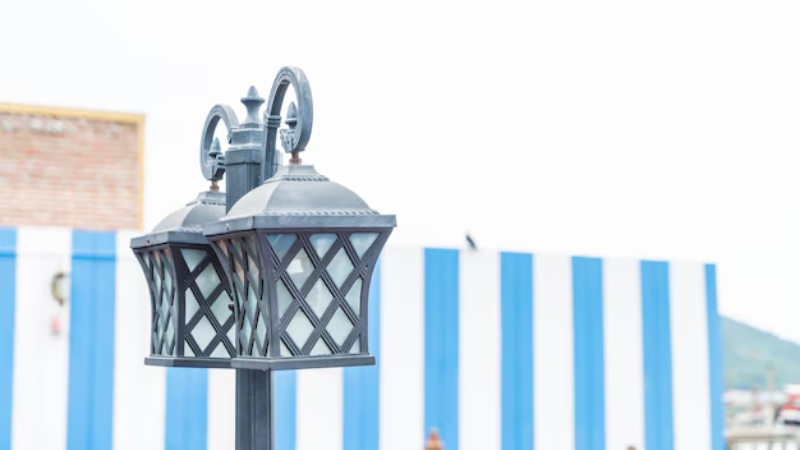
Classic choices for parks and driveways. Modern post-tops use efficient optics and bat-wing distributions to light paths without excessive glare.
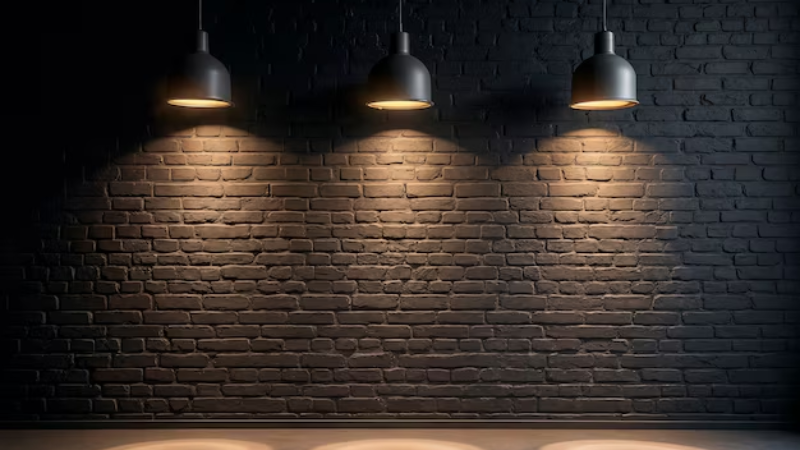
Here we have a comparison of different types of outdoor lighting for your ease:
| Type of Light | Approximate Price Range ($) |
|---|---|
| Wall Lights | $25 – $120+ |
| Path Lights | $20 – $90+ |
| Flood Lights | $30 – $180+ |
| Spotlights | $25 – $110+ |
| String Lights | $15 – $60+ |
| Up/Down Lights | $35 – $140+ |
| Post Lights | $30 – $250+ |
Smart controls are moving from premium to standard. Dimming, scheduling, occupancy sensing, and remote dashboards lower operating hours and simplify maintenance across multi-site portfolios.
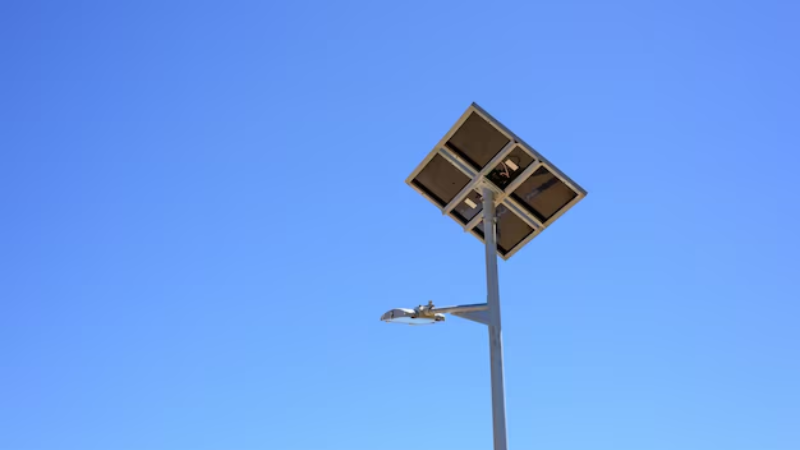
Solar adoption is accelerating where trenching is costly. Integrated solar luminaires with improved batteries cut install time and bring lighting to off-grid paths, parks, and perimeters.
Sustainability drives specs for recyclable materials and low-VOC coatings. Light-pollution awareness also grows; choose optics and CCTs that minimize skyglow while meeting safety targets.
SKU planning: Cover three tiers: core IP65 wall/path lights and 30–50 W floods; enhanced variants with sensors, IK10 housings, and coastal finishes; and premium models with DALI/0–10 V, gateways, or camera integrations.
Trade terms: To keep your pipeline predictable, align on MOQs, 15–30-day lead times for standard SKUs, and flexible Incoterms (FOB/CIF/DDP). Ensure 3–5-year warranties—confirm coverage for drivers, LED boards, and housings.
Sales enablement: Request IES files, wiring diagrams, and installation guides for your team. Having complete documentation shortens approvals and speeds jobsite work.
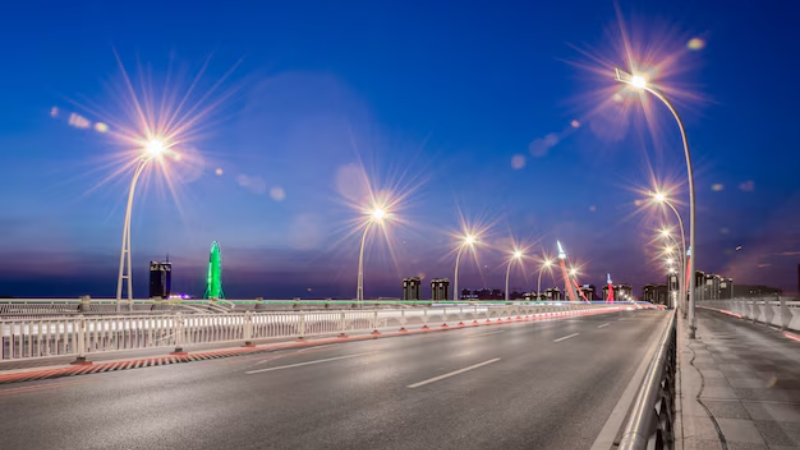
For customers, there needs to be the right outdoor lighting inventory to ensure supply and maximize profit. Understanding customer specifications through product selection for different markets is a vital step.
Residential buyers usually need beautiful and ambient lighting, while commercial buyers need efficient and security-oriented products. Government projects such as streetlights or park lighting need weather-resistant, durable products that comply with safety standards.
Inventory diversification is required to attract a large customer base. Having various styles, options, and price points in stock enables price-sensitive customers and customers looking for the best quality products.
For instance, a seller can carry affordable solar path lights for residential customers and premium smart floodlights for commercial customers.
Profit margins must also be of high importance. While more expensive premium lighting solutions will cost more in the short term, they generally provide greater durability, warranty support, and long-term reliability that are of more value to commercial clients.
On the other hand, offering reduced-cost lighting solutions with bulk discounts can attract contractors and large-volume buyers who want to keep project costs at a minimum.
Maintaining quality relationships with suppliers is also very important. Reputable suppliers ensure ongoing stock availability, price consistency, and support in custom orders.
If you get inventory through a trusted manufacturer, you can get a proper, high-quality product line, extended warranties, and technical support.
Providing added value can make one company stand out from the rest. Offering installation instructions, post-purchase service, and professional design recommendations provides the customer with an informed decision.
Residential community.
By installing 200 solar LED path lights, you remove trenching costs and bring a uniform 3000 K ambience to sidewalks. Common-area electricity expense drops toward zero while safety improves.
Hotel exterior.
Replacing 300 metal-halide floods with 30 W smart LEDs saves roughly $45,000 per year (energy only) and reduces CO₂. Guest feedback cites brighter walkways and clearer signage.
Municipal streets.
Upgrading 500 fixtures to IP66 LED post-tops with time-of-night dimming saves about $50,000 annually while meeting dark-sky guidelines on pilot corridors.
Define purpose. List your safety, security, and aesthetic goals per zone.
Pick optics. Choose beam spreads that match tasks and mounting heights.
Fix the CCT. Keep one color per site zone to avoid patchy visuals.
Verify ratings. Confirm IP/IK, surge protection, and salt-spray where needed.
Validate data. Collect UL/ETL or CE/RoHS, LM-79/LM-80/TM-21, and IES files.
Plan service. Ensure spare parts and a responsive warranty process.
Choosing the right outdoor lighting will be the determining factor in increasing safety, beauty, and energy efficiency. It’s time to take action! Maximize your product line on the market and provide the best solution for your end user.
For more advice, read our related articles and make informed decisions for your next project!
We at Risuncorp specialize in providing premium quality lighting solutions to contractors, businesses, and lighting suppliers. If you are looking for outdoor light fixtures for landscape and security lighting, indoor light fixtures for modern interiors, or commercial light fixtures for large projects.
We provide a complete range of options to fit your requirements. Lift your business to the next level with the correct lighting solutions. Call us now or download our catalog to discover the perfect fixtures for your projects.
Q1. What outdoor lighting is best for commercial projects?
If you manage commercial projects, LED flood lights and smart wall packs give you the best balance of brightness, efficiency, and low maintenance.
Q2. How do I choose between solar and wired outdoor lighting?
Use solar lights when you need simple installation for gardens or off-grid areas. For parking lots and streets, wired LED systems keep your spaces consistently bright.
Q3. What certifications should outdoor lights have for B2B orders?
For global trade, you should look for UL/ETL (North America), CE/RoHS (Europe), plus LM-79/LM-80/TM-21 reports. These protect your business and ensure reliable performance.
Q4. What is the standard warranty for outdoor lighting fixtures?
Most professional outdoor fixtures include a 3–5 year warranty. You should always confirm if the warranty covers LED boards, drivers, and housings.
Q5. What factors reduce the lifetime cost of outdoor lighting?
Choose high-efficiency LEDs (≥120 lm/W), durable housings (IP65+), and easy-maintenance designs. These lower your total cost of ownership by cutting energy bills and replacement cycles.
Tired of the same old bathroom lighting? A chandelier isn’t just for the dining room anymore.
Picture soft light falling over your bathtub, or a sleek fixture highlighting your shower. Whether you’re into vintage brass or clean glass, there’s a style that looks great and plays by the safety rules.
Your bathroom should feel like a treat—not just a utility space.
Bathroom chandeliers do more than light up a room. They blend style and function. Imagine a fixture above your bathtub that resists humidity and adds layered lighting.
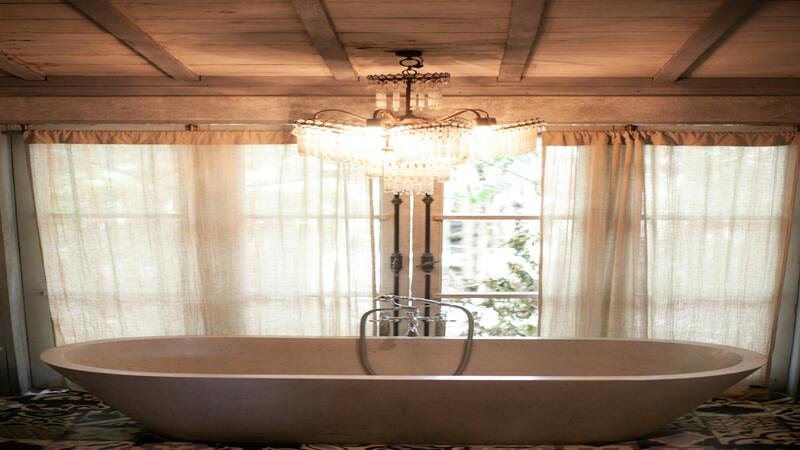
This isn’t decor; it’s a functional upgrade for contractors and homeowners alike. Here are some more reasons to install chandeliers in Bathrooms.
A chandelier turns a basic bathroom into a luxury retreat. Crystal designs scatter light like high-end hotels, while industrial metals ground modern themes.
Hanging over a freestanding tub or shower, it becomes the room’s centerpiece and photo-ready.
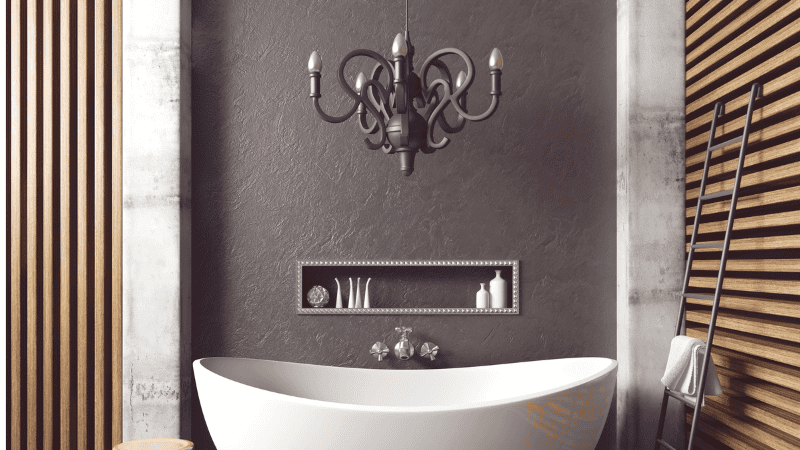
Elevate your luxury bathroom projects with strategic chandelier integration. Create stylish spaces by balancing aesthetics and functionality to appeal to discerning clients.
Master proportionality rule for size and scaling. Apply the “diameter rule” (length + width in feet = chandelier inches). Focus on slim frames for compact spaces. Embrace bold, cascading styles in sprawling ensuites.
You can align chandeliers with design narratives. Crystal for traditional luxury. Geometric metals for modern minimalism and aged brass for vintage charm. We offer customizable artistry to reflect brand identities.
Wet-rated designs resist humidity. Use marine-grade brass or sealed glass. Center fixtures away from spray zones. Pair them with recessed LEDs for practical yet opulent shower experiences.
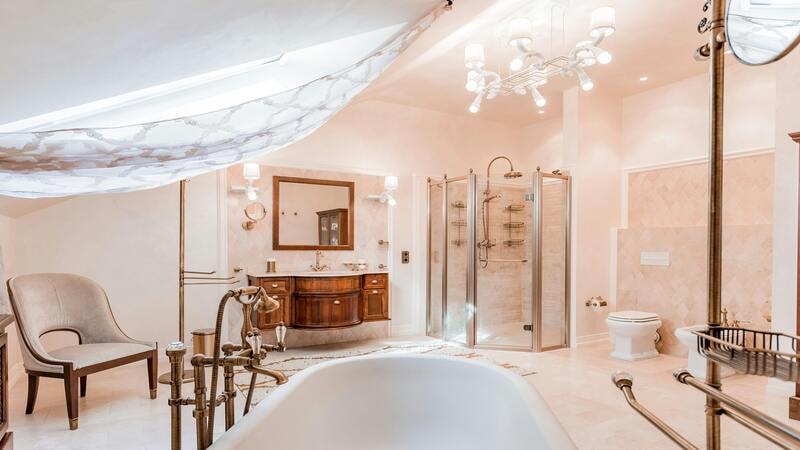
Balance atmosphere and safety by following electricity rules. Position damp-rated fixtures 7+ feet above tubs. To enhance relaxation and go well with tub materials, choose elegant textures.
| Style | Type/Features | Effect/Application |
|---|---|---|
| Traditional | Crystal accents, ornate metalwork | Timeless elegance for classic bathrooms with freestanding tubs or marble finishes. |
| Drum | Fabric/frosted glass shades, enclosed | Soft, ambient glow ideal for transitional or minimalist designs. |
| Tiered | Multi-layered metal or crystal frames | Dramatic focal points in grand ensuites or high-ceilinged spaces. |
| Starburst | Angular arms, metallic finishes | Modern edge for industrial lofts or avant-garde bathrooms with monochrome palettes. |
| Mini Chandelier | Compact crystals, geometric shapes | Functional charm in powder rooms, petite bathrooms, or above dual vanities. |
Selecting the ideal chandelier involves balancing design and technical accuracy. Here’s how to match fixtures with client requirements while maintaining safety and security.
Approach the integration of style as a priority, not an afterthought. This enhances the bathroom environment. Crystal for classic, starburst for modern style.
Measure the chandelier size and bathroom dimensions (apply the diameter rule). First, determine the lighting type; layered (cascading) designs are ideal for flexibility.
Use LED-supporting fixtures (300–500 lumens ambient light). Dimmable wattage needs to be accessed for control of mood and energy consumption. You can also take a look at the guide to Types of Light Bulbs. This will help you choose the best bulb for your bathroom.
Specify damp-rated for tub-adjacent zones and wet-rated for showers. Materials like sealed glass or marine-grade brass prevent corrosion.
Ensure UL/ETL listings for electrical performance security. Highlight certifications to clients for building trust and simplifying code compliance.
From crystal opulence to rustic warmth, chandeliers redefine bathroom luxury. Discover the top 5 chandelier styles in detail. See how they align with design trends, client demands, and functional needs.
| Style | Key Characteristics | Effect | Best for |
|---|---|---|---|
| Modern | Clean lines, Geometric shapes, Matte metals (black, brass) | Crisp, uncluttered elegance | Contemporary bathrooms, modern lofts, and upscale hotel bathrooms. |
| Traditional | Crystal accents, Candelabra bulbs, Ornate detailing | Timeless luxury | Classic bathrooms with freestanding tubs or marble-clad ensuites |
| Coastal | Wicker, rattan, or weathered wood, Soft white finishes | Airy, relaxed vibes | Ideal for beach-inspired bathrooms, coastal homes, or serene spa retreats. |
| Rustic | Distressed metals, Edison bulbs, Reclaimed wood | Warm, vintage charm | Best for farmhouse-style bathrooms, country cottages, or rustic cabins. |
| Industrial | Exposed bulbs, Raw iron/steel frames, Cage designs | Urban edge | Great for urban lofts, modern-industrial bathrooms, and urban-style settings. |
A bathroom chandelier’s success depends on fusing beauty with technical accuracy. This section covers essential elements in the creation of beautiful, practical bathrooms.
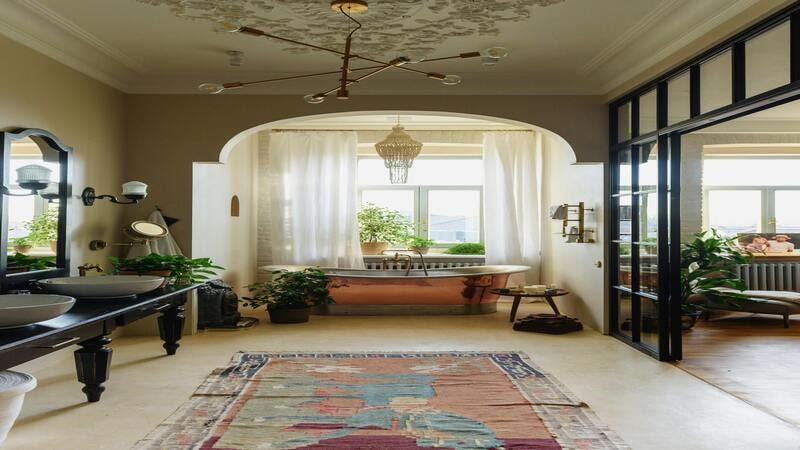
1. Fixture Features and Materials
The material selection provides a durable environment in wet conditions. The color and finish coordinate the fixture to your bathroom’s decor. Use corrosion-resistant materials as a top priority. Coordinate finishes with hardware colors for uniform design.
| Material | Fixture Feature | Look/Effect | Suitability for Bathtub | Suitability for Shower | Reason |
|---|---|---|---|---|---|
| Crystal | Transparent, Sparkling Finish | Adds elegance, reflects light, creates a luxurious feel | Suitable | Not suitable | Crystal enhances the ambiance, but due to water spots and steam damage in the shower, light may be blocked. |
| Brass | Antique or Modern Finish | Warm, rich appearance with a classic feel | Suitable | Not Suitable | Brass adds warmth and style but can corrode with constant exposure to water in the shower. |
| Glass | Frosted or Clear Glass | Soft, diffused light or sharp, clean light | Suitable | Suitable | Glass is versatile and works well in both environments. |
| Chrome | Shiny, Reflective Surface | Bright, polished finish that complements modern interiors | Suitable | Suitable | Chrome is durable and easy to clean, ideal for both bathtub and shower. |
| Copper | Aged, Vintage Style | Warm tones, rich patina, natural aesthetic | Suitable | Not Suitable | Copper looks great in vintage or rustic setups but may not hold up well in humid or wet environments. |
| Wood | Natural, Rustic Appearance | Organic, warm, and cozy feel | Suitable | Not Suitable | Wood offers a natural vibe but can warp or deteriorate when exposed to moisture in the shower. |
2. Electrical and Safety Considerations:
Here are some installation tips that one should keep in mind for safety and security in humid environments.
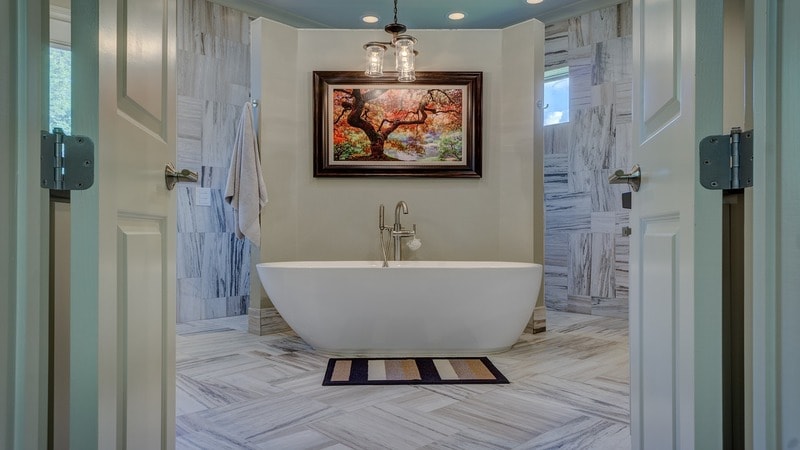
3. Height and Positioning:
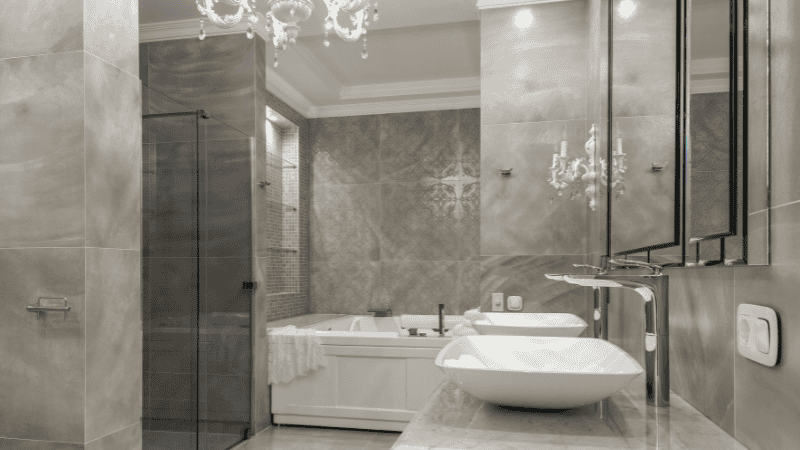
Determining the optimal height for bathroom chandeliers requires balancing aesthetics, safety, and functionality. Over bathtubs, hang fixtures 7–8 feet above the floor to maintain a clear sightline. For standard 8–9 ft ceilings, position the chandelier at least 3 ft horizontally from the tub edge.
In showers, focus on flush or semi-flush mounts centered away from direct spray zones. Ensure at least an 8-foot ceiling height to prevent interference with showerheads or doors.
For vaulted ceilings, extend the chain or rod to keep the fixture proportional. Keep it outside the splash radius. Always verify local building codes. Collaborate with electricians early to align placement with the room’s focal points.
4. Hiring Professionals:
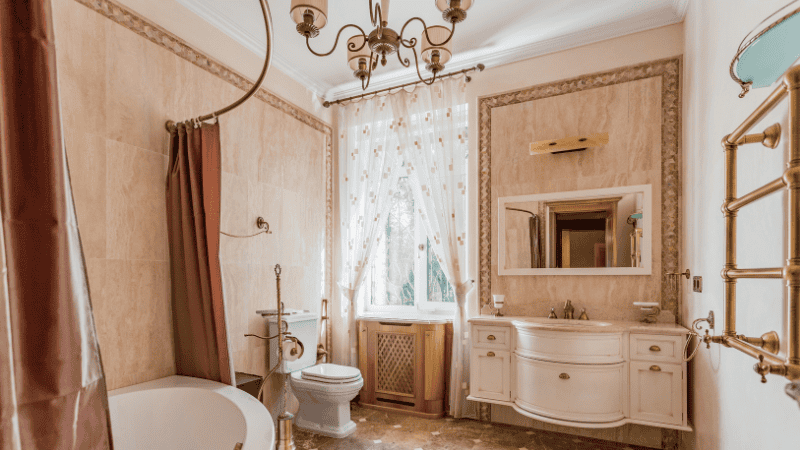
While DIY projects can be tempting, bathroom chandelier installations often demand professional expertise. Hire a licensed electrician in these scenarios:
5. Hiring a Professional vs. DIY Installation:
| Approach | Pros | Cons |
|---|---|---|
| DIY Installation | Lower upfront cost.Creative control over timing/style.Suitable for small, dry-area fixtures. | Risk of code violations/electrical hazards.Limited expertise in moisture sealing warranty for errors. |
| Hire a Professional | Code compliance and safety assurance.Expertise in complex wiring/moisture management. Often includes warranties. | Higher upfront cost.Scheduling dependencies.Potential design compromises if not aligned with the vision. |
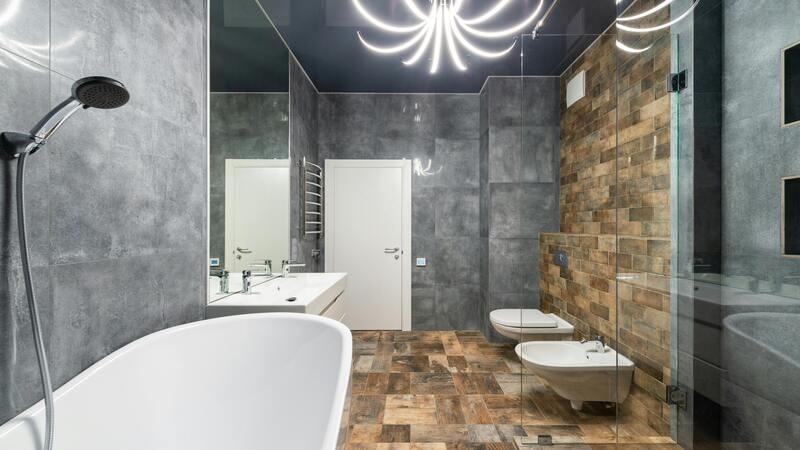
Strategic placement elevates design while adhering to safety standards. Balance aesthetics, function, and compliance to create showstopping yet practical spaces.
The best locations for placement are the center of the room or over the bathtub. The center of the bathroom is ideal for maintaining symmetry in large bathrooms. It even provides ambient lighting.
It creates a luxurious focal point when hung over the tub. Hang it over 7+ feet above the floor to avoid steam. Chandeliers double the functional art. Over-tub placement adds drama, and centered fixtures unify open layouts.
Pair with recessed LEDs for layered lighting that merges task and ambiance. Always maintain 3+ feet of clearance between fixtures and water sources. Use GFCI-protected circuits and damp-rated materials.
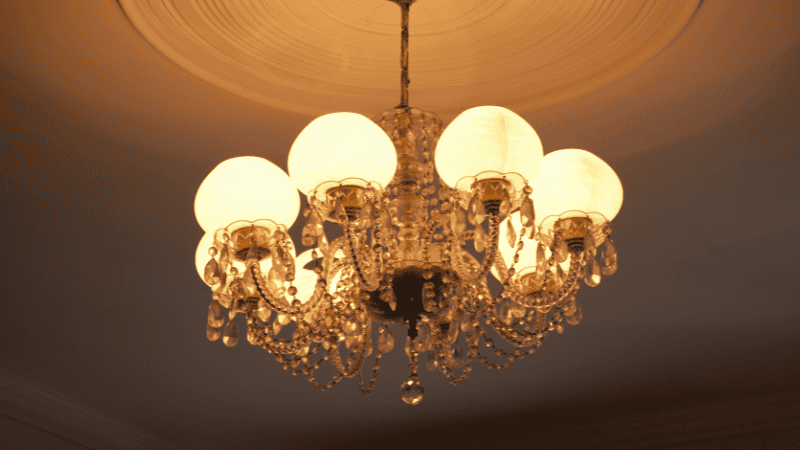
If you’re looking to improve your bathroom, a chandelier is a great option. It brings both style and function, turning a simple space into something special.
With so many designs to choose from, a chandelier can be the perfect addition to elevate your bathroom. You can install different kinds of lights and give your bathroom the upgrade it deserves.
Our experts at Risun Corp, with over 14 years of experience, can help you find the perfect bathroom chandeliers tailored to your needs.
Please request a free consultation or visit our product catalog page for bulk orders. Contact us today to explore our range of chandeliers and get our expert suggestions and improve your business.
Ready to get started ?
Send Your Inquiry

Our team will get back to you promptly

please
download
Get notified about new products
Our team will get back to you promptly!