Are you planning to revitalize your kitchen space? If so, you need to know which over-sink lighting is best for your space. The lighting for this functional area in your home requires very careful consideration. You have to factor in aesthetics and functionality.
Let’s discover how to choose the perfect fixture for your kitchen’s design, improve functionality, and create a warm, inviting space.
Kitchen lighting is on the final page of a remodeled house’s journey towards fine aesthetics. It is essential for both functionality and aesthetic reasons.
A kitchen with proper over-the-sink lighting no longer requires the person to squint to be able to see the workspace. It ensures that you have sufficient light in your kitchen while enhancing the overall atmosphere.
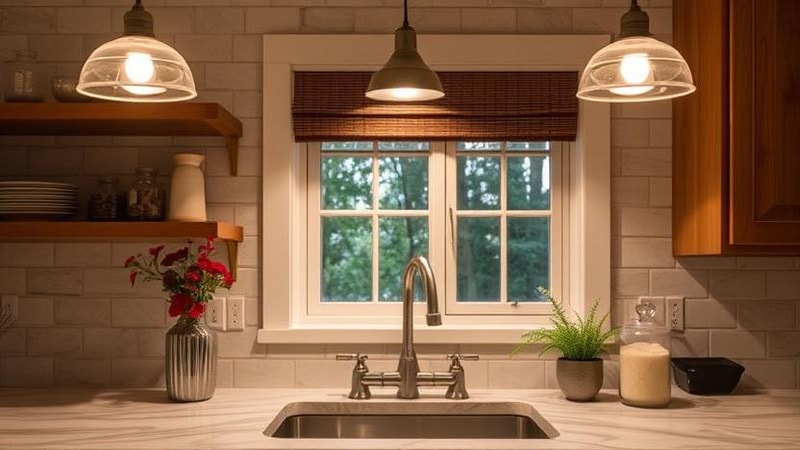
Visibility in the kitchen area is most important. Especially around the kitchen sink, as it is one of the busiest work areas. It is almost always in use whether you are washing dishes, rinsing produce, or preparing meals.
Proper lighting enhances visibility while reducing eyestrain. Without adequate lighting, the shadows from cabinets can make it difficult to complete any task.
Over-the-sink lighting, in addition to being practical, helps to create a warm and pleasant kitchen atmosphere.
The correct lighting can serve as a focus point, calling attention to the sink area while also contributing to the kitchen’s overall design scheme.
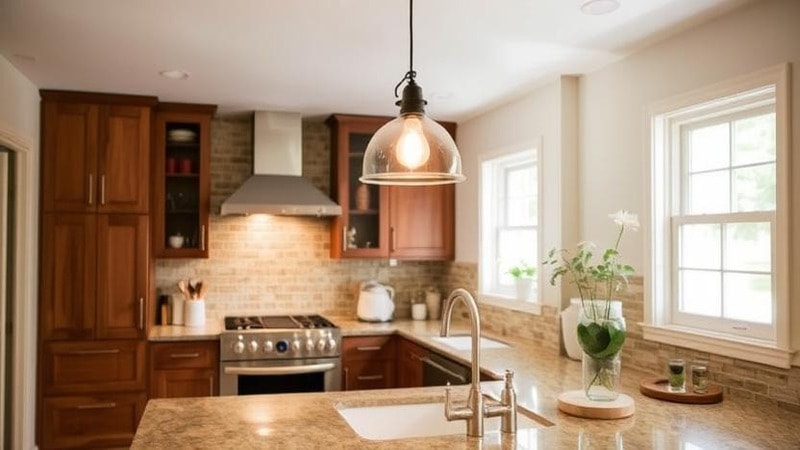
Over-the-sink lights are the right step in the direction of creating the kitchen you’ve always wanted. There are all sorts of kitchen lighting available on the market. Here are some options that can help you find your favorite design.
Pendant lights are the most elegant addition to the kitchen post. They are flexible and available in a variety of styles; you can pick the one you like the most. You can opt for modern designs or choose a farmhouse aesthetic.
However, while choosing such a light, make sure the size is proportionate to the sink width. In case you opt for multiple pendant lights, space them about 24–30 inches apart for optimal illumination.
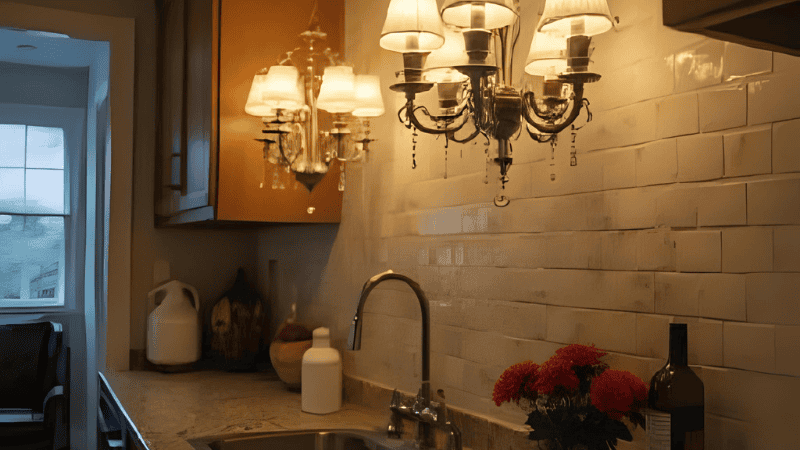
Chandeliers can add a dramatic and elegant finish to your kitchen. While traditionally associated with dining rooms, smaller or modern chandeliers can add sophistication to kitchens with high ceilings.
Recessed lights provide a clean and minimalistic look, making them ideal for modern and contemporary kitchens.
Since they sit flush with the ceiling, they offer even illumination without obstructing sightlines. They are ideal for kitchens with low ceilings or limited space.
Track lighting is a flexible lighting solution. It allows you to adjust the position of each light to direct lighting where it’s needed most.
This makes it an excellent choice for task lighting above the sink, as well as other areas of the kitchen. It is ideal for kitchens with vaulted or angled ceilings.
If your kitchen sink is located beneath cabinets, under-cabinet lighting is a functional and visually appealing option.
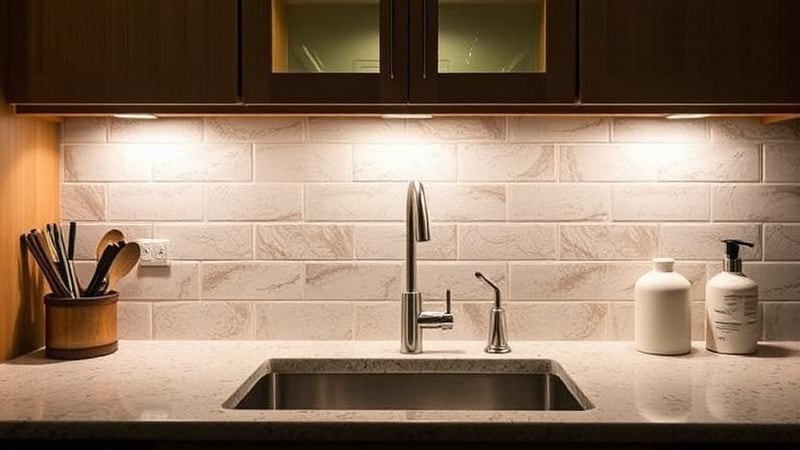
These lights reduce shadows and provide direct illumination over the sink and countertops. There are three types of under-cabinet lighting.
The flush mount lights are also an amazing lighting solution for kitchens with lower ceilings. These fixtures provide ample illumination without interfering with headspace. Thus making them a practical alternative to pendant lights or chandeliers.
You have to consider a lot of factors to pick the perfect light fixture for your sink. It is important that you choose something you love.
But it is also essential that it meets your functional needs. Here are the key factors to consider when making your decision.
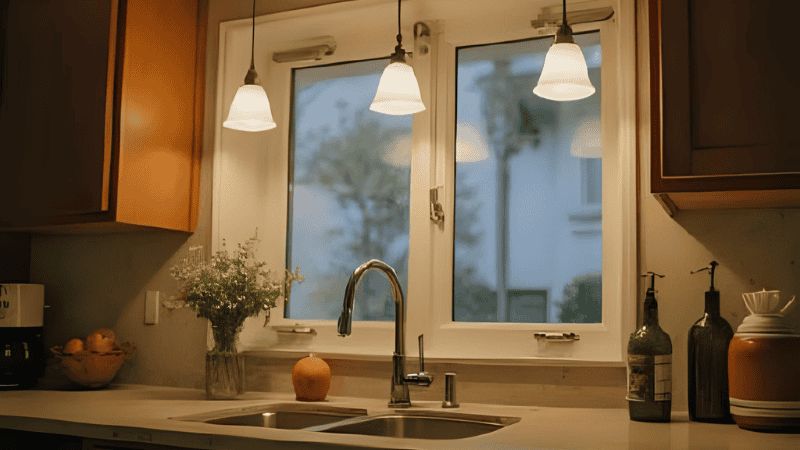
Your sink light should complement the overall look of your kitchen. Whether you have a modern, farmhouse, industrial, or conventional kitchen, selecting the proper fixture ensures a consistent appearance.
For farmhouse kitchens, use gooseneck sconces or rustic pendant lights in matte black or antique finishes. For a modern kitchen, opt for sleek recessed lighting or a minimalist pendant with metal or glass accents.
Traditional kitchens can have chandeliers or flush mounts with decorative elements such as frosted glass or bronze finishes.
The kitchen sink is a high-traffic area that requires proper lighting. Consider the type of lighting that best meets your needs.
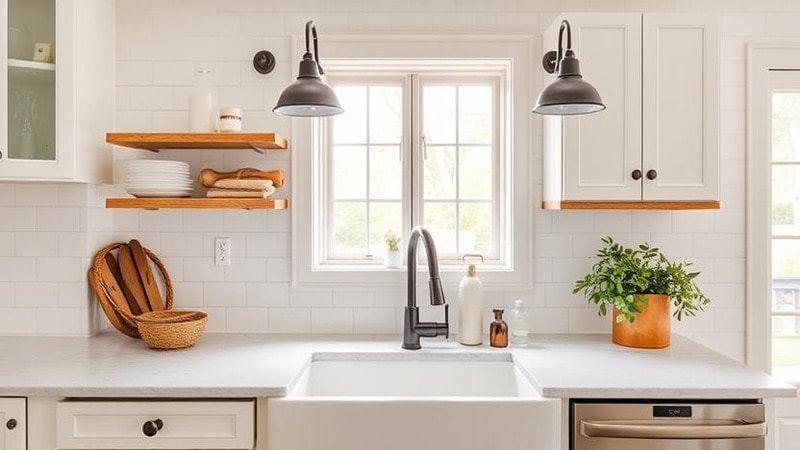
Task lighting provides focused, bright lighting for operations such as dishwashing and food preparation. Pendant lights, recessed lighting, and under-cabinet lights are ideal for this purpose.
Ambient lighting uses softer lighting to create a warm, inviting ambiance. Dimmable lighting or decorative chandeliers can help achieve this vibe.
Some fixtures are more straightforward to install and maintain than others. If your plan is to DIY the project, then choose pendant or plug-in lights. The pendant lights have a simple mounting system.
Plug-in track lighting does not require hardwiring. You can also choose LED fixtures. They have long lifespans, which reduces the need for regular bulb replacement.
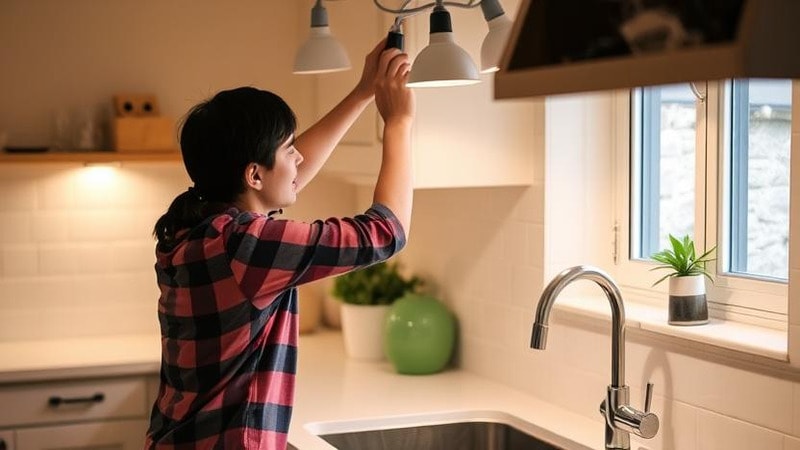
The size of the fixture should be appropriate for your sink and the surrounding kitchen space.
A fixture that is too big can overpower the space, while one that is too small may not offer enough light. Individual fixtures (pendants, sconces, or flush mounts) are ideal for smaller sinks measuring 10–14 inches in diameter.
Multiple pendants are ideal for wider sinks. You can space two or three smaller pendants 24 to 30 inches apart.
Here are some thought-provoking lighting options for different kitchen aesthetics.
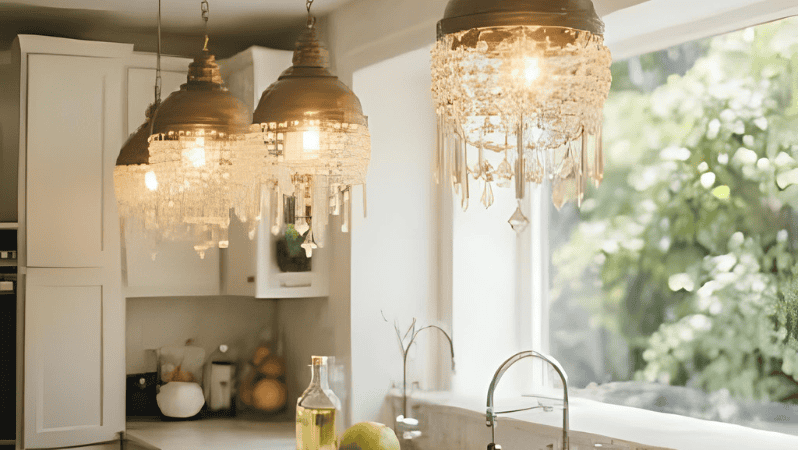
Modern and minimalist kitchens require clean lines, elegant materials, and subtle designs. Lighting should enhance the sleek design while also providing functional illumination.
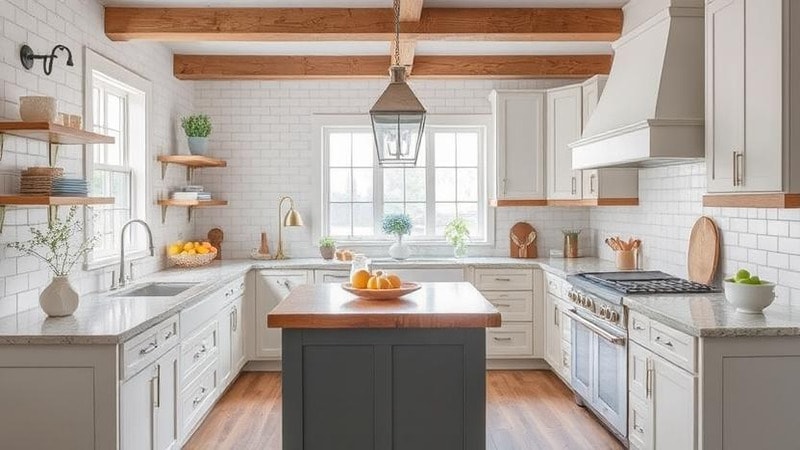
A farmhouse or rustic kitchen combines warmth, charm, and vintage-inspired accents. Lighting should add to the pleasant, inviting ambiance. You can go for:
Industrial kitchens feature functional design, striking contrasts, and raw materials. The appropriate lighting should represent the edgy, urban aesthetic.

For a traditional, timeless kitchen, lighting should combine elegance and functionality. Transitional kitchens combine traditional and contemporary styles. So they can benefit from versatile fixtures. If you have such a kitchen, you can choose:
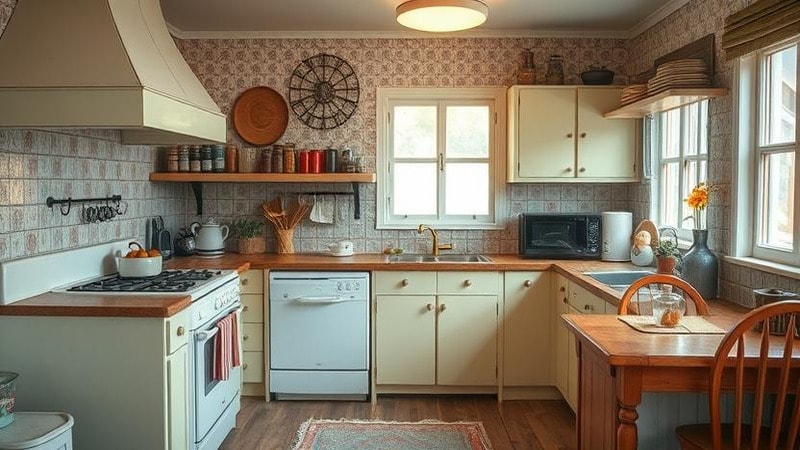
If you are remodeling your house, then the first step should be to replace the lighting fixtures to match your aesthetic. The correct over-the-sink kitchen lighting improves both function and style, making daily activities easier and improving your kitchen’s ambiance.
Whether you choose pendant lights, recessed fixtures, or under-cabinet lighting, the perfect choice may transform your room into a well-lit, welcoming environment.
You cannot and should not compromise on quality lighting fixtures. especially for an area as important as the kitchen. Explore high-quality, stylish lighting options tailored to your kitchen’s needs at Risun Corp.
Whether designing a new space or upgrading existing fixtures, finding the right lighting can make all the difference. Partner with us for bulk orders and customized lighting solutions. Contact our industry experts today to bring your business new developments.
Ideally, 30–36 inches above the countertop or 6 feet from the floor for optimal lighting without obstruction.
Yes, recessed lights provide even, unobtrusive illumination. They are great for modern kitchens. Place them directly above the sink to reduce shadows.
LED bulbs (3000K–4000K) offer bright, clear lighting for food prep and cleaning while maintaining a natural look.
Do you want to upgrade your lighting system with a low-cost, energy-efficient solution? LED technology has altered the lighting business by providing greater brightness, longevity, and sustainability than traditional lighting.
In this article, we’ll look at the basics of LED lighting and learn about LED lighting selection. Let’s look at the science, applications, and breakthroughs influencing the future of lighting.
LED is short for light-emitting diodes. It is a semiconductor device that produces visible light. Light is produced when an electrical current is passed through it. The traditional incandescent bulbs the other hand, produce light by heating a filament.
LED produces light using electroluminescence. This technique turns electrical energy directly into light more efficiently than incandescent light. LED light bulbs work in the opposite way that photovoltaic cells do, converting light into power.
Instead, LEDs emit light by using electrical energy. Thus making them a highly efficient and cost-effective lighting solution. The various benefits of LEDs have led them to become the preferred choice for residential, commercial, and industrial lighting.
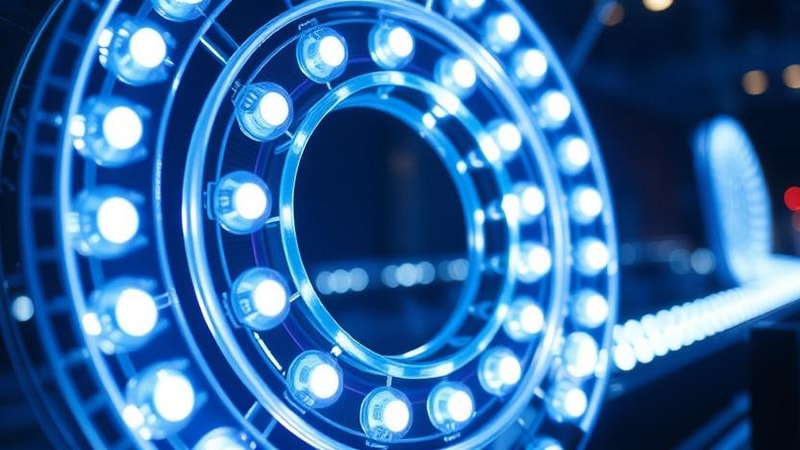
British scientist H.J. Round in 1907 discovered electroluminescence in silicon carbide. This discovery laid the groundwork for LED technology. However, practical applications went undiscovered until 1962.
When Nick Holonyak Jr. created the first red LED. This accomplishment signaled the start of solid-state lighting. Thus paving the path for broad innovation.
In the 1990s great work was done to advance high-power LEDs. Shuji Nakamura’s creation of blue LEDs made it possible to produce white LED lights.
Thus changing the lighting business. This discovery made it practical for general illumination. Hence resulting in their widespread adoption throughout industries.
LEDs were first restricted to indicator lights, electronic displays, and small-scale applications. This was due to their poor brightness and limited color possibilities.
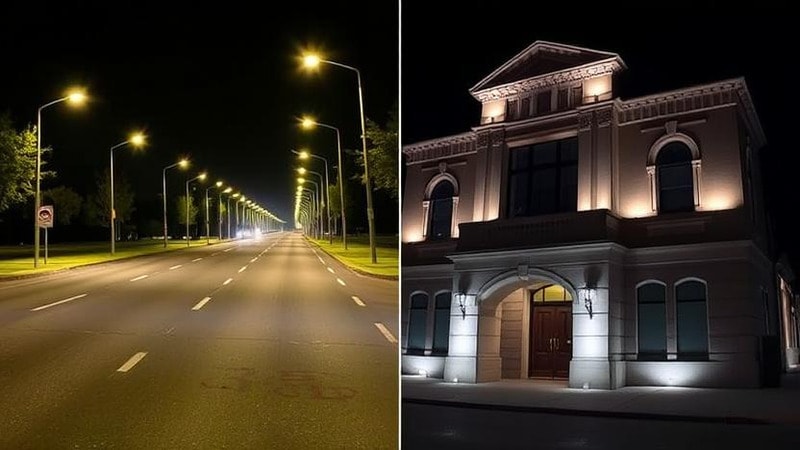
However, with time, brightness, efficiency, and color rendering improved. Thus, LEDs evolved from specialized to mainstream lighting solutions in commercial, industrial, and residential settings.
Today, they are utilized in streetlights, automobiles, business buildings, and even smart homes.
Modern LED technology has advanced significantly, setting the norm for energy-efficient lighting. Major advancements in the LEDs used in lighting include:
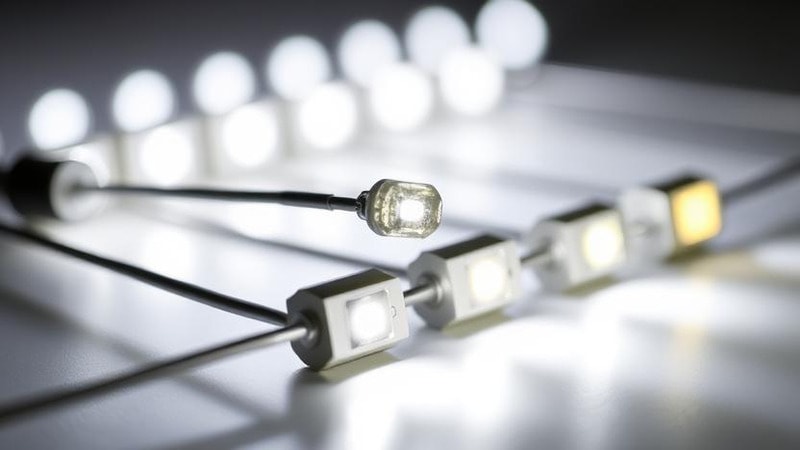
These advancements established LED light bulbs as the premier alternative for long-lasting, high-performance lighting.
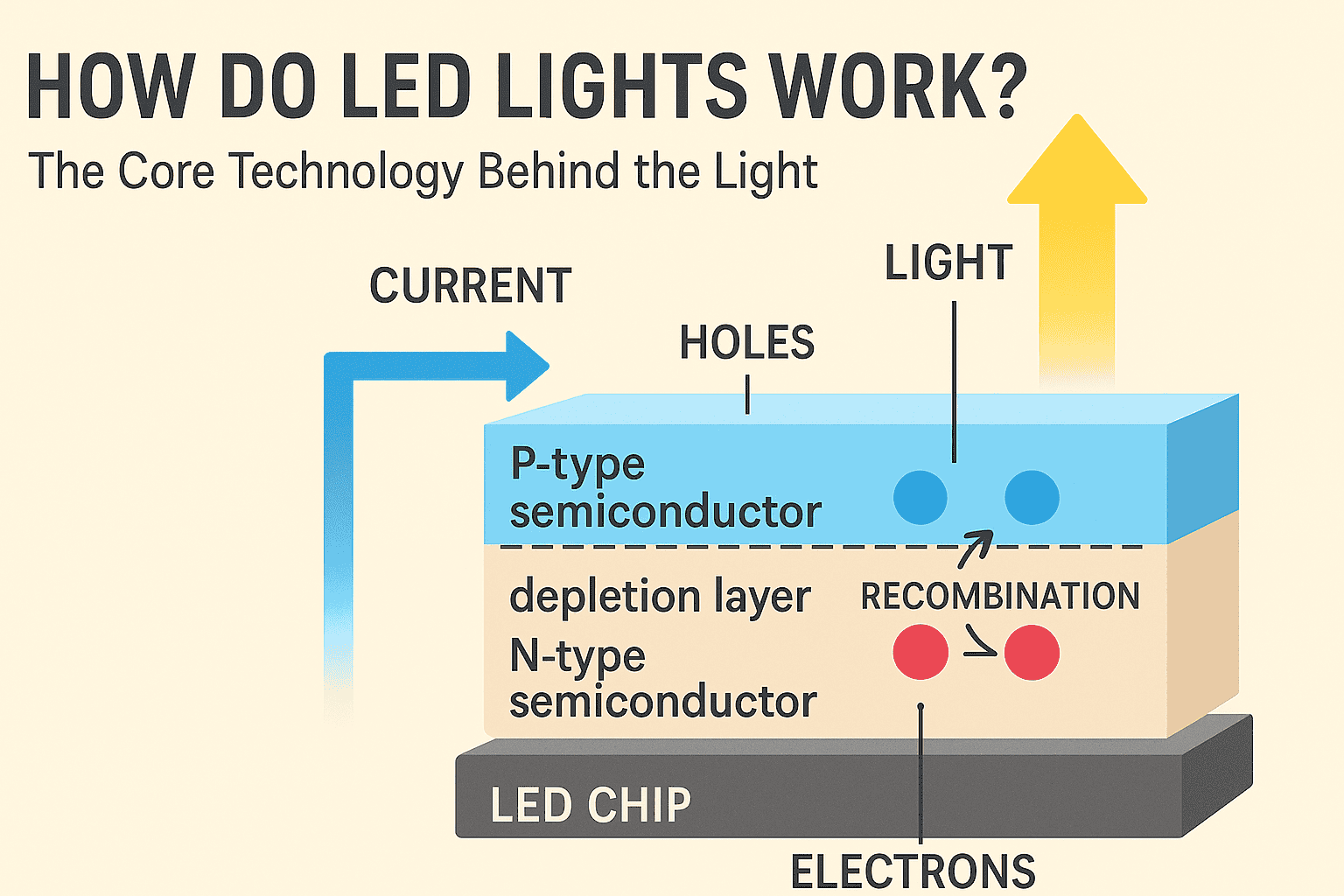
LEDs work on the principle of electroluminescence, which is the conversion of electrical energy into light. LED light bulbs generate light directly from a semiconductor.
Unlike incandescent bulbs, which rely on heated filaments. And fluorescent lights, which employ gases and mercury vapor. This novel approach makes LEDs substantially more energy-efficient and durable.
Every LED contains a semiconductor chip. This chip is commonly comprised of gallium nitride (GaN) or other compound semiconductors.
When an electric current flows through the LED, it excites electrons within the material, causing them to change energy levels. This movement provides light while producing very little heat loss. Thus making LED bulbs extremely efficient.

Imagine a waterfall: electrons are like the water drops at the top (high energy state). When they fall, they emit energy. However, in LEDs, this energy is released as light rather than heat.
An LED contains two layers of semiconductor material:
When an electrical current is provided, electrons transfer from the N-type layer to the P-type layer. As electrons fill these “holes,” they emit energy in the form of photons.
The result is the visible light spectrum. The lighting products are defined differently based on the semiconductor materials. You can opt for an LED that physically resembles familiar light.
Unlike incandescent bulbs, LEDs can be configured to provide a wide range of color temperatures. These include warm white (2700K) and cool daylight (6500K).
This is accomplished by changing the semiconductor composition. It can also be done by using phosphor material coatings to alter the radiated wavelengths.
Furthermore, LEDs are far more energy-efficient than traditional lights. They convert approximately 90% of the energy into visible light. On the other hand, incandescent bulbs release 90 percent energy as heat.
This efficiency translates into lower electricity usage and a longer lifespan. This makes LEDs an excellent choice for both household and commercial lighting applications.
The proper LED lighting depends on your specific requirements. Whether for small gadgets, commercial settings, or industrial applications. Here we’ve broken down the most common forms of LED technology and their applications.
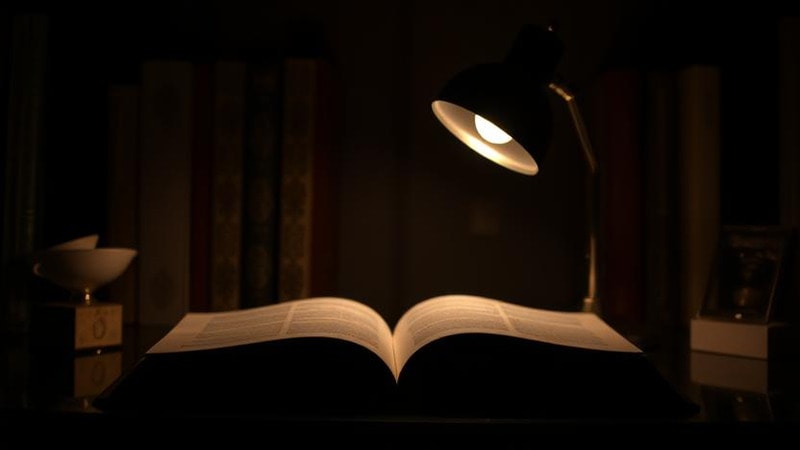
Standard LEDs are the most basic sort of light-emitting diode, and they are widely used in small-scale devices. They are employed as indicator lights in appliances, digital displays, and signage.
Because of their low power consumption and small size, they are perfect for applications that require a small amount of light.
Surface-mounted device (SMD) LEDs are popular due to their great brightness. They also have a small construction. These LEDs are directly installed on a circuit board, making them perfect for use in LED strips, retail lighting, and backlit displays.
Their versatility and energy efficiency make them a popular choice for both decorative and functional lighting.
Chip-on-board (COB) LEDs are designed for high-intensity illumination and provide more light in a small space. They are often utilized in warehouses, factories, and big commercial environments.
These places require bright, homogeneous lighting. Their great efficiency and ability to eliminate glare make them ideal for industrial and high-performance applications.
Efficiency: SMD and COB LEDs produce more lumens per watt than conventional diodes.
Cost-effectiveness: Standard diodes are the least expensive. Whereas COB LEDs have a higher initial cost but provide greater light.
Size and application: Standard diodes are ideal for small-scale applications. SMDs for flexible and decorative lighting, and COBs for high-intensity commercial lighting.
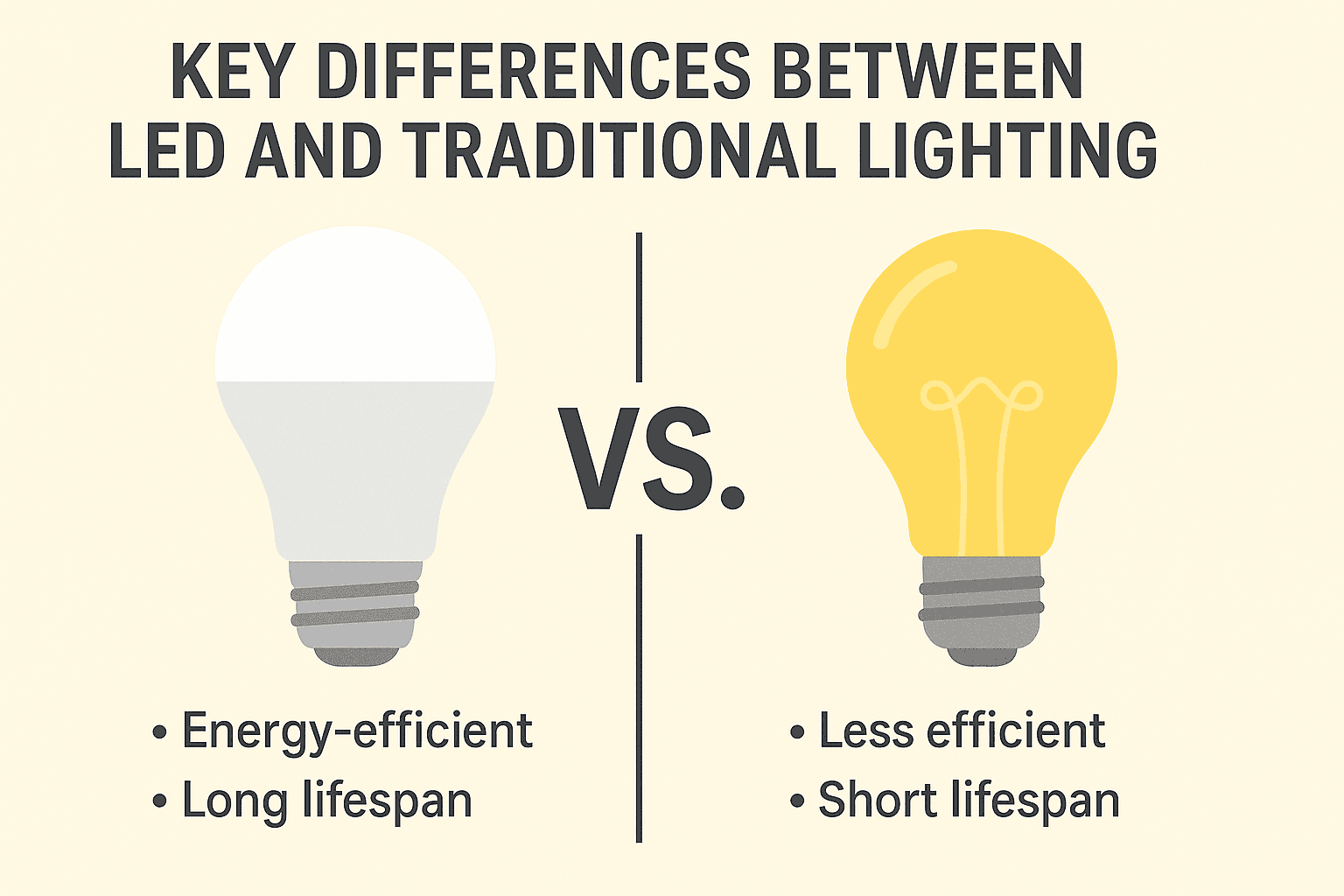
LED technology has transformed the lighting business. By providing energy-efficient, long-lasting, and focused lighting options. LEDs use less energy and give superior illumination. Unlike classic incandescent or compact fluorescent CFL.
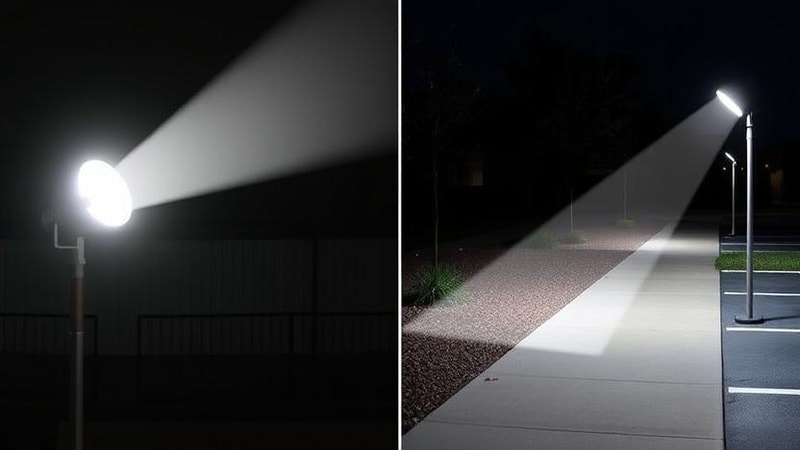
One of the key advantages of LEDs is their directional lighting capability. Unlike typical light bulbs, which emit light and heat in all directions, LEDs focus light in a specific direction, reducing light loss and increasing efficiency.
This makes them excellent for task lighting, spotlights, and industrial applications requiring precision illumination.
LEDs consume far less energy than incandescent lamps while generating the same or better brightness. LEDs turn the vast majority of their energy directly into visible light.
LEDs’ efficiency allows them to last up to 25 times longer than incandescent bulbs and three to five times longer than compact fluorescent lighting CFLs, resulting in decreased replacement and maintenance costs.
LEDs create white light by combining multiple colored LEDs (red, green, and blue) into a recognizable white hue. This method gives you more flexibility over color temperature, allowing for warm, cool, and daylight changes.
| Feature | LED Lighting | Incandescent Bulbs | CFL (Compact Fluorescent) |
|---|---|---|---|
| Energy Efficiency | Uses 80-90% less energy | Least efficient, wastes 90% as heat | More efficient than incandescent but less than LEDs |
| Lifespan | 25,000 - 50,000 hours | 750 - 2,000 hours | 8,000 - 15,000 hours |
| Heat Emission | Minimal heat production | Very high heat emission | Moderate heat emission |
| Brightness | Instant full brightness | Instant full brightness | Takes time to warm up |
| Durability | Shock-resistant, solid-state | Fragile, glass filament | Fragile, glass tubing |
| Environmental Impact | Eco-friendly, no mercury | High energy waste | Contains mercury, requires special disposal |
| Upfront Cost | Higher initial cost, but long-term savings | Low initial cost, frequent replacements needed | Moderate cost, but less durable than LEDs |
Fluorescent lighting is a popular choice for workplaces, warehouses, and commercial facilities due to its energy efficiency and affordability. The light output of fluorescent bulbs is controlled by phosphor coatings within the tube.
The phosphor-electricity reaction generates ultraviolet UV light. Which is then converted into visible light. This procedure uses multiple color temperatures, measured in Kelvin (K), to produce a distinct shade of white light.
Fluorescent lights are often divided into three color ranges: warm white (2700K-3000K), cool white (3500K-4100K), and daylight (5000K-6500K).
While these give useful lighting alternatives, the color accuracy and consistency could decrease over time owing to phosphor degradation, resulting in flickering or fading.
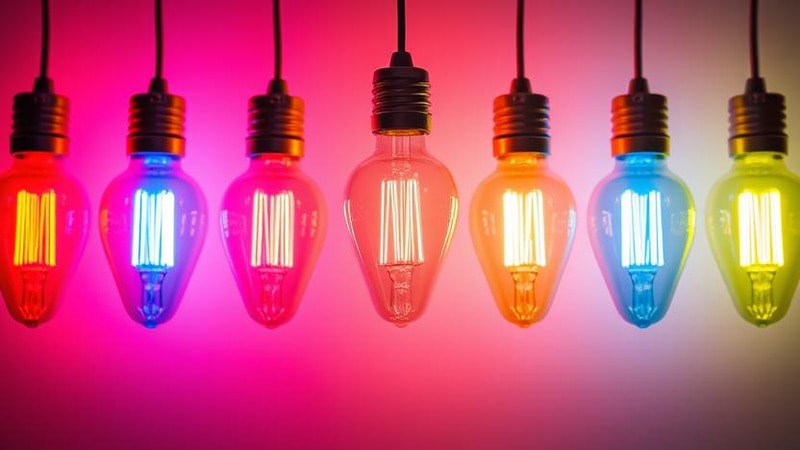
Furthermore, fluorescent bulbs lack accurate color control, making them less suited to modern lighting requirements.
LEDs provide remarkable color versatility due to their semiconductor-based construction. Instead of relying solely on phosphor coatings, LEDs achieve a wide range of colors by emitting light directly from various semiconductor materials or using phosphor conversion processes to produce white light.
This provides steady, high-quality illumination that is stable throughout time. One of the most significant advantages of LED technology is its ability to create a diverse spectrum of colors, including RGB (Red, Green, Blue) possibilities.
RGB LEDs are great for ambient, dynamic, and decorative lighting applications because they can create millions of color combinations by combining primary colors, unlike fluorescents, which are only able to produce preset color temperatures.
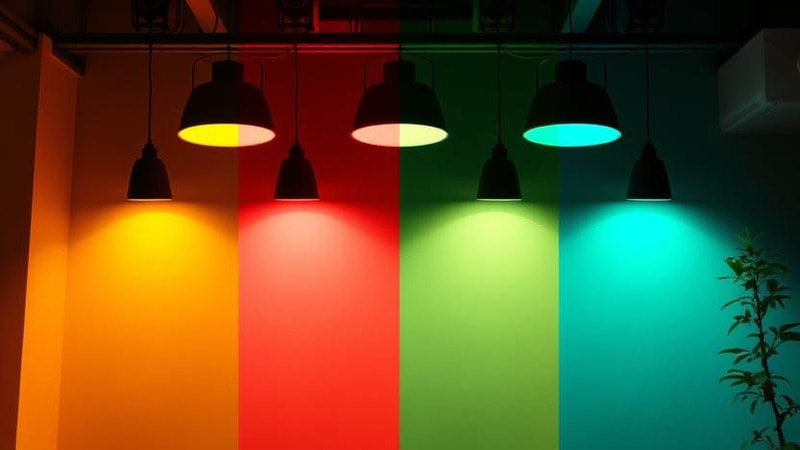
Furthermore, LEDs are smart lighting compatible, allowing users to control brightness, alter colors, and program lighting effects via remote controllers or mobile apps.
It is extremely important to choose the right lighting for your project. The shade, angle, and type of light dispersion can have a significant impact on the final look of the space.
These factors also impact the functionality and appeal of the project. Here is how to choose the right LED lighting for your project.
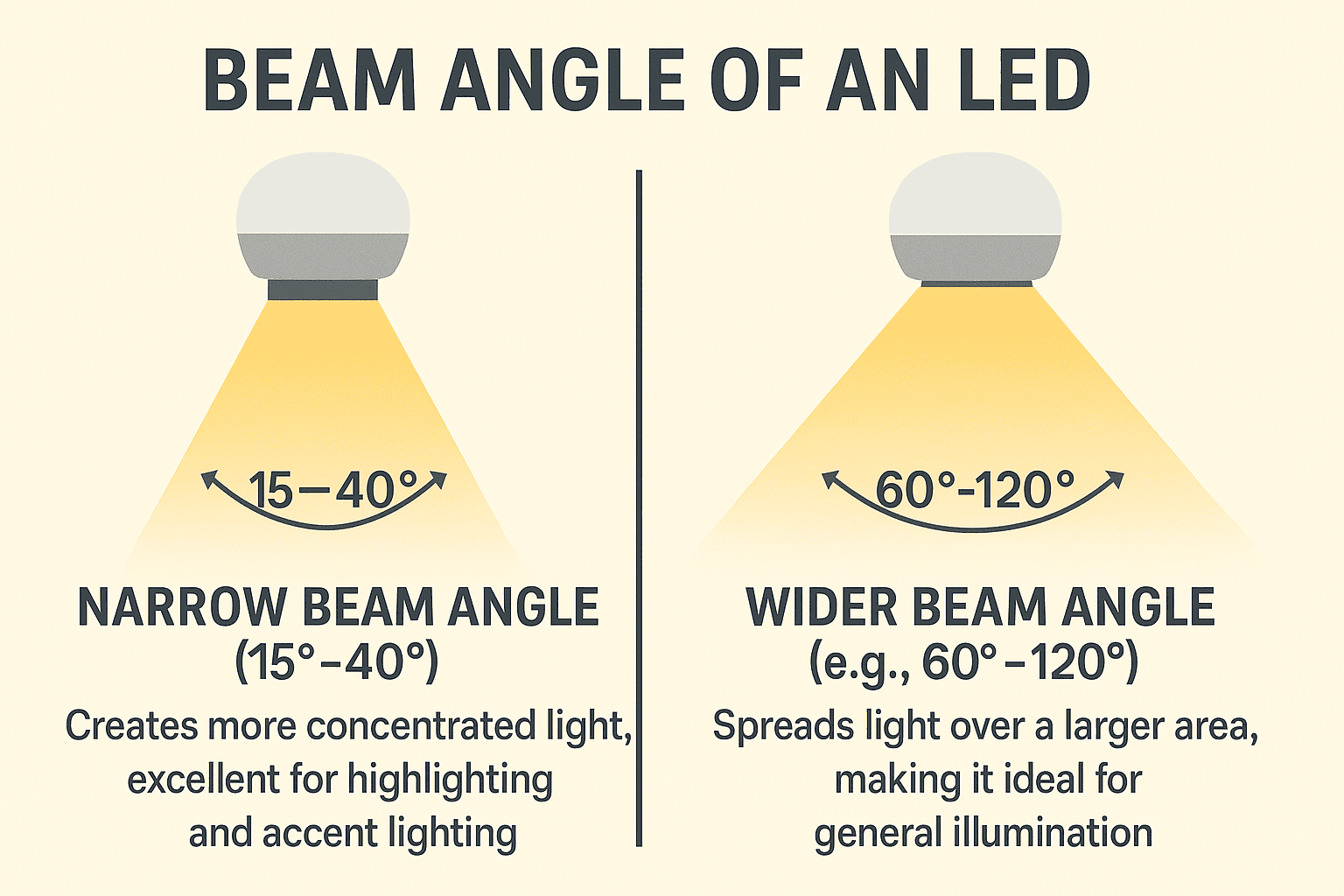
The beam angle of an LED controls how widely or narrowly it distributes light. A narrow beam angle (15°-40°) creates more concentrated light, making it excellent for highlighting and accent lighting in retail displays or art galleries.
A wider beam angle (e.g., 60°-120°) spreads light over a larger area, making it ideal for general illumination in offices, warehouses, and big commercial buildings.
Choosing the proper beam angle is critical for maximizing visibility, decreasing glare, and improving the overall vibe of an area.
Proper lighting distribution is necessary for both aesthetics and functionality. Uneven illumination can create shadows, hotspots, and dark zones, affecting vision and comfort. LEDs are intended to provide consistent light dispersion.
Choosing LEDs with diffused lenses or reflectors helps to maintain uniform light levels throughout a space, reducing eye strain and increasing productivity in work settings.
A light source’s ability to create colors in comparison to natural daylight is measured by the Color Rendering Index (CRI). LEDs with a CRI of 80 or above are best suited for workplaces, homes, and general applications.
Whereas CRIs of 90 or more are suitable for retail establishments, photography studios, art galleries, and medical facilities where color accuracy is essential.
A high CRI guarantees that colors appear vibrant and true to life, making products more appealing in retail settings and boosting visual clarity in offices.
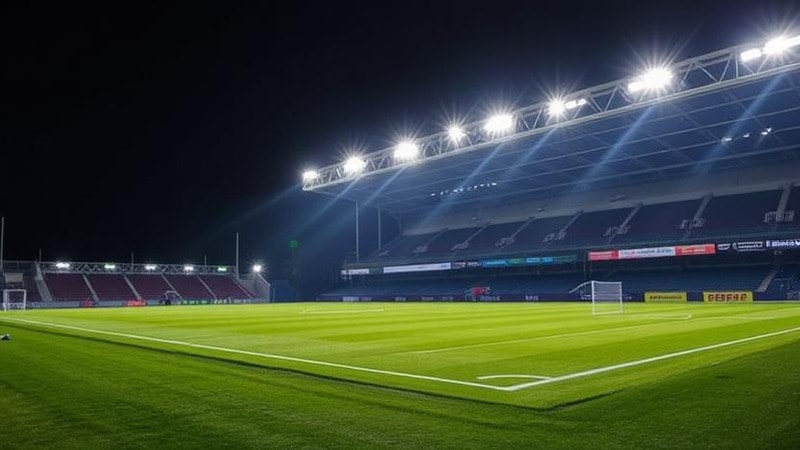
LED lighting’s long lifespan and low energy consumption are two of its biggest benefits. LEDs significantly reduce electricity costs by using up to 80% less energy than conventional lighting.
Businesses can assess their return on investment (ROI) by comparing upfront LED installation expenses to long-term energy savings.
Furthermore, several government incentives and rebates encourage businesses to adopt energy-efficient lighting solutions, which increases cost-effectiveness.
Invest in high-quality products by buying from a company that has received the ENERGY STAR certification. These items undergo extensive testing to guarantee that they fulfill efficiency, brightness, and performance specifications. ENERGY STAR-certified bulb LEDs.
Choosing ENERGY STAR-certified LEDs allows you to minimize your carbon footprint, save power bills, and contribute to a more sustainable future.
LED technology has changed the lighting business by providing unparalleled energy efficiency, durability, and diversity. LEDs are a cost-effective and sustainable lighting solution.
They can be used for residential, commercial, and industrial applications. They are capable of lowering energy usage and maintenance expenses. Their adjustable color temperatures and improved light quality make them the favored option for modern lighting applications.
As a reputable manufacturer with more than 15 years of expertise. Risun Corp specializes in cutting-edge LED solutions that improve efficiency and performance.
Our high-quality LED products meet industry requirements and give long-term value to organizations, businesses, and wholesalers across multiple industries.
Are you looking to update your lighting system? Schedule a free consultation to find the ideal lighting solution for your requirements!
A. LEDs utilize up to 80% less energy and last much longer than incandescent bulbs. Thereby lowering electricity bills and maintenance costs.
A. There are many different types of LEDs, such as COB LEDs, SMD LEDs, and ordinary diodes. Each is designed for a specific application such as accent lighting, retail displays, and industrial use.
A. Yes, weather-resistant and waterproof LEDs are available for outdoor applications. They can be used in streetlights, security lighting, and landscape lighting.
A. No, LEDs do not emit UV light or radiation or excessive heat. Thus making them safer than traditional lighting. Choosing warm or neutral color temperatures can also help alleviate eye strain.
A. You have to consider factors such as beam angle, color temperature, CRI, and lumens. These considerations ensure that the LED light fits your aesthetic and practical requirements.
Are you wondering which light type to choose for your project? Fluorescent lighting is a popular and energy-efficient option for various lighting needs in homes, businesses, and commercial spaces.
In this guide, we’ll explore the types of fluorescent lights, how they work, their benefits and drawbacks, and the best use cases to help you make an informed lighting choice for your space.
A fluorescent lamp is also known as a fluorescent tube or bulb. It is a gas-discharge lamp that generates visible light by fluorescence. It’s composed of low-pressure mercury vapor.
The vapor emits ultraviolet UV light when activated. The ultraviolet light interacts with a phosphor coating inside the tube. Thus transforming it to visible light.

Fluorescent lamps are far more efficient than incandescent bulbs. They have a luminous efficacy of 50-100 lumens per watt. Because of their high efficiency, they are used as general lighting in office spaces, industrial, and residential applications.
While LEDs have outperformed fluorescent lamps in terms of energy savings. They continue to be widely utilized due to their low price as well as their reliability.
A fluorescent light bulb is a gas-discharge lamp that produces light by fluorescence. It is made up of a sealed glass tube filled with mercury vapor and inert gases. The tube also has a phosphor fluorescent coating inside. When electricity flows through the gas, it produces ultraviolet radiation.
The UV photons act as the light source. When they react with a phosphor coating, they are converted into visible light. The common incandescent bulb generates light by heating a filament. Fluorescent lights produce light more effectively while remaining cooler.
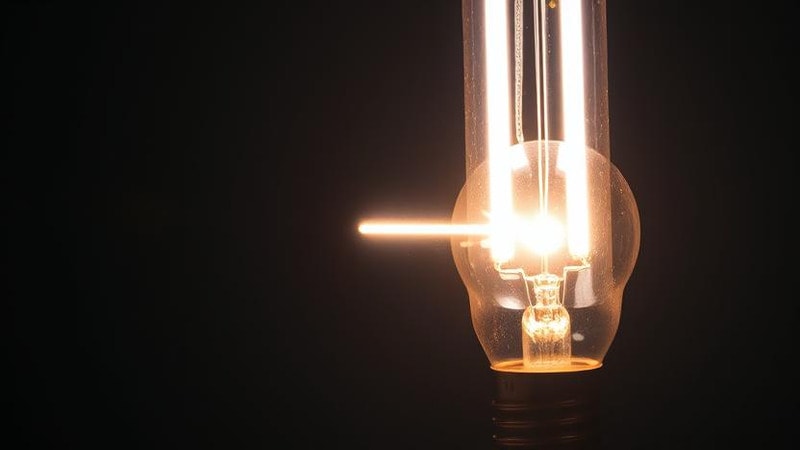
Compared to LEDs, fluorescent lights consume more energy and have a shorter lifespan. Yet they are still commonly used in workplaces, schools, and commercial settings due to their low cost.
The process of light generation from a fluorescent lighting fixture is not that complicated. Electronic ballasts are used to pass an electric current. As you turn on the power, a current of set voltage passes through mercury atoms sealed inside the tube.
The excited electrons emit ultraviolet light. This UV light is invisible to the human eye. However, when they react with the phosphor coating, a visible light with full brightness is emitted.
These bulbs can emit light in a variety of color temperatures. This chance depends on the type of phosphor used in the bulb. Some phosphors produce a cool white light.
While others create a warmer, yellowish glow, this method allows fluorescent lamps to produce bright, energy-efficient illumination with minimal heat output.
This interaction produces visible light. However, unlike incandescent lights that work by heating a filament, fluorescent lamps work efficiently by using this chemical reaction, which produces much less heat.
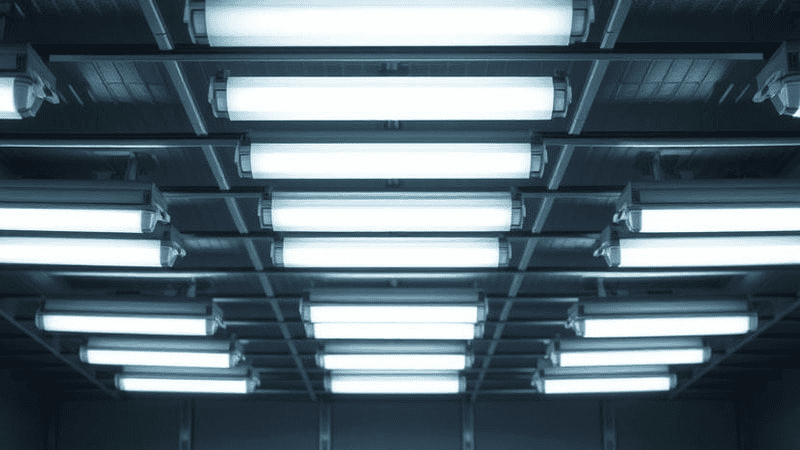
Fluorescent lamps are made up of several critical components. All of which work together to produce light effectively. The main component is the glass tube or bulb.
It contains a small amount of mercury vapor as well as an inert gas like argon or krypton. The color of the emitted light is determined by the phosphor coating on the tube’s inner walls.
The term “fluorescence” is derived from the mineral fluorite, which produces a similar luminous effect. The structure also contains a cathode and an anode for electrical conduction. The system relies on ballast for a consistent electrical supply.
Fluorescent lighting is classified into several varieties, each of which is best suited for a specific use. The two major types are linear fluorescent tubes and compact fluorescent lamps (CFLs).
The linear fluorescent tubes are large, cylindrical tubes. These are often utilized in business environments, including offices, schools, and warehouses. They give brilliant, even illumination and are commonly found in overhead fixtures such as troffers.
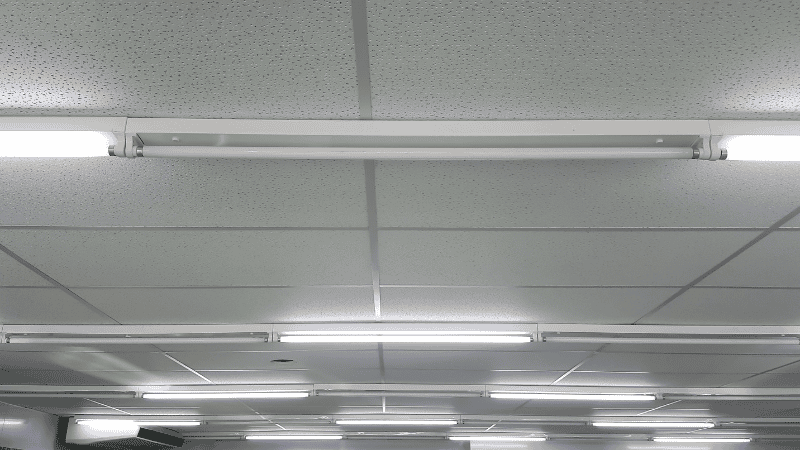
Compact fluorescent bulbs or lamps are tiny fluorescent lights that fit into ordinary incandescent sockets. They come in a variety of shapes, including twin tube, triple tube, and circular variants.
CFLs utilize around one-third of the energy of incandescent bulbs. Thus making them an affordable option for home and business lighting projects.
Fluorescent lighting is the go-to option for high-ceiling environments such as warehouses, retail stores, offices, and schools due to its energy efficiency and long lifespan.
For instance, T5 and T8 fluorescent tubes are commonly used in offices to provide bright and even lighting, while CFLs are often used in home lighting fixtures.
Fluorescent lighting is the preferred option because it provides savings and low initial expenditure. Fluorescent lights consume less energy than incandescent bulbs while giving more brightness. This makes them perfect for big indoor lighting with extended operation hours.
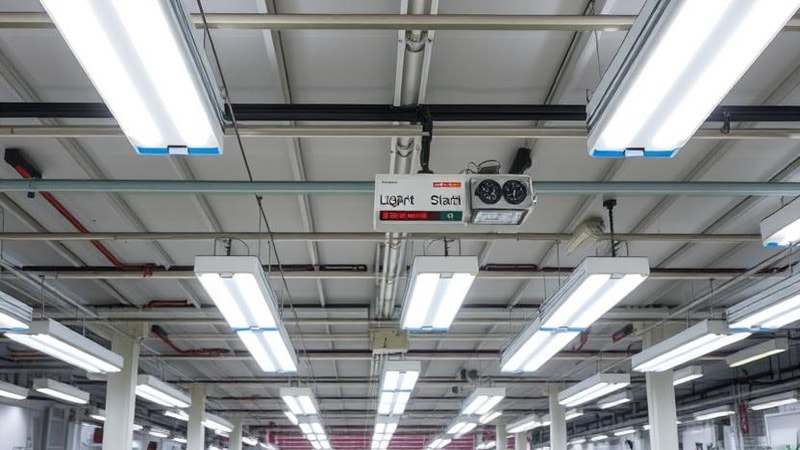
Fluorescent bulbs are also utilized in educational institutions, parking garages, and supermarkets to improve visibility and safety through efficient illumination.
Fluorescent lights are not the most advanced option for lighting available on the market. However, they do have their pros and cons. Let’s explore their advantages and disadvantages so you can make an informed decision for your business.
Fluorescent lights are highly energy-efficient, consuming up to 75% less energy than incandescent lights. Their long lifespan lowers maintenance and replacement expenses.
They offer a wide range of color temperatures, from warm to cool lighting, making them versatile for various environments, such as perfect for offices, schools, and large commercial settings.
One significant disadvantage is their environmental impact. Fluorescent bulbs contain mercury, which can be deadly if damaged or incorrectly disposed of. The initial cost is also more than incandescent bulbs, but the long-term benefits outweigh the cost.
In addition, some people prefer the warm glow of classic lights to the cool light of fluorescent bulbs. They can experience color shifting over time, affecting the brightness and consistency of the lighting.
Fluorescent lighting is a common choice, but how does it compare to other lighting options? Let’s look at the differences between LED and incandescent lights.
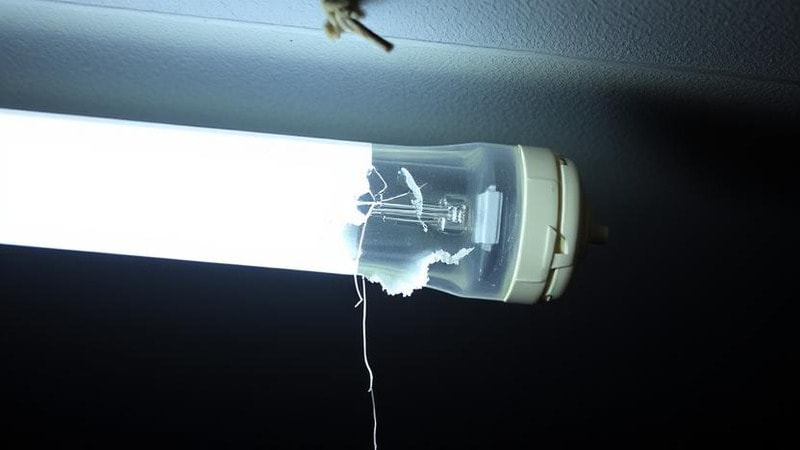
LEDs use 50% less electricity than fluorescent lamps, making them a more energy-efficient option. LEDs also live far longer, often 50,000 hours or more. As opposed to 10,000–15,000 hours for fluorescent lights.
Furthermore, LEDs do not contain mercury, making them an environmentally friendly option. All in all, switching from fluorescent to LED might be beneficial.
Fluorescent bulbs consume 75% less energy than incandescent bulbs, making them an economical choice for companies and homeowners.
However, incandescent bulbs emit a warmer light and contain no harmful elements, such as mercury. Fluorescents last 8–10 times longer than incandescent bulbs, resulting in lower replacement costs.
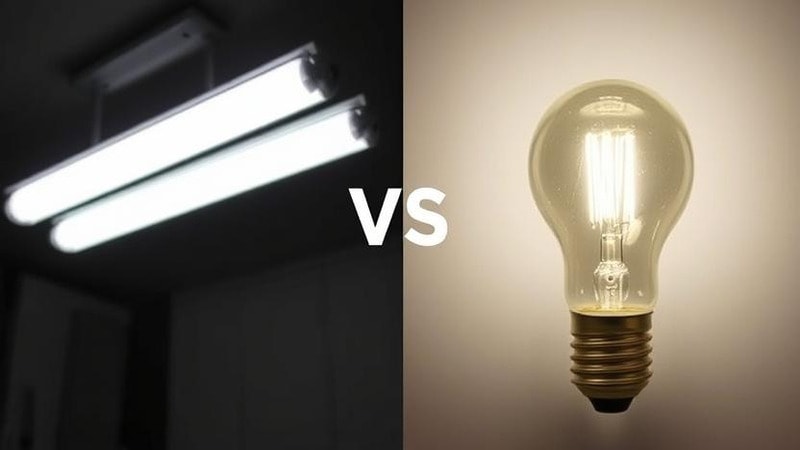
Fluorescent bulbs are widely utilized in companies, retail establishments, warehouses, and even some households. However, because they contain mercury, they must be handled with caution and disposed of properly.
Using certified recycling services promotes safe and environmentally responsible disposal of fluorescent lights.
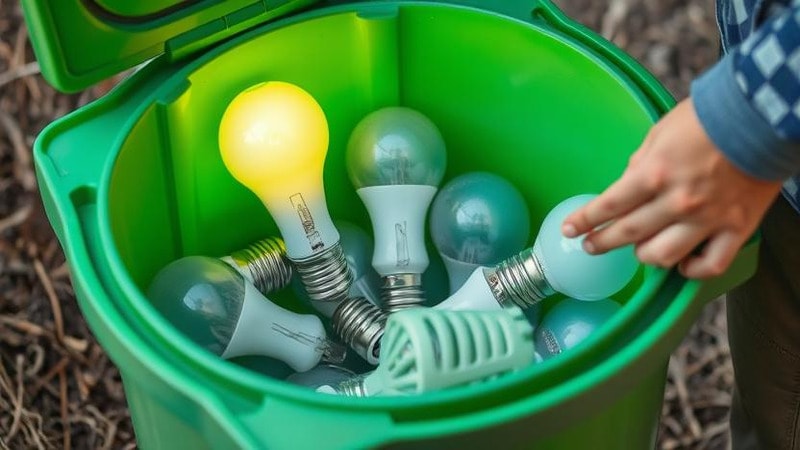
Fluorescent lighting is still a cost-effective and energy-efficient option for businesses and commercial spaces. They are perfect for businesses, warehouses, and retail establishments since they last longer and consume less energy than incandescent bulbs.
However, due to the high mercury level, careful disposal and recycling are required. Understanding the benefits and applications of fluorescent lighting will allow you to make informed lighting decisions.
As the lighting industry continues to evolve, you must stay ahead by choosing lighting solutions that balance efficiency, longevity, and sustainability. At Risun Corp., we specialize in high-quality fluorescent lighting solutions tailored for commercial and industrial needs.
Considering fluorescent lighting for your next project? Contact us for personalized advice on selecting the right lighting solution for your commercial or residential needs to improve your business.
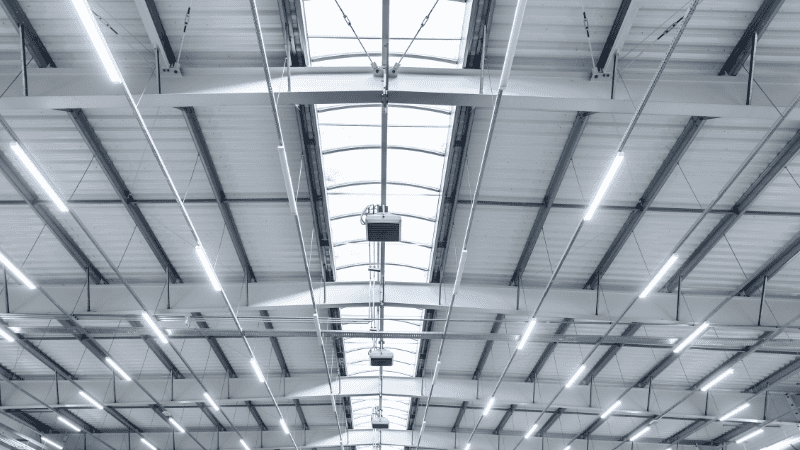
A. Fluorescent lamps work by passing an electric current through mercury vapor inside a glass tube. This process generates UV light, which then excites the phosphor coating on the tube’s inner surface, producing visible light. The ballast regulates the current to maintain a steady light output.
A. It offers higher energy efficiency than incandescent bulbs. Moreover, it lasts 8–10 times longer than regular bulbs, thus reducing replacement costs. It provides bright and even light with consistent, high-lumen output, ideal for workspaces and large areas.
A. The mercury content is the most significant drawback of fluorescent lighting. Because of this, the bulbs require special disposal. Some models may flicker or take time to reach full brightness. Moreover, the light emitted can feel harsh compared to warm incandescent lighting.
A. Fluorescent lamps should be disposed of through certified recycling programs to prevent mercury contamination.
Many hardware stores, municipal waste facilities, and specialized recycling centers accept fluorescent bulbs for proper disposal. Never throw them in regular trash to avoid environmental hazards.
Are you trying to enhance the ambiance of your living room? Adopting a new ceiling light might be the best way to go about it. Whether you’re looking for a cozy atmosphere, modern, or luxurious feel, the right fixtures can make all the difference.
Ready to brighten up your space? From statement chandeliers to minimalist recessed lighting, let’s explore all the ways you can uplift your living room space.
Lighting has the power to change the entire outlook of any room. In the case of living rooms, it is important to choose the right type of lighting.
The living room sets the tone for the entire house. The living room ceiling lights play a crucial role in setting the atmosphere.
The right living room lighting has the power to enhance the mood of the space. Any warm-toned soft lights will create a cozy and inviting environment. While bright and cool-toned lights will promote focus and energy.
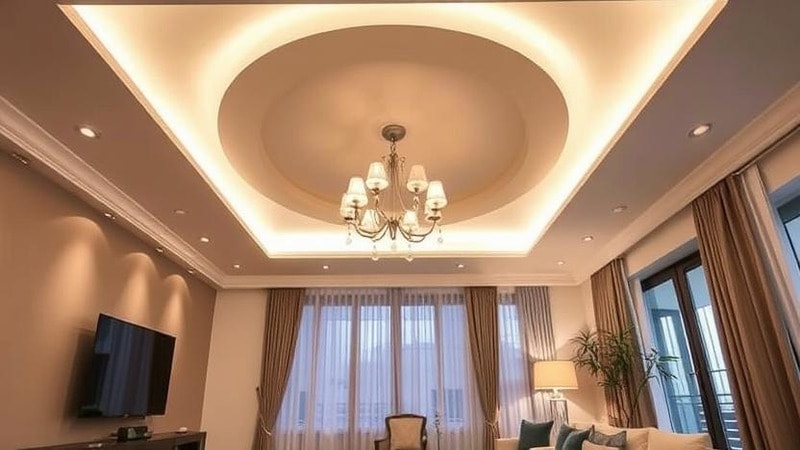
Beyond aesthetics, ceiling lights are essential components of living rooms due to their usability. They ensure even illumination across the room to aid in reading, entertaining guests, or watching TV.
A well-lit living room needs multiple sources of overhead lighting to create a balanced and functional environment. Understanding the importance of each type aids in creating a lighting scheme that meets both aesthetic and functional requirements.
General lighting offers consistent illumination across the living space. Thus reducing sharp shadows and creating a more comfortable atmosphere.
This type includes ceiling lamps, chandeliers, and pendant lights. These forms of lighting brighten the area and make it feel more open and inviting.
Recessed lights or LED panels are also often used in modern designs. They provide the illusion of extra space when used as living room light fixtures.
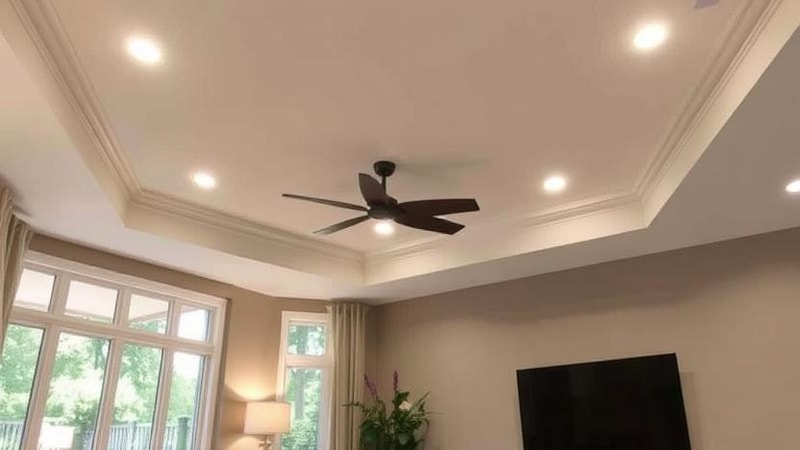
Task lighting provides targeted lighting. It is for specific activities such as reading, writing, or using a laptop. It reduces contrast and shadows in concentrated regions, preventing eye strain.
Some examples include desk lamps, floor lamps, and adjustable reading lights. Task lighting is used with ambient lighting to reduce contrast. Thus creating a visually balanced environment.
Mood lighting sets the tone for the space by providing a warm, inviting, and perfect ambiance. It involves soft, diffused lighting from decorative devices. Such fixtures include wall sconces, string lights, and table lamps. They reduce contrasts and add depth.
Ceiling lighting plays a crucial role in defining the ambiance and functionality of a living room.
From grand chandeliers to space-saving flush mounts, there are countless options to suit various interior styles. Below are some of the best ceiling lighting ideas to elevate your living space.
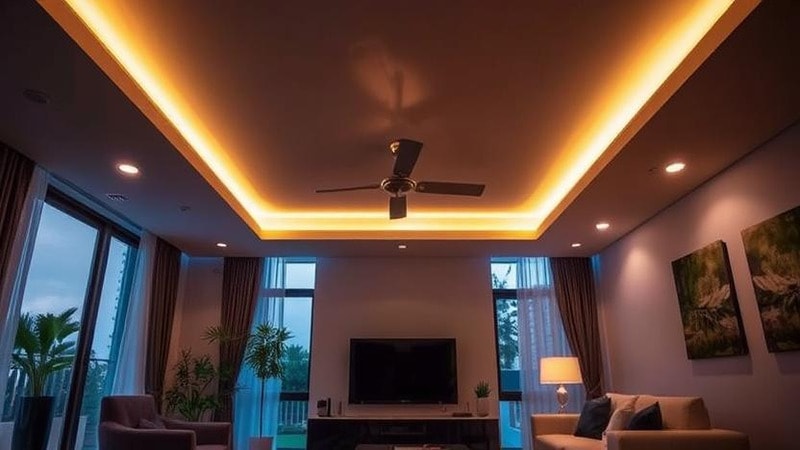
If you are looking to make a bold statement, eye-catching ceiling lights serve as both functional lighting and a centerpiece for the living room.
These fixtures draw attention, set the mood, and contribute to the overall design theme. They are the right way to light a room.
Chandeliers have long been a symbol of luxury and sophistication. They are perfect for high ceilings and spacious living rooms with multiple corners and large windows.
They create a grand focal point while offering ambient illumination. They are available in many styles, some of which include:
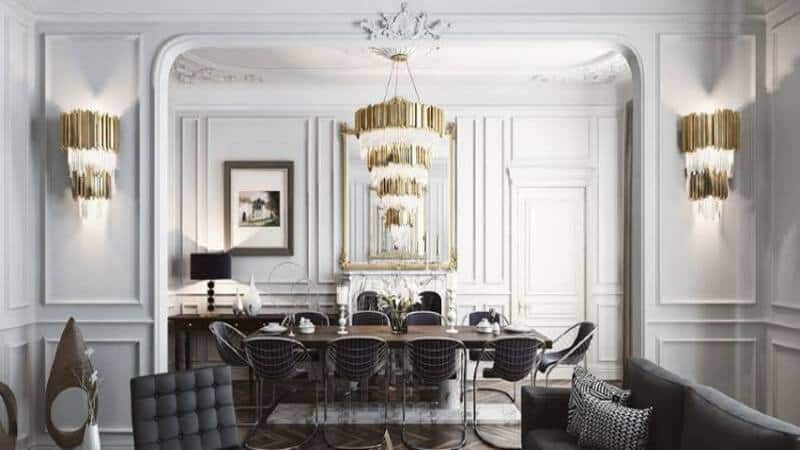
Chandeliers add character to any room, whether they are classic, modern, or minimalist. They are also available in brass, matte black, chrome, and brushed gold finishes.
Pendant lights are a great way to provide layered lighting to your living area. They are usually suspended from the ceiling. They give both direct and indirect lighting.
Thus making them excellent for seating spaces, coffee tables, and reading nooks. When installing pendant lights, place them 30-36 inches above tables or dining rooms for excellent illumination without blocking views.
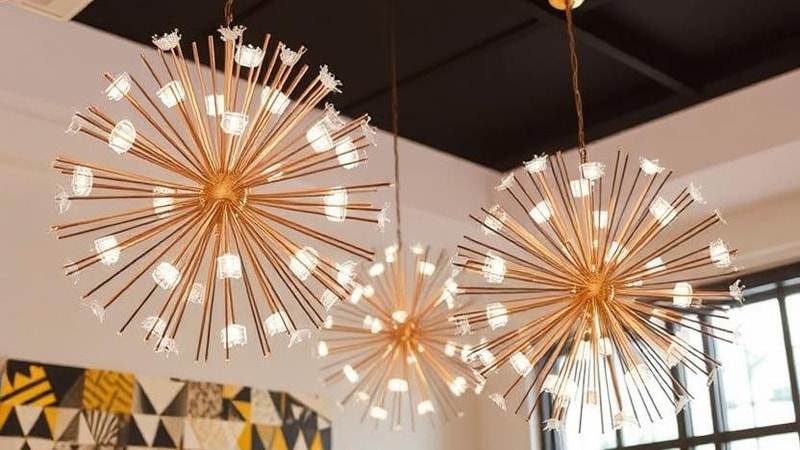
Here are three types of pendant-style lighting for your living space.
Lantern-style pendant lights create a calmer and pleasant atmosphere. They are made of paper, glass, or metal.
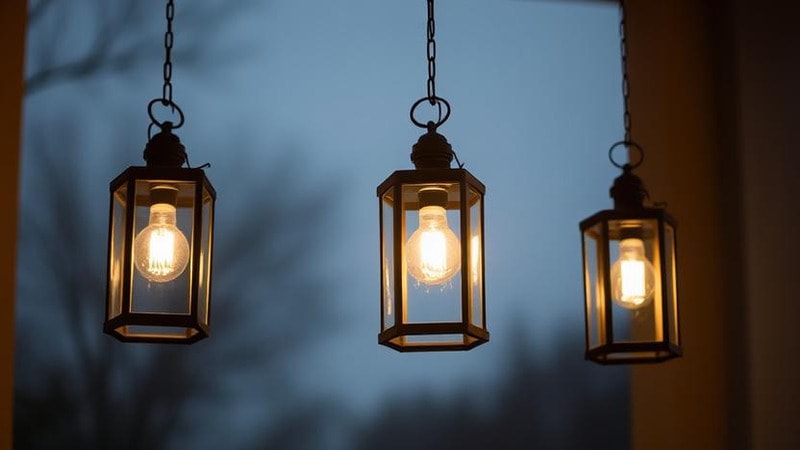
They emit a soft, pleasant glow that adds to the mood of a living area. They add a sense of individuality and vintage appeal to any area.
If your house does not have a high ceiling but you still want accent lighting. Then you need to consider these space-saving and practical ceiling light fixtures.
Flush mount and semi-flush mount fixtures are practical and beautiful lighting solutions for living spaces with low ceilings. These lights are located close to the ceiling. They deliver uniform brightness without taking up too much room.
Popular options include modern drum lights, LED-integrated fixtures, and frosted glass domes. All options blend nicely with contemporary and minimalist designs.
Semi-flush mounts, which extend slightly from the ceiling, provide greater dimension and decorative flair while being compact in form.
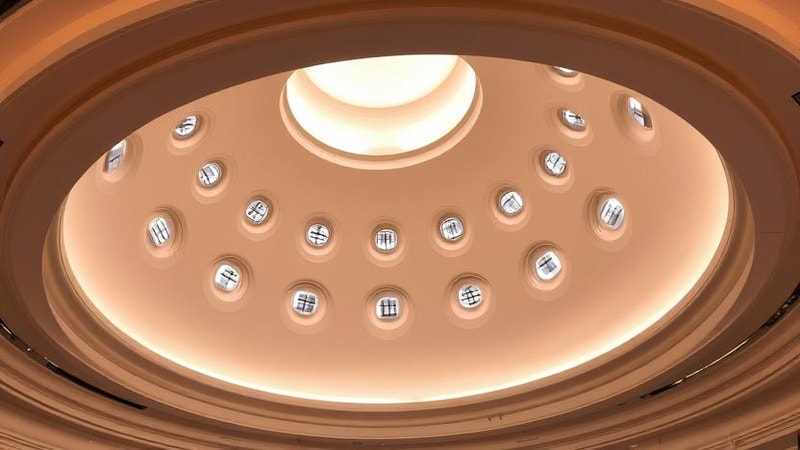
Dome ceiling lights are ideal for those who value understated elegance. These fixtures provide gentle, diffused illumination.
They provide light that is uniformly distributed throughout a room, making them perfect for small—to medium-sized living rooms.
Dome lights come in a variety of materials, including glass, metal, and fabric shades. They blend in with a wide range of décor types.
You can choose frosted glass for a warm glow. Or you can opt for metallic finishes for a sleek, modern appearance.
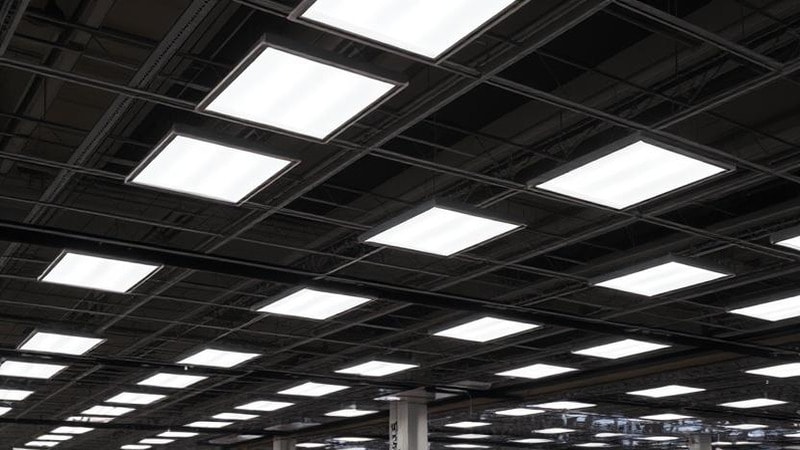
LED panel lights provide a stylish and elegant solution for modern living areas. These ultra-thin fixtures can be surface-mounted or recessed to provide a clean, flush look. LED panels are known for their energy efficiency and even light distribution.
They are an excellent choice if you are looking for a modern yet unobtrusive lighting system. They are available in square, rectangular, and circular shapes. They will fit perfectly with any modern or Scandinavian-style interior.
Modern living rooms require lighting that is both stylish and functional. Functional ceiling lights strike the ideal balance.
By providing targeted illumination while complementing contemporary homes. These lighting solutions improve utility without losing aesthetics.
Recessed lights, also known as can lights or downlights, are a sleek and modern choice. They are perfect if you desire soft, streamlined lighting. They provide a uniform spread of light when installed directly into the ceiling.
Also, do not require any visible fittings. Recessed lights are ideal for low ceilings or minimalist interiors, keeping the space open and clean.
To guarantee consistent brightness around the room, set them 4-6 feet apart. They work well when combined with other lighting sources, such as pendant lights or floor lamps, to create a multifaceted lighting effect.
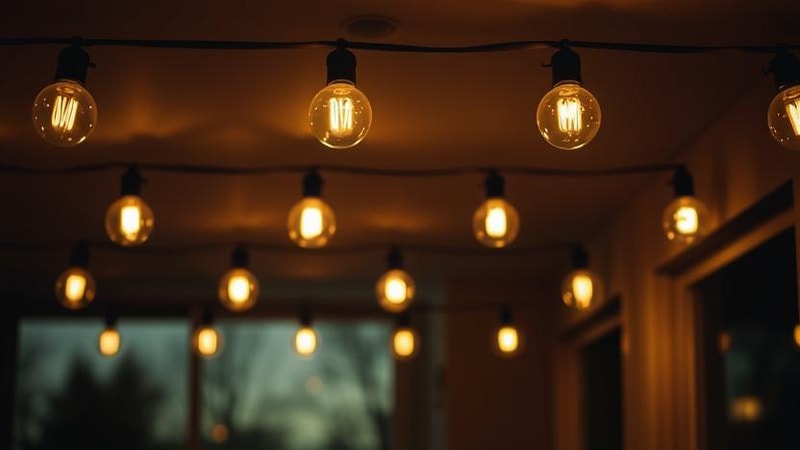
Track lighting is a great option for individuals who require directional and flexible lighting. It features many adjustable heads on a mounted track.
It is ideal for highlighting artwork, bookcases, or architectural details. Track lighting’s flexibility allows you to direct light exactly where it is required.
Thus making it excellent for open-concept areas. Track lighting is used in commercial and gallery settings because it can highlight displays and create focus points.
Ceiling fans with integrated LED lighting are ideal for homes in warmer regions. These dual-purpose lights provide ambient lighting while keeping the space cool. Thus, making them an excellent option for energy-conscious homes.
Many versions include dimmable lights and changeable fan speeds, allowing you to customize your comfort and efficiency.
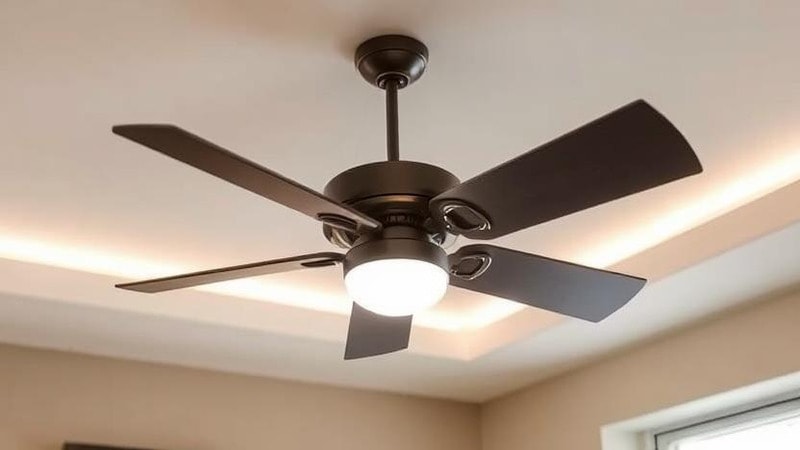
There are many ceiling lights that can be adapted for mood lighting or indirect lighting. These include;
Drop ceiling lighting is also known as recessed cove lighting. It simulates a floating ceiling by inserting LED strips within the fake ceiling construction.
This hidden lighting approach creates a mellow, diffuse glow. It adds to the room’s ambiance without causing glare. Warm white LEDs are recommended for a friendly and inviting ambiance. While cool white LEDs create a more modern, high-contrast style.
Skylight-style LED panels provide an innovative alternative for homes that lack natural lighting. These panels imitate the effect of a real skylight. They allow for adjustable brightness and color temperature, giving the appearance of natural sunshine.
Advanced models can also imitate the changing colors of the sky throughout the day. Thus, encouraging a better sleep-wake cycle by synchronizing with natural circadian rhythms.
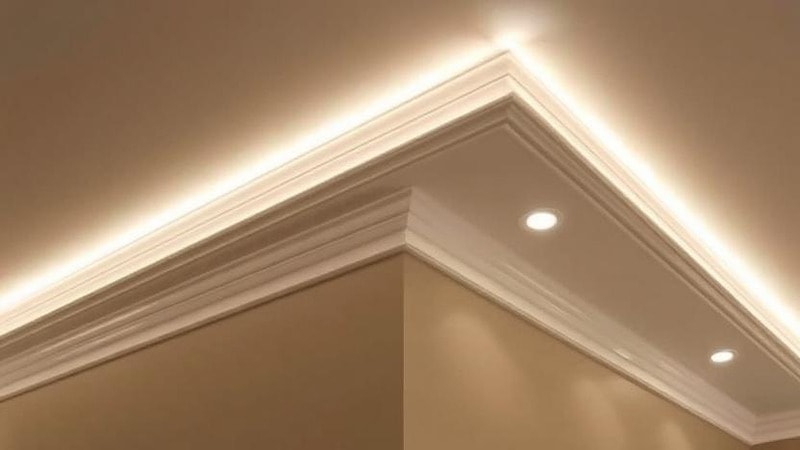
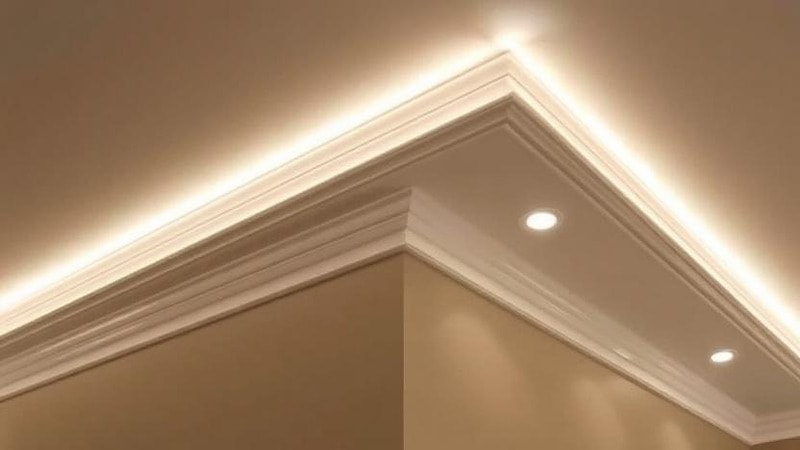
Cove lighting is a smart approach to provide ambient lighting without exposing different light sources. Placing LED strip lights around crown molding or recessed ceiling borders generates a diffused, soothing glow that improves the overall look of a room.
To get the greatest results, utilize dimmable LED strips with varying color temperatures to suit different moods and events.
Smart RGB ceiling lights take personalization to the next level. They allow you to control and adjust colors and brightness via mobile apps.
Even voice assistants like Alexa and Google Home can have access to the lights. These fixtures are ideal for creating various moods depending on your style.
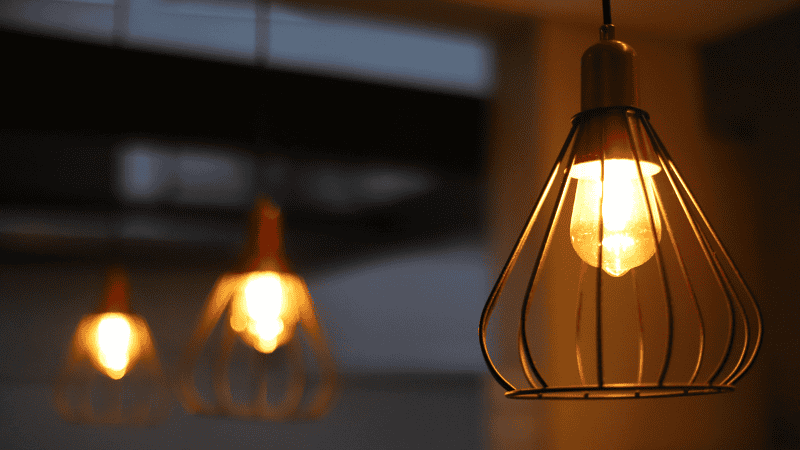
Industrial pipe lighting makes an excellent alternative for loft-style and urban-themed living spaces. These fixtures feature exposed metal pipes, Edison bulbs, and rustic finishes. They reflect the raw, vintage beauty of converted warehouse areas.
Industrial pipe lighting is commonly installed as chandeliers or track-style installations. They complement spaces with exposed brick, concrete, or reclaimed wood accents.
Geometric LED fixtures have a futuristic appearance and are ideal for cutting-edge architectural design.
These lights are available in eye-catching designs, including hexagons, squares, and interlocking rings. They provide harmony and sophistication to minimalist interiors.
Many designs use integrated LED strips, which improve both energy efficiency and endurance.
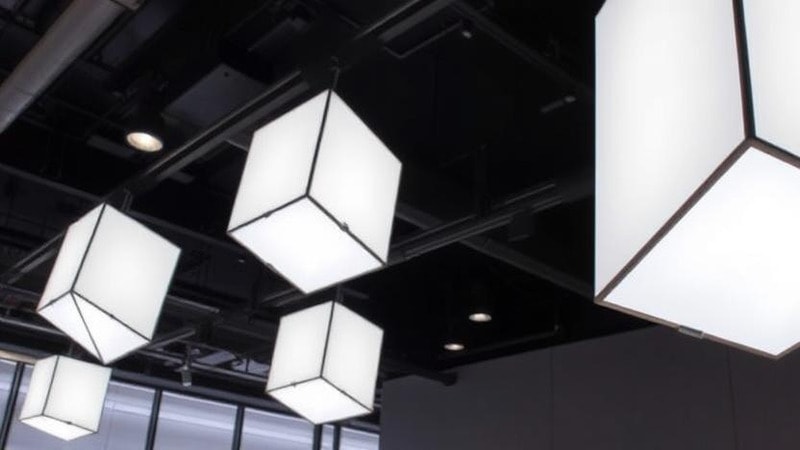
Decorative lighting solutions improve the aesthetics of a room. They feature unique designs, soft lighting effects, and statement pieces that bring personality to the environment.
Fiber optic ceiling lights produce a fascinating starry sky impression. Thus, making them ideal if you want a celestial-inspired ambiance.
These small lights are embedded in false ceilings or custom panels. They provide a peaceful and dreamy environment by mimicking glittering stars.
Vintage lantern-style ceiling lights are ideal if you prefer a rustic, farmhouse, or cottage vibe. These fixtures are made of aged wood, wrought iron, or antique-finish metal. They add a nostalgic touch to living rooms.
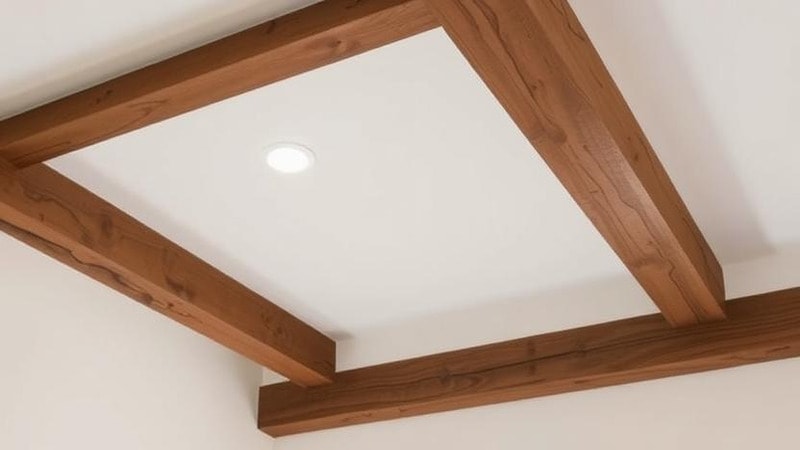
Wooden beam lighting is great for rustic, Scandinavian, or bohemian-style living spaces. This design integrates LED strips or hanging Edison lights.
Whether installed as a single huge beam or in a crisscross pattern, hardwood beam lights offer warmth and character to any room.
Floating light panels give a futuristic look by dangling ultra-thin LED panels within a ceiling frame. The end result is a sleek, floating look that suits modern spaces.
Backlit LED panels provide even illumination, minimizing shadows and enhancing the high-tech atmosphere.
Crystal flush-mount ceiling lights add a touch of luxury to tiny living spaces without overpowering the space. Their clear-cut crystals refract light beautifully, producing a chandelier-like brilliance in a tiny package.
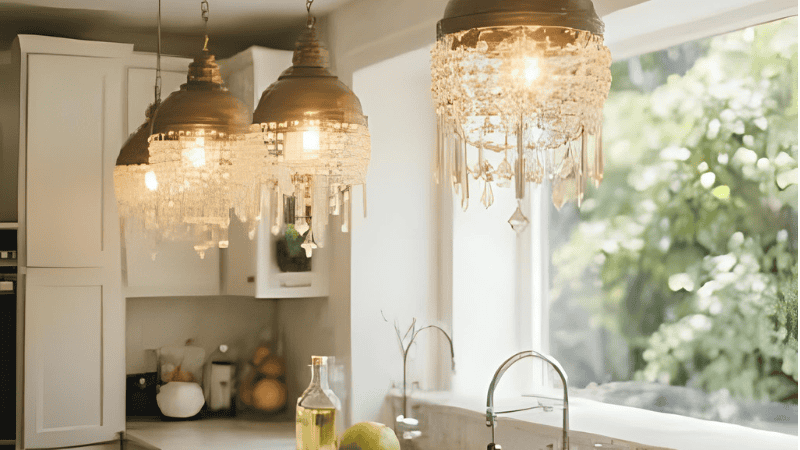
Energy-efficient ceiling lights have become a top priority due to their sustainability.
Solar-powered ceiling lights are an excellent choice if you are environmentally conscious and seeking sustainable lighting solutions. These fixtures employ solar-charged batteries to power LED lamps, which reduces reliance on electricity.
Motion-sensor ceiling lights are energy-efficient as they switch on automatically when motion is sensed. They are equipped with PIR motion sensors, which allow for hands-free operation while also reducing wasteful energy usage by turning off when no movement is detected.
Ceiling lights produced from recyclable materials provide a fashionable yet environmentally beneficial solution. These fixtures use bamboo, repurposed wood, or upcycled metals to minimize environmental impact while keeping aesthetic appeal.
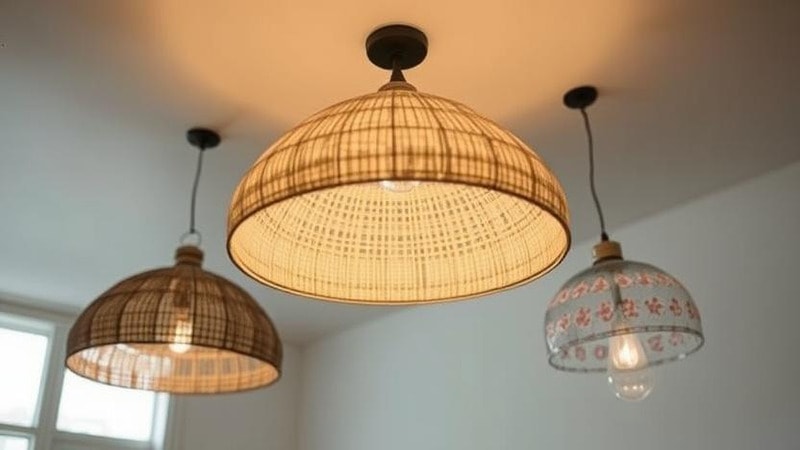
Hybrid ceiling lights combine many functions into a single unit. Some examples include Ceiling fans with built-in LED lighting, pendant-track lighting hybrids, and task and ambient lighting fixtures.
These multi-purpose solutions are ideal for households seeking versatile and space-saving lighting options without sacrificing style.
Good lighting for your living room is determined by your style, brightness requirements, and ceiling height. Here is a living room lighting guide for you to follow.
Your lighting should complement your décor. Minimalist pendant lights and recessed lighting are ideal for modern homes.
But chandeliers or semi-flush installations are perfect for classic styles. Industrial themes look great with exposed light bulb pendants, and metal track lighting provides a raw, edgy vibe.
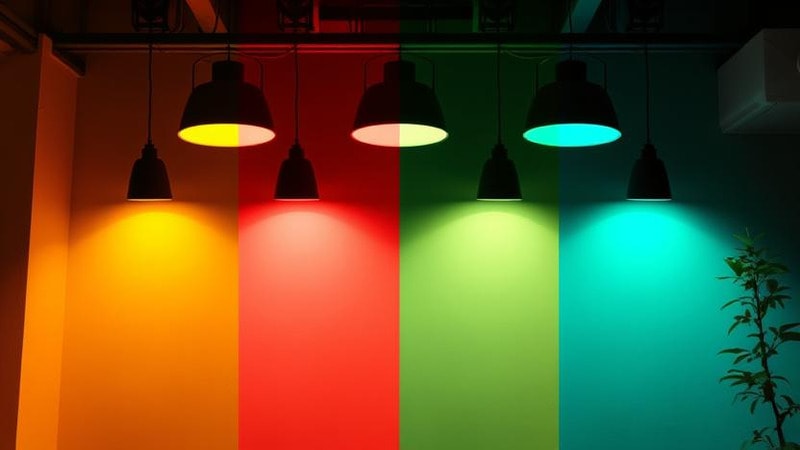
The color temperature of your lights influences ambiance. Soft white (2700 K- 3000 K) produces a warm and inviting ambiance, and bright white (3500 K- 4000 K) provides a balanced glow for everyday use.
Daylight (5000 K- 6000 K) is appropriate for task-oriented environments that require clear, concentrated lighting.
The height of the ceiling is perhaps the most important factor. For low ceilings (less than 8 feet), flush-mount or semi-flush lights give adequate lighting without overpowering the space.
Pendant lights or smaller chandeliers can be installed on standard ceilings (8-10 feet high). High ceilings (over 10 feet) provide room for multi-tier chandeliers and huge statement fixtures.
The perfect ceiling lighting could transform your living area, improving both beauty and functionality. Whether you prefer the classic elegance of chandeliers, the sleek appeal of recessed lights, or the warmth of pendant clusters.
Selecting the proper fixtures for your area depends on your style, ceiling height, and brightness requirements.
Explore a large selection of beautiful and energy-efficient ceiling lights at Risun Corp to complement your decor and tastes. Need expert advice? Contact our lighting experts today to select the ideal fixtures for your needs and improve your business!
A. The living room ambiance can completely change if the wrong lighting is used.
A. LED lights are the most energy-efficient and long-lasting. While CFLs provide intermediate efficiency. Incandescent bulbs produce a warm glow while consuming the most energy.
Want to enhance the exterior of your home with attractive yet effective lighting? Barnhouse lighting combines rustic beauty with modern efficiency. Thus making it an excellent choice for farmhouse-style houses, porches, and outdoor spaces.
Let’s look at the finest barn lights for different locations. We will also explore their benefits and learn how to choose the best one for your home.
Barnhouse lighting features rustic, industrial-style light fixtures. Such lighting designs originated in barns and warehouses. Originally, these lights were intended for endurance and usefulness. But they have evolved into a fashionable addition to modern farmhouse designs.
They combine old charm with contemporary elegance. There are so many varieties of bran lights but the most common include gooseneck lights, pendant barn lights, and wall-mounted lamps.
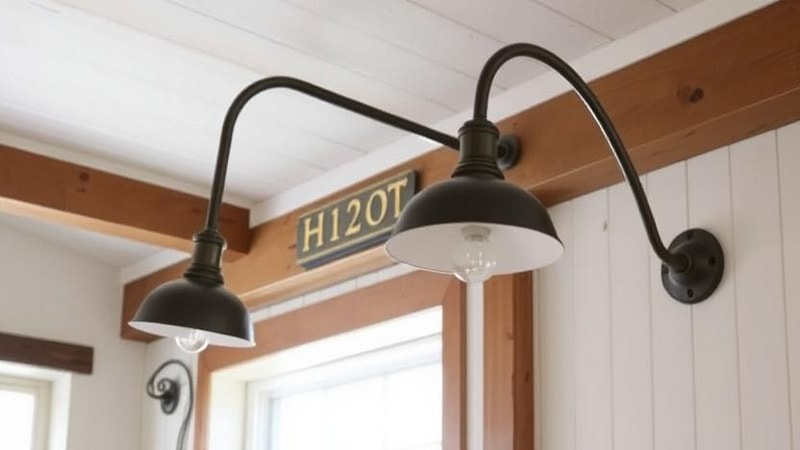
Gooseneck lights have curved arms, kind of like a goose’s neck. This makes them excellent for use on walls and in entryways. Pendant farm lights swing from the ceiling, bringing character to porches and kitchens.
Wall-mounted fixtures provide precise lighting for exteriors and doors. Barn lights look great in both modern and classic settings. They add warmth and rustic appeal to your farmhouse project.
Barnhouse lighting is available in a variety of styles. Each type performs a specific function while adding to a space’s rustic decor. The appropriate lighting depends on the venue, ceiling height, and intended ambiance. Here are a few of the most popular choices:
These classic, curved-arm lamps extend outward to direct focused light where it is needed. Gooseneck lights, which were originally built for farms and industrial environments, have become popular in modern and farmhouse-style exteriors.
They are great for illuminating barn doors, outdoor signage, garages, and paths. They are ideal for combining functionality and historical appeal.
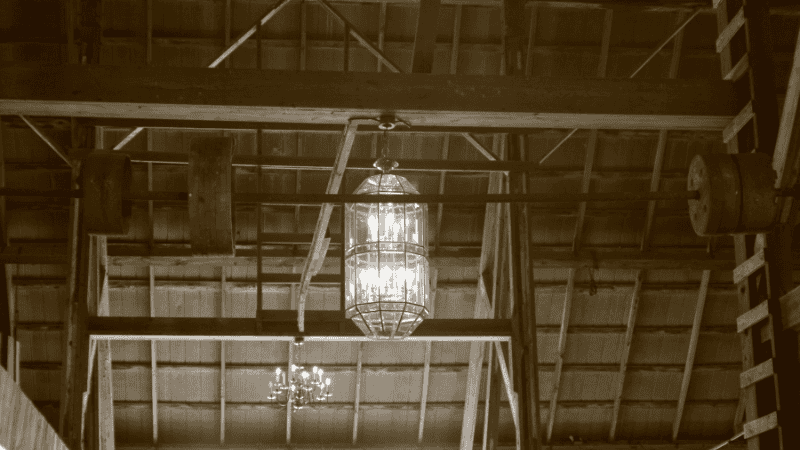
Pendant barn lights hang from the ceiling and provide both ambient and task lighting. They do extremely well in vast, open areas such as barns, workshops, and lofted kitchens. They are available in dome, cage, and bowl shapes.
They create a spectacular focal point while preserving the original farmhouse vibe. Some modern pendant lights now have adjustable cords and LED light choices to improve energy efficiency.
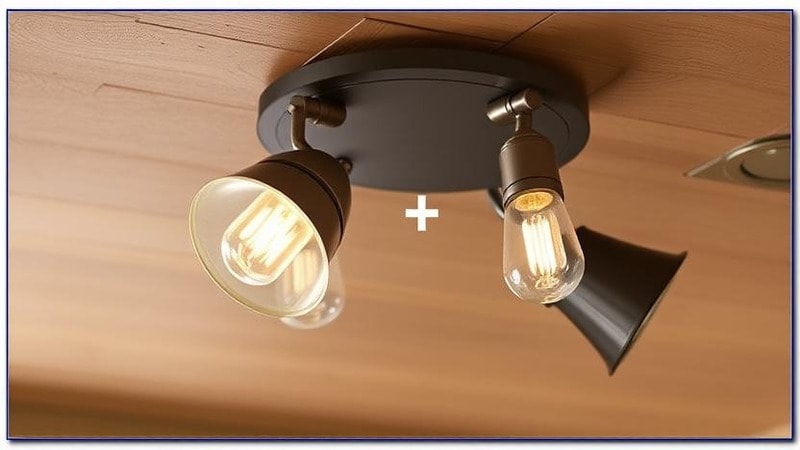
Flush mount and semi-flush barn lights are a small and practical alternative for places with low ceilings. These lamps are close to the ceiling, providing even illumination without dominating the space.
They are widely utilized in enclosed barns, mudrooms, entryways, and corridors with restricted above clearance. Many modern flush mount systems use weather-resistant materials for both indoor and outdoor applications.
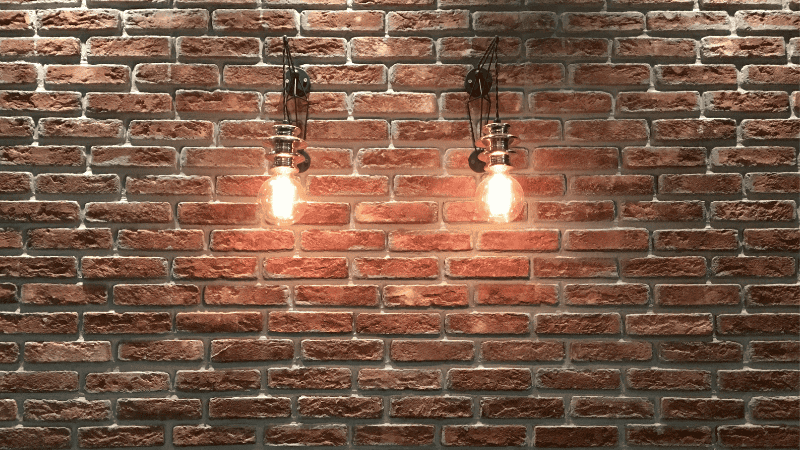
Wall sconces offer both decorative and useful lighting. Thus making them great for highlighting barn interiors, hallways, and porches. They provide a warm and inviting atmosphere while increasing visibility in low-light areas.
Their styles range from industrial metal sconces to glass-enclosed lanterns. Thus allowing you to coordinate your lighting with the entire design scheme.
String lights are ideal for outdoor and event lighting. They add a warm and festive glow to barns, patios, and farm-style locations. These lights can be stretched along beams or wrapped around posts.
They provide a soft, pleasant glow that adds to the ambiance. Many festoon lights now use energy-efficient LEDs, making them a long-lasting and cost-effective option.
Barnhouse lighting adds a pleasant, rustic vibe while providing functional illumination. The correct lighting fixtures can add warmth and charm to your kitchen, living room, or dining area.
These fixtures provide adequate lighting for high ceilings and vast areas. They are usually handcrafted from 18-gauge American steel, bringing both durability and charm. You can choose from various metal shades.
Or you can opt for exposed lights to add an industrial edge. The rustic finishes, such as galvanized metal or distressed wood, add a sense of genuineness to the barnhouse style.
Lamps bring warmth and atmosphere to every room. For a farmhouse aesthetic, choose designs made of natural materials such as wood or wicker.
Metal lanterns and mason jar-inspired lighting also add a vintage touch. You can opt for bold lamp shades to add individuality. LED bulbs are always an energy-efficient option.
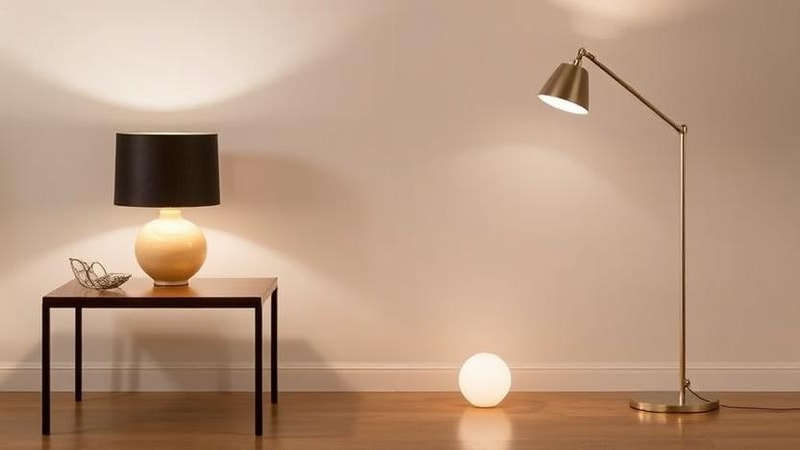
Pendant lighting is ideal for kitchen islands and dining tables. Metal, wood, and glass are all suitable materials for barnhouse themes. Crystal parts can be added to provide an elegant touch. While reclaimed wood or industrial metal patterns can be chosen to keep everything contemporary.
Proper outdoor lighting is essential to improving curb appeal. Barn-style fixtures compliment rustic, farmhouse, and modern exteriors, providing purpose and charm to porches and patios.
Choosing the proper lighting can boost the visibility of your property. It also emphasizes architectural details and improves outdoor living spaces.
Porch and patio lighting should strike a balance between looks and functionality. Wall lanterns or sconces in aged pewter, oil-rubbed bronze, or dark copper finish offer character and a vintage feel.
String or fairy lights stretched across beams or pergolas create a comfortable atmosphere for outdoor meals and evening events.

Consider fixtures with industrial-style metal shades or mason jar-inspired designs. These styles will add to the rustic vibe while delivering gentle, diffused lighting.
Strategic lighting not only improves safety but also accentuates important architectural and landscape aspects. Path or stake lights along walkways and driveways provide visibility. Whereas uplighting can be used to highlight trees, fences, or barn exteriors.
Solar-powered lights are an environmentally responsible and cost-effective alternative that reduces energy usage while delivering constant illumination.
Motion-sensing lights provide an additional degree of security by automatically coming on to discourage intruders and safely guide visitors through outdoor regions.
Barn lighting should strike a balance between aesthetics, functionality, and efficiency. Before making a decision, consider the following factors.
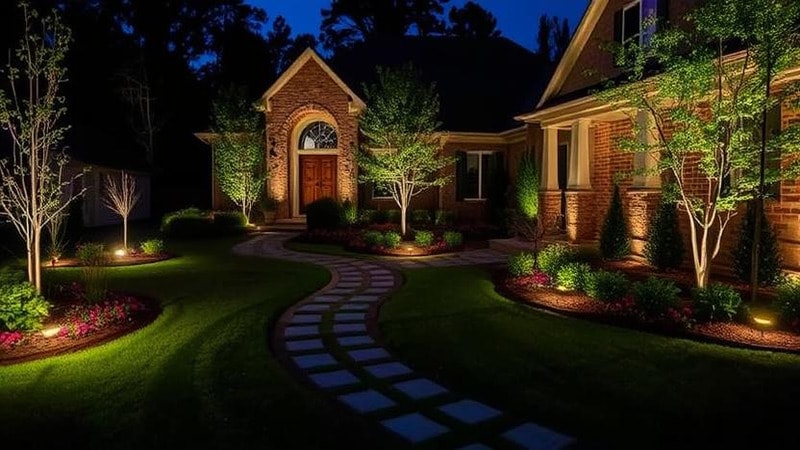
Proper brightness promotes safety and visibility. Task areas require at least 50 lumens per square foot. Whereas ambient lighting is only 20-30 lumens. Large barns require more wattage, but porches and smaller rooms require less.
Warm white (2700K–3000K) produces a gentle, inviting glow. It accentuates the rustic and farmhouse aesthetics. Cool white (4000 K- 5000 K) provides bright task illumination, which is appropriate for workplaces. Choose wisely based on the functionality and ambiance of the place.
In the case of energy efficiency, LEDs are on top. They require 75% less energy than incandescent bulbs. They last longer and have lower maintenance costs. The solar-powered solutions are new to the business. They promote sustainability and reduce electricity costs.
In the case of material, you have to be location-specific. Metal, aluminum, and steel are durable options. Glass pieces provide elegance but may require additional maintenance. Outdoor fixtures should be treated with weather-resistant coatings. This is important to avoid rust and deterioration.
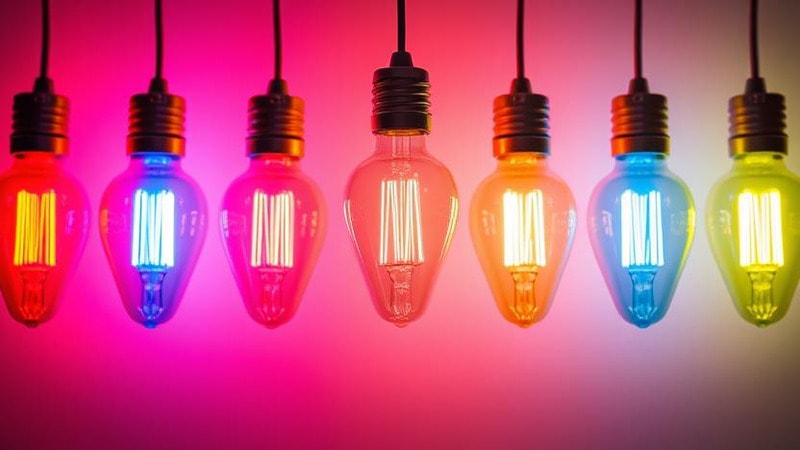
Outdoor barn lights require protection against weather, dust, and debris. The IP65 rating assures waterproofing in exposed areas. IP44 is appropriate for covered porches and semi-protected areas.
There are two ways you can go about installation and wiring. You can either opt for hardwired lights or plug-in solutions.
The hardwired lights give a permanent setup but require professional installation. On the other hand, plug-in solutions provide versatility, but they require nearby outlets.
Lighting should complement the overall style of your home. Rustic gooseneck lighting complements farmhouse settings. Whereas sleek industrial lighting looks great in modern barn house designs.
Barn lights have numerous functions. They increase security, visibility, and aesthetic appeal. There are motion-sensing alternatives that provide enhanced safety. Moreover, dimmable light options allow for ambiance control.
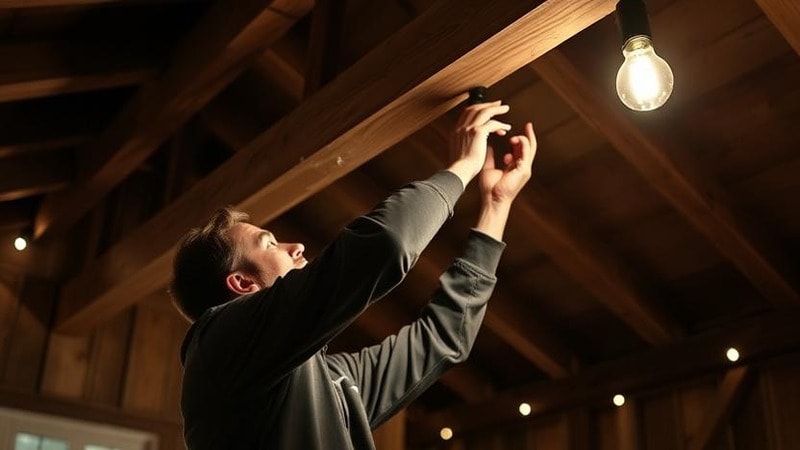
It is very important to choose fittings that complement the space. Large barns require big lights for complete coverage. Compact designs are perfect for porches and doors, as they don’t overpower the exterior design.
The choice between LED and traditional barn lights is based on energy efficiency, longevity, and aesthetics. This is how they compare.
LED bulbs can endure over 25,000 hours, but incandescent bulbs often burn out within 1,000 hours. This leads to fewer replacements and lower maintenance expenses.
LED fixtures require less maintenance and may survive harsher weather conditions. Traditional bulbs are more delicate and require regular replacement, particularly in outdoor applications.
LED barn lights require up to 80% less energy than incandescent or halogen lamps. This makes them an economical solution for long-term savings.
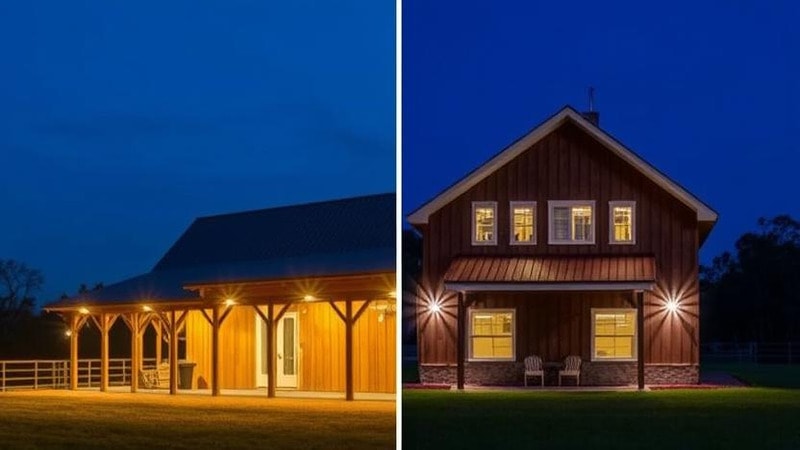
Modern LED technology now reproduces the warm glow of antique bulbs. There are options for dimmable and color-adjustable LEDs to provide adaptability while retaining a rustic aesthetic.
Choosing the wrong barn lights might compromise both design and functionality. Avoid these common lighting blunders to get the greatest results for your space.
A size match is the biggest design overlook. Oversized lights might overwhelm a little porch. Whereas fixtures that are too tiny may not provide sufficient illumination.
To maintain equilibrium, measure the space and select a proportional lighting fixture.
Mixing modern and rustic styles can appear disconnected. A sleek industrial light may not work in a historic barnhouse. Maintain a consistent design that complements your home’s architecture.
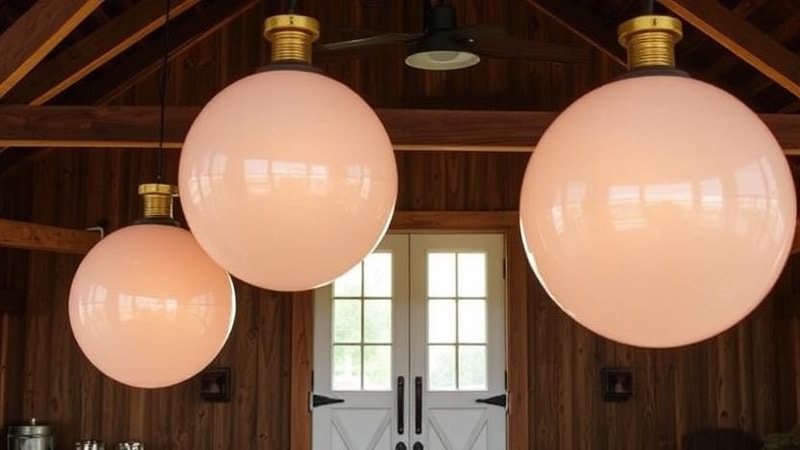
Poor placement can result in dark areas or excessive glare. Position lights above entryways, at eye level for wall-mounted lamps, and evenly distributed along paths. Proper placement improves aesthetics and safety.
Barn lights combine rustic appeal and modern practicality to enhance both indoor and outdoor areas. Size, brightness, style, and longevity are all important considerations when choosing the correct light.
LED barn lights are an excellent investment because they are energy-efficient, long-lasting, and require no maintenance.
Whether you require gooseneck lights for signage, pendant fixtures for high ceilings, or weather-resistant outdoor sconces, the right lighting can improve both the appearance and functioning of your property.
The right barnhouse lighting does more than illuminate; it defines the character of a space. Are you looking to source reliable barn-style lighting solutions? At Risun Corp, we specialize in high-quality, durable barn-style lighting solutions.
With over 15 years of experience in lighting manufacturing, we provide customizable, energy-efficient options to meet your project needs. Download our product catalog or request a consultation today to explore our industry-leading designs.
The ideal size depends on the area you want to illuminate. Larger fixtures, such as chandeliers or pendant lights, are best suited for high ceilings or large rooms.
Compact lighting solutions, such as wall sconces or flush mount lights, are more suited to tiny locations. Ensure that the light fixture’s scale complements your space for visual harmony and adequate illumination.
Yes, LED lights are ideal for barn lighting. Compared to typical incandescent bulbs, they are more energy efficient, have longer lifespans, and emit less heat.
Furthermore, LED technology has progressed to match the warm glow of classic lights, guaranteeing that the ambiance is not compromised.
When selecting fixtures for outdoor applications, make sure to choose lights that are specifically designed for outside use. Look for fixtures with adequate Ingress Protection (IP) ratings.
This indicates resistance to dust and water. Materials such as galvanized steel and powder-coated finishes improve weather resistance.
Ready to get started ?
Send Your Inquiry

Our team will get back to you promptly

please
download
Get notified about new products
Our team will get back to you promptly!