
When it comes to choosing the proper lighting for your space, two popular options are A19 and BR30. Both of these LED bulb options are efficient and enhance the overall ambience of the setting. This article explains the differences between these bulbs to help you make the right choice. Let’s dive in!
All you need to know about A19 Bulb
A19 is a famous bulb code, which explains the shape and size of the bulb. The A in A19 explains the standard round shape of the bulb, and the numeric digit 19 helps in explaining the diameter of the bulb. The diameter is measured in eighths of inches, i.e., 19/8 = 2.375 inches.
A19 bulbs are best known for providing an even omnidirectional light distribution. This omnidirectional light distribution makes them widely used in both commercial and residential properties.
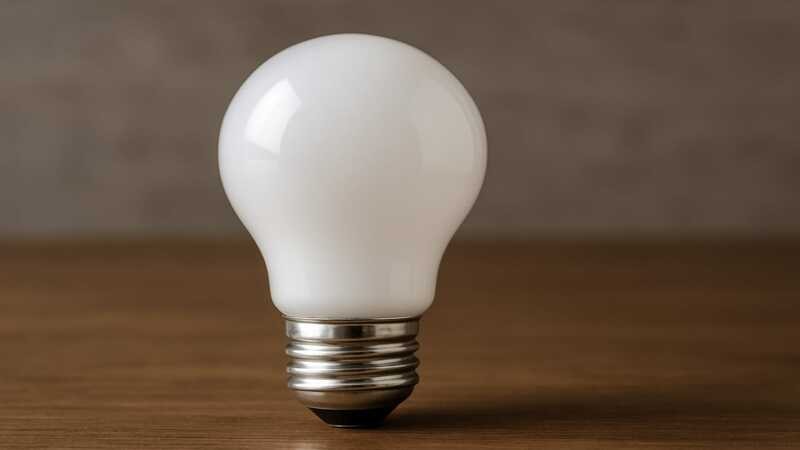
The E26 base is used in the A19 light bulbs. The letter E in the code explains that the base screw is an Edison bulb’s screw, and the numeric digit refers to the diameter of the base. This base type is commonly used in North America.
The compatibility of A19 with the E26 base and multiple other fixtures further contributed to the popularity of these household light bulbs. A19 vs E26 light bulbs are ideally used in homes to provide sufficient light for conducting daily routine tasks.
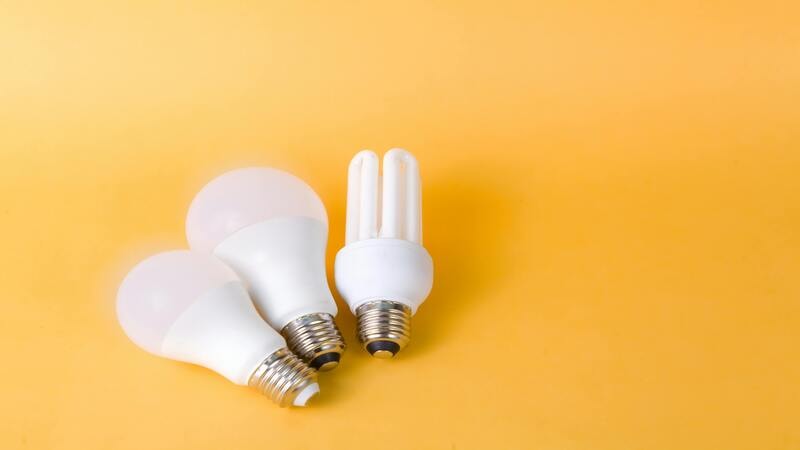
A19 was initially available only as incandescent light bulbs. However, it is now available in fluorescent, Halogen, and LED versions. The table below mentions the pros and cons of A19 bulbs. Read them to make the right choice:
| A19 Pros | A19 Cons |
|---|---|
| Commonly available | Not suitable for directional lighting |
| Works well with most fixtures | Less efficient in recessed lighting |
| Available in smart/LED options | Not ideal for a focused beam |
All You Need To Know About BR30 Bulb
When you are in the market looking to purchase a bulb, you may have wondered what BR30 means on a light bulb. The answer to this question is that BR30 is a bulb code, which explains the bulb’s size, type, and shape.
BR30 is a popular light bulb code. The BR in code explains that the shape of the bulb is rounded with a reflector to distribute light.
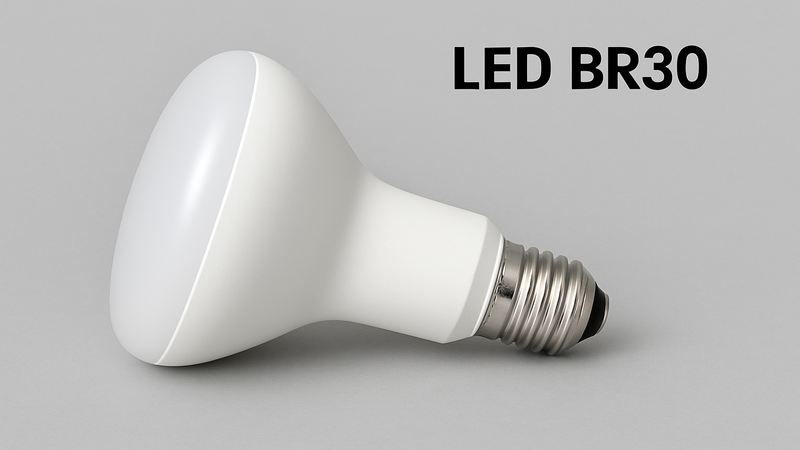
Whereas 30 indicates the diameter of the bulb. Diameter of BR30 bulb is also measured in eighths of an inch, i.e., 30/8 =3.75 inches.
The BR30 bulbs emit a focused and wider beam of light. In contrast to A19, these bulbs are ideally suited for use in recessed cans, ceiling lights, and directional lighting.
Even though this bulb is large, it still uses an E26 base. The table below explains some pros and cons of the BR30 light bulb:
| BR30 Pros | BR30 Cons |
|---|---|
| Ideal for flood lighting. | Larger size, so it does not fit with all fixtures |
| Ideally used in recessed lighting | Less versatile than A19 |
| Available in smart options | More expensive |
A19 vs BR30: Key Differences You Should Not Ignore
A19 and BR30 bulbs differ from one another not only based on their shape, but also in terms of their light output, base type, efficiency, and fixture compatibility.
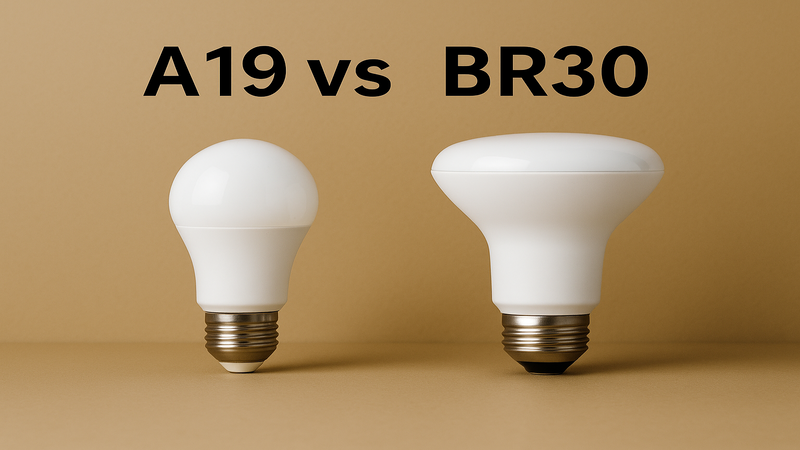
The key differences between these bulbs are explained below:
Shape & Size
The A19 bulb has a roughly pear-shaped design, similar to the classic Thomas Edison-style incandescent bulbs, measuring 2.375 inches in diameter. A19 bulbs are compact, lightweight, and fit well in lamps, kitchen pendant lights, and decorative lighting.
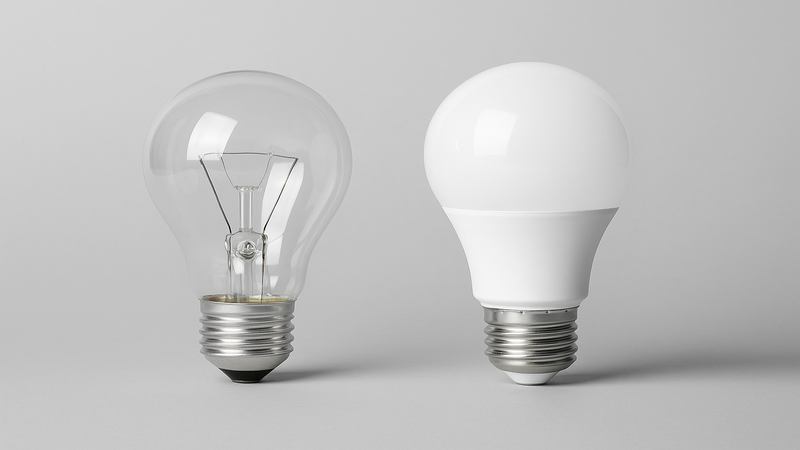
On the other hand, the BR30 bulb is longer, with a bulged reflector design and a 3.75-inch diameter. Its built-in reflector lens makes it ideal for directional applications. This reflector-type bulb is commonly used in recessed lights or track light setups.
Light Output & Beam Angle
The bulbs also differ from one another based on the light output and beam angle. A19 LED bulbs emit omnidirectional light, covering nearly 360°, making them ideal for ambient lighting in ceiling light fixtures, wall sconces, or bathroom vanities.
The BR30 LED lamps offer a wide beam angle of around 110°, delivering focused light. It is typically used to highlight specific areas or to highlight artwork.
Application Use
A19, BR30, PAR30, and GU10 are all efficient light bulbs; however, they serve different purposes. A19 bulbs are standard household bulbs with low wattage and compact shape, used in table lamps, ceiling fans, bedside lights, and other indoor lighting fixtures.
BR30 light bulbs, however, are used in recessed cans, kitchen spots, and track lighting.

Fixture Compatibility
A19 bulbs fit well with most light fixtures, including those with shallow bases. BR30 bulbs, however, are large and thus cannot fit in shallow and enclosed fixtures.
If you have enclosed fixtures, opt for A19 bulbs. If your fixture is large, choose BR30 LED bulbs instead.
A19 vs BR30 : Smart Features
With the advancement of LED technology, LED smart versions of A19 and BR30 have become popular. The smart versions of both these light bulbs have some common advanced features, including:
- Voice control
- App Sync
- RGB color changing
- Option to choose from different color temperatures, i.e, from 1800k to 6500k – from warm light to daylight color temperature
The smart BR30 bulbs are designed for recessed cans, particularly in ceiling or kitchen lighting applications. The focused light beam makes them best for task lighting.
However, with a slightly bulkier shape, these bulbs don’t fit well in shallow or decorative light fixtures.
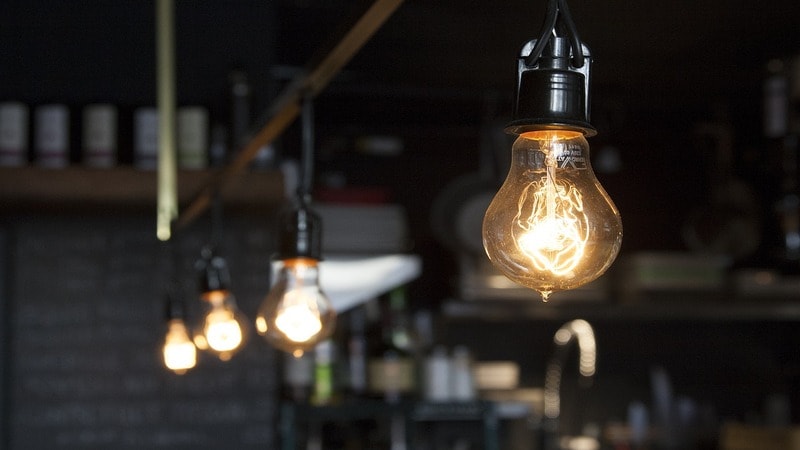
The A19 smart bulbs are compatible with most common light fixtures. These bulbs are ideal for general lighting and for smaller spaces.
Can You Replace BR30 With A19?
Yes, you can replace a BR30 with an A19 bulb, but it is not ideal in all cases. A19 bulb is designed to spread light in all directions, whereas BR30 light bulbs offer a wide beam and are suitable for recessed ceiling can or directional lighting.
So, in case you place an A19 bulb in a BR30 light fixture, the light may spread in unwanted directions and won’t deliver the same lighting result as a BR30.
It is recommended to use A19 bulbs for general lighting and reserve BR30 bulbs for recessed lighting. Before switching, always ensure to check the fixture depth. A19 bulbs are small, so they may not fit well in a BR30 fixture.
Quick Tip: A19 is not the best replacement for BR30, especially when light beam matters.
Which Should You Choose? A Quick Decision Guide
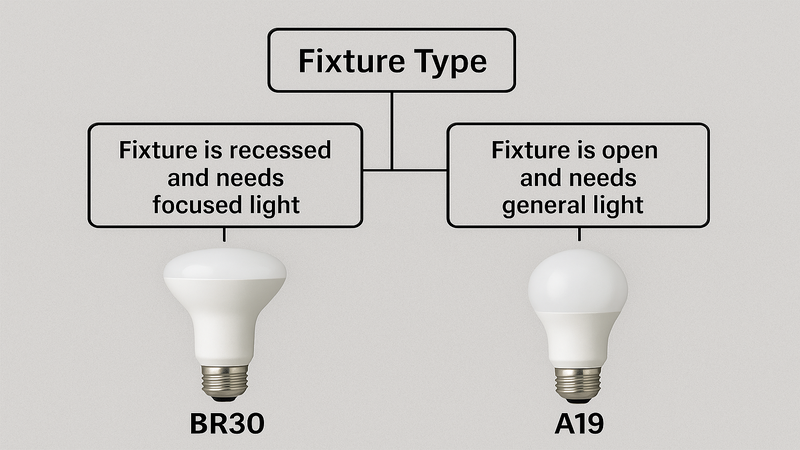
Choosing the right bulb type is a crucial task; one needs to evaluate the lighting needs, fixture type, and the required aesthetic before making a final decision.
The following table mentions some of the cases and the recommended bulb type. Read it to get an answer to the most commonly asked question of what BR30 bulbs are used for.
| Use Case | Recommended Bulb |
|---|---|
| Table lamp | A19 |
| Recessed ceiling fixture | BR30 |
| Kitchen downlighting | BR30 |
| General lighting | A19 |
| Wall sconces | A19 |
| Highlighting Art | BR30 |
| Entryway Chandeliers | A19 |
A19 vs BR30: Which One is Energy Efficient?
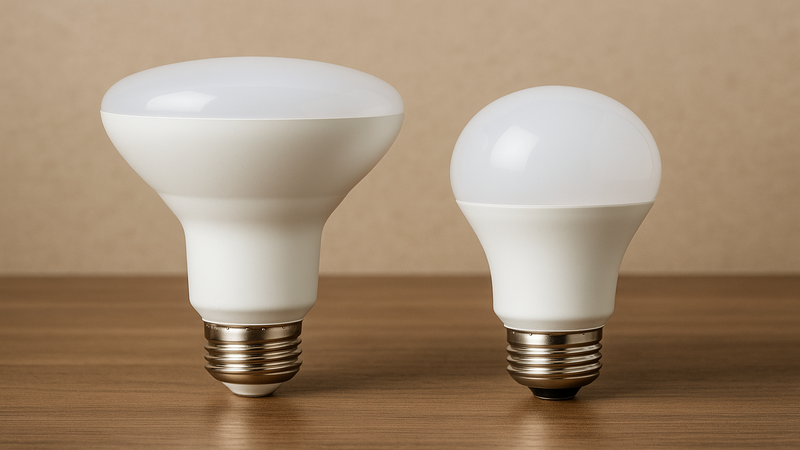
When purchasing any lighting source, buyers prefer the energy-efficient options. LED versions of A19 and BR30 bulbs are significantly more energy-efficient than halogen bulbs or incandescent bulbs.
A19 LED uses around 9W and replaces traditional bulbs that use over 60W. A BR30 LED light bulb also uses around 9-12 W to replace a 75W incandescent bulb.
If you’re looking for energy-efficient bulb options, be sure to choose those with an Energy Star rating. This certification ensures that the bulb meets high efficiency and performance standards.
Additionally, opt for bulbs that offer a high lumens per watt ratio, as they provide greater brightness while consuming less power.
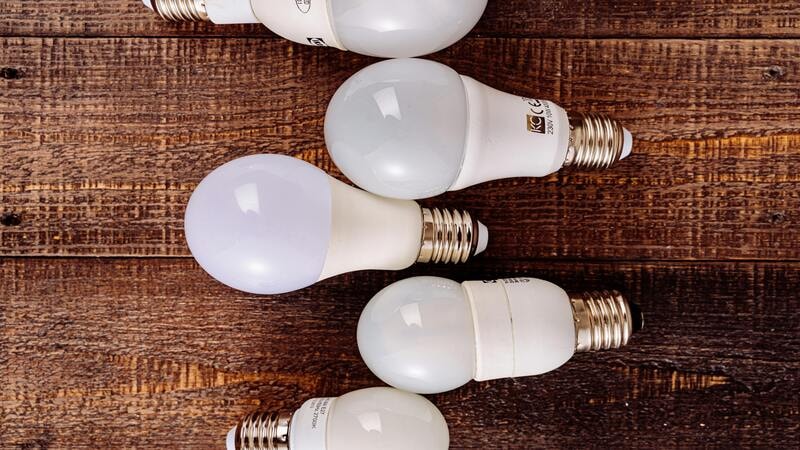
Some LED bulbs also reduce blue light emission, which helps prevent eye strain and promotes better sleep. Additionally, the LED dimming feature helps save energy by adjusting brightness according to the user’s requirements.
Conclusion
A19 and BR30 bulbs suit different lighting requirements and are highly popular in both residential and commercial settings. Choose one of them that matches your lighting requirements. To reap the benefits of energy savings and other advanced features, opt for LED A19 or BR30 bulbs. Also, ensure that the bulb is compatible with your light fixture to avoid difficulties later on.
Elevate Your Commercial Lighting Solutions with Risun Now!
Looking to buy an A19 or BR30 light bulb? Risun Corp is here to offer the best lighting solutions tailored to your needs.
We provide a comprehensive product range, streamlining your sourcing process and saving you time and effort. Risun’s light bulb batch undergoes rigorous inspection by our QC team before shipment, ensuring consistency, compliance, and reliability.
So what are you waiting for? Contact us today to get a personalized solution tailored to your commercial needs.
FAQs
Q1. What is the difference between A21 and BR30 bulbs?
A21 and BR30 bulbs differ from one another primarily in terms of their shape and size. A21 bulbs have a pear-like shape and a diameter of 2.625 inches. BR30 bulbs, however, are 3.75 inches wide and have a bulged reflector for producing a broad light beam.
Q2. Which bulb is best for recessed lighting?
It is recommended to use A19 bulbs for general lighting and reserve BR30 bulbs for recessed lighting.
Q3. Can you help me choose the right lighting products for my distribution needs?
Yes. We can help you select the right lighting products, streamline procurement, and consolidate multi-vendor SKUs into full containers. Direct delivery to multiple U.S. warehouses cuts shipping costs and increases efficiency.
Q3. How can you help me build my lighting brand?
We handle supplier sourcing, product development, quality control, and certifications-ensuring smooth, efficient, and compliant imports tailored to your brand needs.
When choosing a bulb, determining the right type can be a bit challenging. One needs to carefully select the bulb size, as even a slight difference in screw base size can make the bulb incompatible. Understanding different light bulb base types such as E26 base, E27, E14, and E12, helps ensure you choose the correct fit for your fixture.
In this guide, we will explain the dimensions of E14 bulbs and other base screw sizes to help you make an informed decision. Ready to dive deeper? Here we go!
What Does “E” Stand For in Bulb Codes?
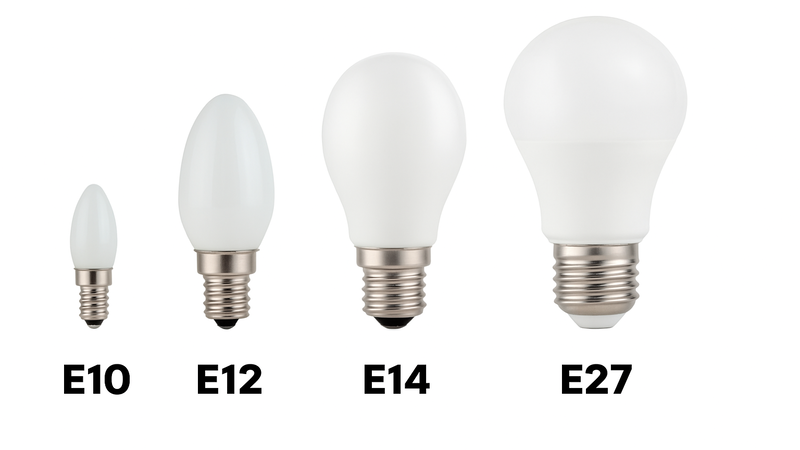
You may have noticed that most of the bulbs have an ‘E’ in their codes. Ever wondered why this letter stands for? Well, the “E” in bulb codes refers to the Edison Screw, named after Thomas Edison.
The Edison screw is a standard type of light bulb base. The number that follows E in bulb codes indicates the diameter of the bulb’s screw base in millimeters. For example, an E14 bulb has an Edison screw base that is 14mm in diameter.
Common light bulb base types include the miniature E10, the candelabra E12, the small Edison screw E14, and the standard E26 or E27 base sizes, which are used in most household light bulb sockets.
It’s essential to note that the lamp holder is always larger than the screw to ensure the bulb fits in smoothly and securely. The table below compares the most common screw sizes in terms of their holder and cap diameters:
| Screw Cap Name | Holder Diameter | Actual Cap Diameter |
|---|---|---|
| E10 | 10 mm | 9.3 mm |
| E12 | 12 mm | 11.5 mm |
| E14 | 14 mm | 13.5 mm |
| E27 | 27 mm | 26 mm |
E10 Bulbs: The Miniature Edison Screw (MES)
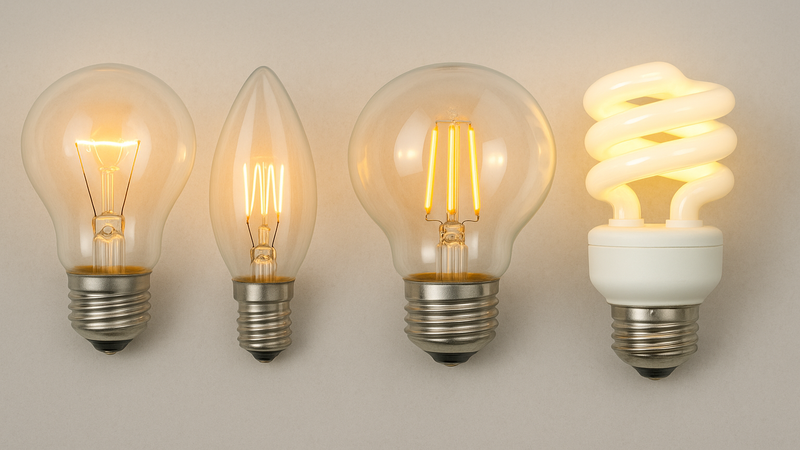
E10 light bulbs are a Miniature Edison Screw base bulb with a diameter of 9.3mm. These light bulbs are designed to fit into a 10mm lamp holder.
With their compact size, these bulbs fit perfectly in vintage light fittings, including old chandeliers, toy trains, model lamps, and indicator panels. Due to their small size and decorative appearance, they are often used to enhance the overall aesthetic of the place.
However, they are not typically used in general household lighting fixtures and are more popular among hobbyists and DIYers for miniature lighting projects.
E12 Bulbs: The American Candelabra Base
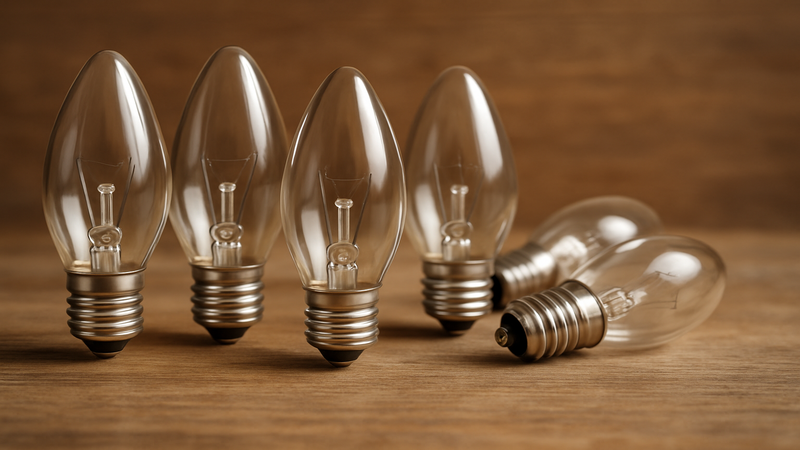
E12 bulbs, with an Edison screw of 11.5 mm, fit into a 12 mm lamp holder. Referred to as the American Candelabra Base, this size is commonly found in the United States, particularly in vintage candelabra-style fixtures, such as chandeliers and decorative wall lights.
In terms of light bulb base sizes, the E12 base is smaller than the E26 base used in standard lamps. The comparison between E12 vs E26 bulbs is common for homeowners looking to replace or upgrade lighting fixtures.
In Europe and the UK, E12 bulbs are not very common and are not readily available in local markets. However, you can get one through online bulb retailers.
E14 Bulbs: Small Edison Screw (SES)
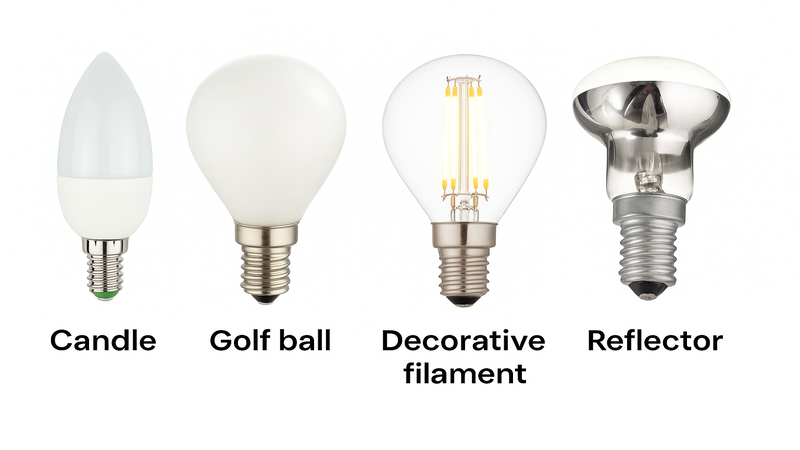
E14 refers to a Small Edison Screw (SES) base bulb with a 13.5mm diameter, fitting into a 14mm holder. This bulb is widely used in European-style fixtures.
E14 bulbs are commonly found in residential lighting. These bulbs are ideal for smaller or more decorative fixtures, such as wall sconces, chandeliers, and desk lamps.
With their availability in various shapes, i.e, candle, reflector, and decorative filament, E14 bulbs are widely used in stylish light fixtures.
While comparing E12 vs. E14 bulbs, it is essential to understand that these bulbs can be used interchangeably. However, doing this is possible only with the aid of an adapter.
In contrast, the E26 bulb base, commonly used in the U.S., is much larger and typically found in standard lighting fixtures. This size difference highlights the importance of checking your fixture’s socket type before purchase.
E27 Bulbs: Standard Edison Screw and E26 Base Equivalent
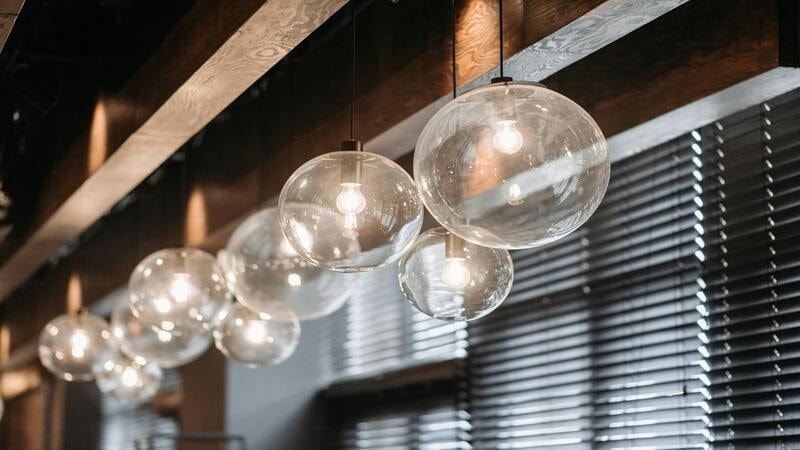
E27 bulb has a screw base of 26 mm and fits nicely in 27 mm bulb holders. The bulb type is not used in chandeliers but is common in other standard lamps, ceiling lighting fixtures, and some commercial lighting fixtures.
In North America, the standard is the E26 base. While many buyers search for “E26 vs E27,” it’s important to note that the two bases are functionally interchangeable, as their minimal size difference makes them nearly identical in practice.
While comparing E14 vs. E27 bulbs, people often find themselves confused about which bulb to use for decorative lighting and which one to choose for general lighting.
The answer to this question is straightforward: use E14 bulbs for smaller, decorative fixtures and opt for E27 for general lighting fixtures.
The A19 is a bulb shape (the classic pear-shape), which commonly uses the E26 base (the screw-in part). This pairing is so standard in U.S. homes that the names are often confused, leading to the frequent comparison of “A19 vs E26.”
Side-by-Side Bulb Base Comparison Table: E10 vs E12 vs E14 vs E27
A side-by-side comparison of different bulb base sizes is given below to help you choose the option that is perfect for your needs:
| Feature | E10 | E12 | E14 | E27 |
|---|---|---|---|---|
| Cap Diameter | 9.3 mm | 11.5 mm | 13.5 mm | 26 mm |
| Lamp Holder Size | 10 mm | 12 mm | 14 mm | 27 mm |
| Common Applications | Model trains, panels, toys | U.S. candelabras, night lights | Chandeliers, desk lamps, ovens, and wall lights | Ceiling lights, pendant lights, and large fixtures |
| Region | Global | Mostly USA | Europe / UK | Global |
| Availability | Low (specialty suppliers) | Moderate (online retailers) | High (widely stocked) | Very High (most standard bulbs) |
| Interchangeable | No | With E14 adapter | With E12 adapter | No |
| Also Known As | MES (Miniature Edison Screw) | Candelabra / Intermediate screw | SES (Small Edison Screw) | ES (Edison Screw) |
This chart is helpful for anyone trying to understand standard light bulb base types, bulb socket types, and how different light bulb bases compare across regions.
Can You Interchange E10, E12, and E14 Bulbs?
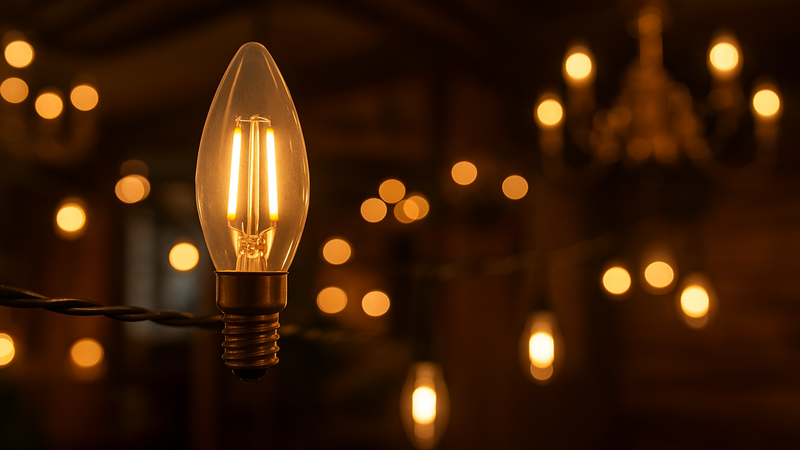
At first glance, the E10, E12, and E14 bulbs may look the same; however, they are not technically the same. This means that these bulbs cannot be used interchangeably without an adapter.
While comparing E10 vs E12 bulbs, note that E10 bulbs are designed for use in miniature lighting and operate on lower voltage (usually 12V or 24V). Using E10 bulbs in a socket designed for high-voltage bulbs can significantly reduce the performance of the bulbs and also pose electrical hazards.
Therefore, direct interchange between E10 and E12/E14 is not recommended and carries significant voltage risks.
E12 and E14 bulbs, having the same size (referring to similar appearance and functionality), are often used interchangeably using an adapter. While using these bulbs interchangeably, ensure that you check the fixture’s voltage, shape, and fitting depth to avoid any issues.
Using an adapter may increase the bulb’s height, so make sure the fixture or lampshade has enough space. Using a bulb that is not compatible with the fixture can lead to a fire risk. So it is essential to double-check the bulb code and the socket size of your fixture when replacing a bulb. Safety should always be the top priority.
To ensure proper fitment, if you are unsure which bulb base type your fixture supports, check the fixture manual or review a bulb base specification chart for compatibility.
How to Measure Your Bulb Base Accurately?
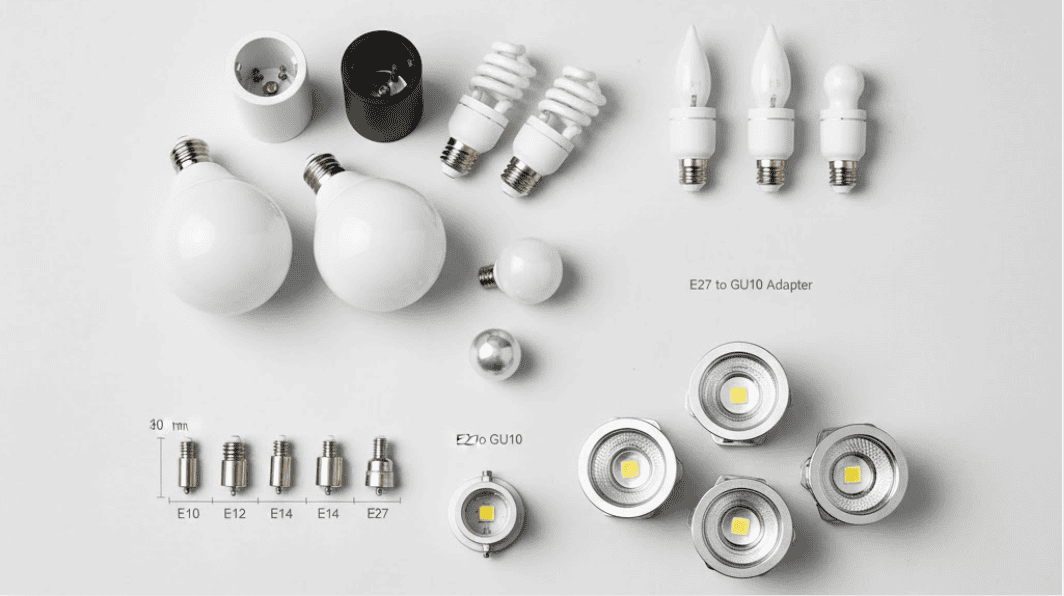
To ensure you get the right bulb type for your indoor or outdoor lighting fixtures, it is essential to measure the base of the bulb accurately. To calculate the base bulb easily, follow the steps given below:
1. Measure the inner diameter of the lamp holder.
Use a ruler or measuring tape to measure the width of the lamp holder’s internal diameter. By measuring the lamp holder, you can find out the bulb that can fit in this holder. For instance, if the lamp holder measures 14mm, the bulb that fits it is an E14 bulb.
2. Measure the width of the bulb base.
Don’t just measure the screw threads on the bulb; instead, measure the inner fitting. As screw threads are smaller than the socket, measuring them is not a great idea.
Additionally, the code refers to the socket diameter, not the screw diameter. Accurately measuring the outer diameter of the widest part of the bulb base is an effective way to determine the correct type.
To identify an E26 base, look for a thread width of approximately 26mm. This measurement is what makes it the standard bulb base size in the United States.
3. Check the existing bulb or fixture manual.
It is recommended to check the bulb code mentioned on the product packaging or, in the case of online shopping, on the product page, to ensure you are selecting the correct bulb type. This is the simplest and most accurate method.
How to Choose the Right Bulb: Final Tips
When you are in the market looking to choose the right bulb type, the following tips can help you:
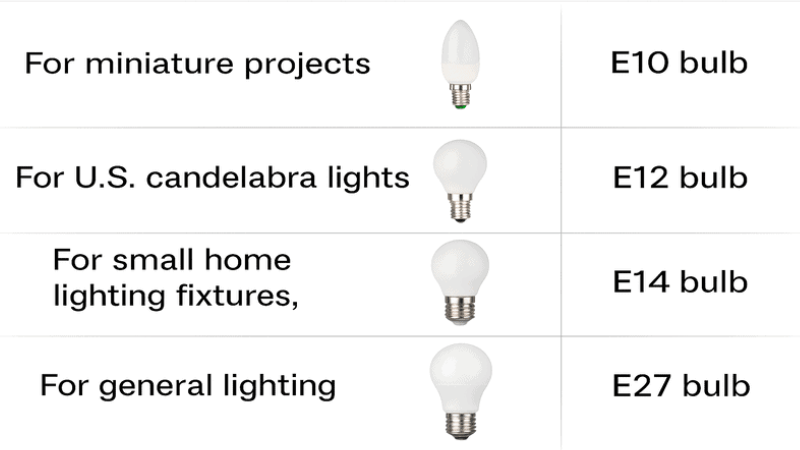
- For miniature projects, choose an E10 bulb.
- For U.S. candelabra lights, choose an E12 bulb
- For small indoor lighting fixtures, especially in the UK and Europe, choose an E14 bulb
- For general lighting, floor lamps, ceiling fixtures, and household uses, choose an E27 bulb or E26 base bulb.
Conclusion
The difference between E10, E12, E14, and E27 bulb bases is very subtle, of a few millimetres only, but they all serve different purposes. Once you understand the bulb size and the type of base it uses, you can easily make the right choice.
Understanding light bulb base types, different light bulb bases, and standard light bulb base sizes will save you from compatibility issues and ensure safer, longer-lasting lighting performance.
When choosing any light source, ensure your fixture is compatible with it. Additionally, choose a reputable lighting supplier to enjoy cost-effective lighting solutions in the long run.
Risun Corp: A Reliable Partner for All Your Lighting Needs!
At Risun Corp, we supply a full range of E10, E12, E14, and E27 bulbs along with matching lamp holders—ideal for bulk orders and business projects.
Our catalog also includes standard E26 base bulbs, helping you source standard light bulb base types and lamp base types for both residential and commercial lighting.
Whether you need decorative lighting for chandeliers or reliable solutions for commercial use, our team can help you find the perfect solution. Get in touch today for a customized quote and start simplifying your lighting procurement.
FAQs
Q1. What is the E14 bulb size?
The E14 bulb features a 14mm diameter screw base. It is commonly known as the Small Edison Screw (SES). These bulbs are typically used in Europe and the UK for small fixtures, such as chandeliers, bedside lamps, and ceiling lights.
Q2. Are E14 bulbs being phased out?
No, the E14 bulbs are not being phased out. Despite technological advancements, these bulbs remain popular. The availability of these bulbs in various shapes makes them ideal for use in decorative lighting, which further contributes to their popularity.
Q3. What types of light bulbs and lamp holders does Risun offer to cater to diverse lighting needs?
Our collection spans from energy-efficient LEDs to versatile CFLs and unique specialty bulbs. For the lamp holder types, we also have a wide range of them, such as E26/E27, E12/E14, GU10, GU5.3, GU4.0, G9, G13, etc, to meet the different needs of various types of lamps, and to meet your needs of one-stop purchasing easily.
Q4. Does Risun offer bulk purchase discounts?
Absolutely! Risun values large-quantity orders by offering special discounts.
Partnered with hundreds of trusted manufacturers, enabling us to deliver a truly one-stop lighting supply solution with consistency and reliability.
Q5. Can E14 and E27 be used interchangeably?
Yes, but only with an E14-to-E27 adapter. Users must ensure the fixture itself can handle the size and weight of an E27 bulb and that the bulb’s wattage does not exceed the fixture’s rated maximum. Carefully read the fixture manual before any interchange.
If you are working with E26 fixtures, remember that E26 vs E27 bulbs are largely interchangeable, as both share similar light bulb base sizes.
The selection of the right bulb for recessed can or flood lighting results in even light distribution, energy efficiency, and a proper fit. When selecting bulbs, you might have come across BR20, BR30, and BR40 bulbs.
This guide will break down the key differences in lumens between BR20 vs BR30 vs BR40 bulbs to help you choose the best lighting option for residential and commercial spaces.
Why BR Bulb Size Matters
BR light Bulbs are common reflective light bulbs used in recessed, ceiling, and can lighting. Their shape and wide beam angle help them to spread light over a larger area. They are available in BR20, BR30, and BR40 bulb codes.
The number after BR indicates the light bulb code. It sounds like the performance grade, but actually, it is the designation for the bulb’s diameter in eighths of an inch. It does not indicate the brightness level of the lamp.
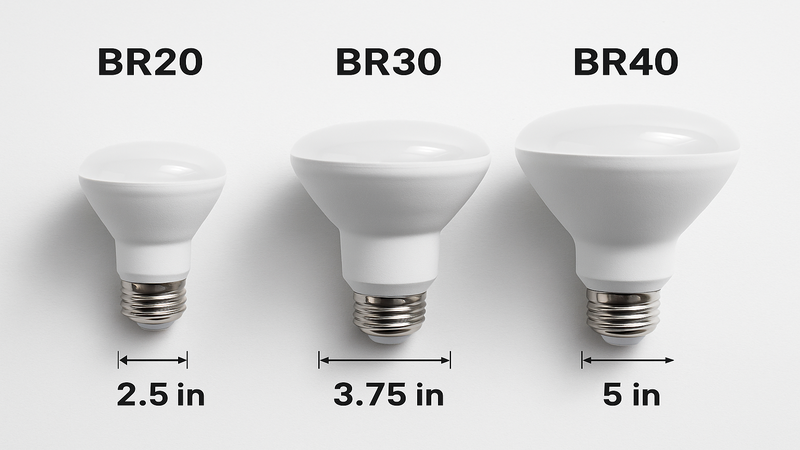
- BR20 = 2.5 inches wide
- BR30 = 3.75 inches wide
- BR40 = 5 inches wide
The selection of the wrong bulb size causes poor fit, light spillover, or inefficient coverage, especially in recessed lights. With a correct BR light bulb size, your lighting looks clean. It works efficiently and delivers the intended ambiance.
What Does “BR” Mean in Light Bulbs?
The “BR” stands for “Bulged Reflector.” This name indicates the curved, bulged neck of the bulb. The extra reflector in BR lamps enhances beam control. It directs light in a wide, soft beam.
Some fixtures need functional necessity lighting, not just aesthetics. With a directional nature, the BR group is designed to illuminate broad areas evenly. They are best used in recessed, ceiling lights, track lights, and floodlight-style indoor fixtures.
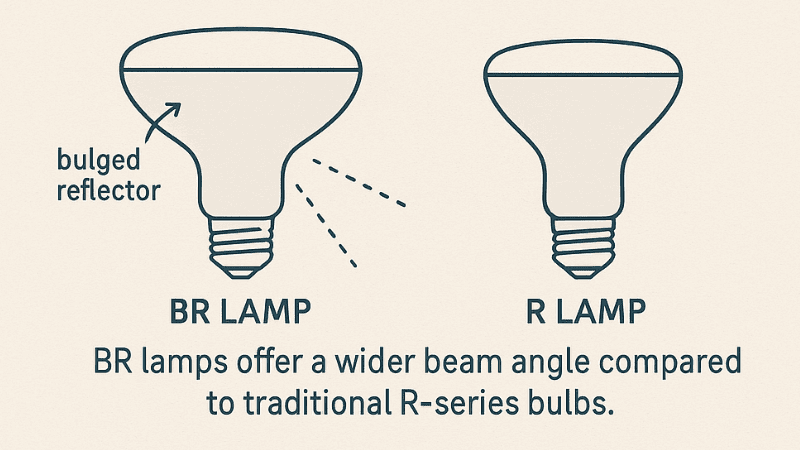
BR lamps offer a wider beam angle (110° to 120°) compared to traditional R-series bulbs. It results in broader and more even light coverage. Traditional R lamps have a straight neck and produce a more focused beam.
When R bulbs are installed in deep fixtures, they reflect off light from the fixture edges, which causes light wastage. BR lamps are an upgraded version of R lamps with a bulged reflector design that directs light toward the center of the beam.
So, the BR light bulbs give more light output, even in different types of recessed or deep luminaires.
BR vs. R Bulbs at a Glance
| Feature | R20 | BR20 |
|---|---|---|
| Beam Control | Narrow, sharp edges | Wide, soft beam |
| Neck Shape | Straight | Bulged |
| Use Case | Older lamps | Recessed/flood lighting |
If you’re choosing between R20 vs BR30 or BR30 vs R20, note that BR bulb types are more modern. The light produced in the BR and R series is the same. But BR distributes light evenly and gives wide coverage, which can be adjusted by color temperature.

BR20 Bulbs: Features, Size, and Use Cases
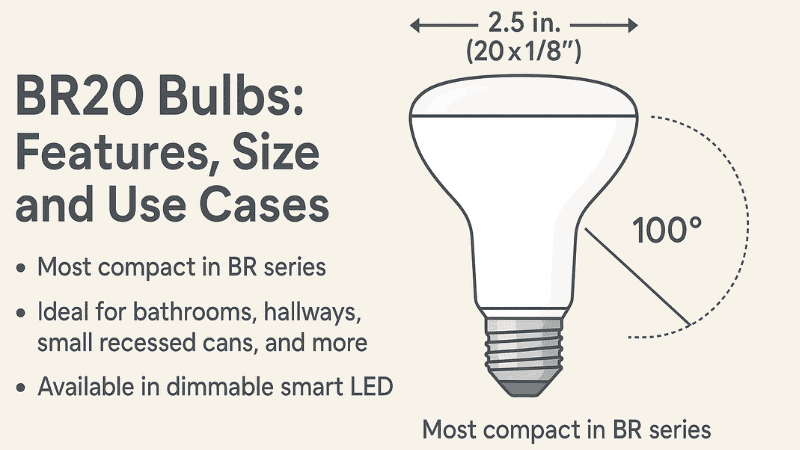
Bulb sizes are measured in eighths of an inch, such as BR20 = 2.5 inches (20 × 1/8″). BR20 bulbs are the most compact in the BR series.
These lamps are ideal to use in bathrooms, hallways, small recessed cans, wall sconces, chandeliers, decorative fixtures, or in pendant lights.
BR20 bulbs have a beam angle of roughly 100°–110°. They cover a smaller surface area. This means they don’t throw as much light as larger BR bulbs. So, for tight and confined spaces, BR20 light bulbs are perfect.
BR20 LED bulbs are also available in dimmable smart LED and color-tuning. They are more energy efficient and can be customized according to mode.
BR30 Bulbs: The Most Versatile Size
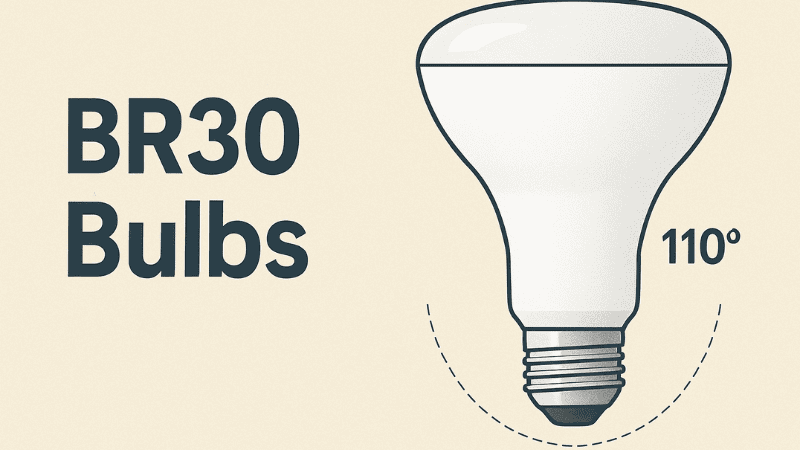
The most popular bulb size in the BR series is BR30, which is used in residential recessed lighting. BR30 bulbs measure 30 eighths of an inch in diameter, which equals 3.75 inches.
They deliver an ideal light beam angle of around 110° and provide a wide, even spread of light without hot spots.
BR30 is typically used in household lighting, such as living rooms, kitchens, bedrooms, and also for general ambient lighting.
Their balance of size and output makes them the go-to bulbs for 4–5 inch cans. It is a common bulb fixture size in homes and retail environments.
BR40 Bulbs: Large and Powerful for Wide Coverage
BR40 bulbs give maximum coverage for a large or vaulted space. With a diameter of 5 inches, BR40 light bulbs are designed for large recessed cans (6″ +) and high ceilings.
BR40 bulbs have strong and wider beams. It is typically used in vaulted ceilings, open-concept living rooms, commercial lighting, and retail lighting.
A BR40 light bulb can not sit flush in smaller cans and can protrude awkwardly if misused. Always measure your fixture first before installing a bulb.
Comparison Table: BR20 vs BR30 vs BR40
| Feature | BR20 | BR30 | BR40 |
|---|---|---|---|
| Diameter | 2.5 in (64 mm) | 3.75 in (95 mm) | 5 in (127 mm) |
| Beam Angle | 100°–110° | 100°–120° | 100°–120° |
| Best For | Small fixtures | Standard cans | Large cans/high ceilings |
| Applications | Bathrooms, tight spaces | Living rooms, kitchens | Vaulted ceilings, large rooms |
| Recessed Fit | 3” cans | 4–5” cans | 6”+ cans |
How to Choose the Right BR Bulb
When selecting a BR light bulb, don’t just consider the brightness. It’s important to choose a light bulb that fits physically in your recessed fixture and visually suits the space. Follow these steps to make sure you get the perfect fit and lighting performance:
1. Measure Your Can Housing
Recessed lights work best with reflector-type bulbs for directional lighting. Directional flood lights provide wide, even light coverage.
Measure the diameter of your recessed lighting can, which is usually in inches. This will help you determine the maximum bulb size that can fit comfortably without protruding or sitting too far back.
2. Match the Bulb Size to the can
The widest point of a BR bulb determines its fit in the fixture. BR light bulbs are available in different sizes, such as BR20, BR30, and BR40. Choose a bulb code that matches your can size. For example, a 4-inch can fit a BR30, and a 6-inch can fit a BR40.
3. Factor in Room Size and Beam Angle
Many light fixtures support BR light bulbs, especially in kitchens and living rooms. BR LED bulbs can be used in pendant lights for stylish, downward lighting.
Large rooms, high ceilings, and track lights can benefit from BR40 with wider beam angles and broad light spread. Small areas like kitchens, hallways, etc, can benefit from BR30, and reading nooks or smaller cans suit BR20 bulbs.
4. Consider Depth
Deep or shallow cans and trim styles can impact the appearance of recessed or exposed bulbs. BR bulbs are designed to minimize light loss in deep fixtures. The right length and shape of a bulb enhance aesthetics and lighting efficiency.
In low-voltage wiring systems, make sure the bulb is compatible. In shallow cans, BR20 fits better; in modern kitchens, BR30 is suitable, and BR40 suits vaulted ceilings.
BR vs R Bulbs: Shape & Lighting Differences
BR and R lamps are directional reflector-type bulbs. They are similarly shaped and have the same characteristics. Both are designed to diffuse light more widely and are better for general illumination than the Parabolic Aluminized Reflector(PAR).
A Parabolic Aluminized Reflector or PAR bulb focuses light in a narrow beam. Track lights typically use LED PAR bulbs or BR light bulbs for accent lighting.
The “R” in the R series stands for “Reflector,” which has a narrow, concentrated beam, better for spotlights or directional lighting. These lamps have a mirror-like reflective coating in the bulb housing for better light output and are commonly found in old fixtures.
The BR is the abbreviation of bulged reflector, which is the modern form of R bulbs. The bulged neck of BR lamps reflects and forwards more light, which is wasted in the R series. BR bulbs offer softer, wider lighting, which is typically ideal for modern recessed and ambient lighting.
| Feature | R20 | BR20 |
|---|---|---|
| Beam Control | Narrow(90°) | Soft(110°) |
| Shape | Straight neck | Bulged neck |
| Edge Definition | Sharp | Soft |
| Best Use | Task/spot lighting | Ambient lighting |
Smart & LED BR Bulb Options
Older halogen and incandescent bulbs have been replaced by modern LEDs. BR LED bulbs offer bright, focused light with lower energy use and emit less heat than incandescents.
BR lamps with LED technology and smart features, including an extra reflector, enhance lighting efficiency, comfort, and control. As compared to incandescent bulbs, LED BR bulbs use significantly less energy and give more light.
Many models now come with built-in smart features designed for greater convenience and customization.
- Dimmable Functionality
Most LED BR bulbs offer dimming capabilities. Just like reading a book or watching a movie, you can adjust brightness with the dimmer switch and save energy.
- Smart Home Compatibility
This enables voice commands and remote control via smartphone apps. So you can automate lighting routines like turning lights on at sunset or off when you leave the house.
- RGB Color-Changing Options
Some BR LED bulbs support full-spectrum RGB lighting. This means you can change the bulb color to millions of shades.
- Tunable White Temperatures
With tunable white LEDs, you can switch the color temperature between warm white (for relaxing) and cool white (for focus and clarity).
- Energy Star Certification
Look for bulbs with the Energy Star label to purchase energy-efficient light bulbs. These bulbs meet strict standards for performance and cost savings in long-term use.
Conclusion
In short, when choosing light bulbs for recessed or floodlights, pick BR light bulbs for high light output. Always consider the light bulb size code to create a perfect ambiance and fit.
- BR20 is suitable for small spaces like bathrooms, hallways, or small task areas.
- BR30 is an ideal choice for bedrooms, kitchens, and family rooms.
- BR40 is suitable for high ceilings, wide rooms, or commercial use.
Always measure your recessed housing first and choose a bulb based on room size and fixture depth. For best results, opt for LED or smart BR bulbs that offer energy savings and flexible control.
Get the High-Quality BR Bulbs From RisunCorp
At RisunCorp, we specialize in high-performance LED lighting solutions for residential and commercial projects. As the largest LED lighting company, we aim to deliver exceptional products all over the world.
Need help choosing the right bulbs for your home or business? Contact us today for a free consultation, or download our full LED bulb catalog, and let us become your good partner to improve your business.
FAQs
Q1: What is a BR30 light bulb?
BR30 light bulbs are directional flood lights with a bulged shape of 3.75 in diameter with a flat top. It offers a wide beam angle that is perfect for general lighting, track lighting, or accent lighting in recessed light fixtures.
Q2: What does the number mean in BR bulbs?
The number in BR bulbs indicates the diameter of the bulb in eighths of an inch. For example, BR30 = 30/8 = 3.75 inches wide.
Q3: Can I use BR40 instead of BR30?
Yes, you can use BR40 instead of BR30 if the fixture can accommodate the extra size. BR40 is large in size and can protrude or not fit smaller cans designed for BR30.
Q4: What is the difference between R20 and BR20?
Yes, in size, both R20 and BR20 bulbs have the same diameter of 2.5 inches (20/8 inches). R20 bulbs have a straight neck with a narrow beam, while BR20 bulbs have a bulged neck that provides a wider, softer beam ideal for modern recessed fixtures.
Q5: Will BR40 fit in a 4-inch recessed can?
No, BR40 bulbs will not fit in a 4-inch recessed can. They are designed for 5-6 inch recessed cans. You can use BR30 or BR20 instead, depending on the depth and application.
When you are in the market looking to buy a bulb, the two options that will confuse you the most are PAR30 and BR30.
The bulbs may appear the same; however, the key features, i.e., beam angle and applications of these bulbs, are entirely different.
This guide will help you understand the difference between PAR30 and BR30 bulbs and will guide you in choosing the right one. So read on:
What Does PAR and BR Stand For?
PAR stands for parabolic aluminized reflector, and BR stands for bulged reflector. These terms explain the shape and function of the bulb’s internal reflector.
An internal reflector directs and focuses light in a specific direction, helping to guide the lightpath.
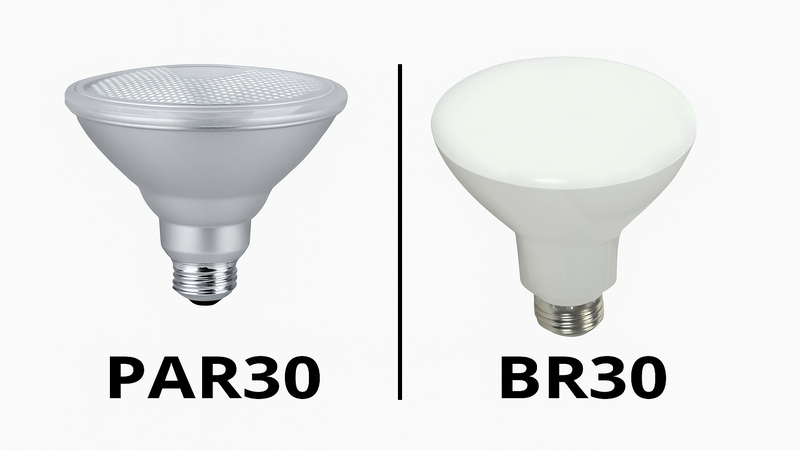
The parabolic shape of PAR bulbs offers a narrow and focused light beam. This light beam makes these bulbs ideal for spotlighting and focused lighting.
Alternatively, the bulged shape of the BR LED bulbs produces a wide and soft light beam, making them an ideal source of lighting for your residential and commercial property.
The reflector defines the light path and its intensity. Thus, it is important to choose a reflector that matches your lighting requirements.
What’s the difference between PAR and BR Bulbs?
The main differences between these two types of light bulbs are explained below. Read them to make an informed lighting decision:
1. Size and Numbering – Explained
The main difference between these bulbs is in terms of their size. The numeric digits that follow the PAR or BR in light bulb codes define the size of bulbs.
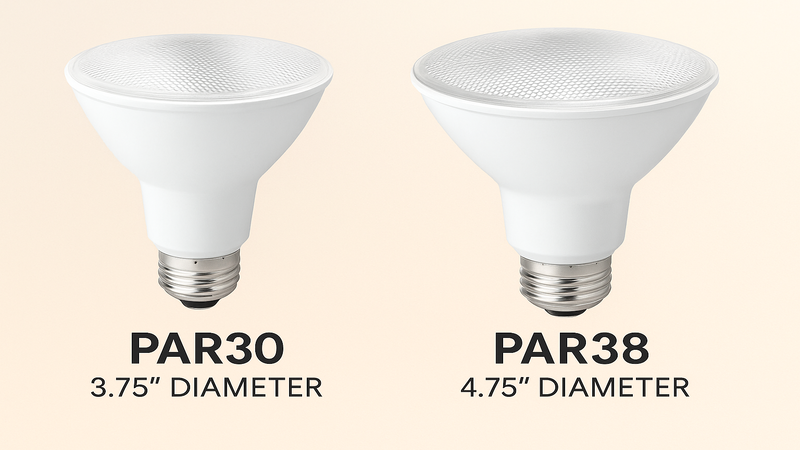
For example, in PAR30 and BR30, 30 represents the bulb’s diameter, measured in eighths of an inch, i.e., 30/8 = 3.75”.
Both the PAR30 and BR30 bulbs share the same diameter, but differ from one another based on the light beams they offer. PAR38 LED bulbs, however, are wider as compared to BR30 LED lamps, as their diameter is measured as 38/8 = 4.75”.
A BR30 vs BR40 vs PAR38 bulb size comparison table with diameter in inches is given below to help readers quickly figure out the right choice:
| Bulb Type | 20 | 30 | PAR38/BR40 |
|---|---|---|---|
| BR | 2.5 | 3.75 | 5 |
| PAR | 2.5 | 3.75 | 4.75 |
2. Beam Angle & Light Output Comparison
The PAR38 vs BR40 bulbs also differentiate from one another based on their light distribution. PAR30 or PAR38 bulbs generate a narrow and focused beam, normally around 40°. This is the reason why these bulbs are ideal for spotlighting and focus lighting.
On the other hand, the reflector type used in BR light bulbs produces a wider and softer light beam. The wider light distribution makes BR30 ideal for flood lighting.
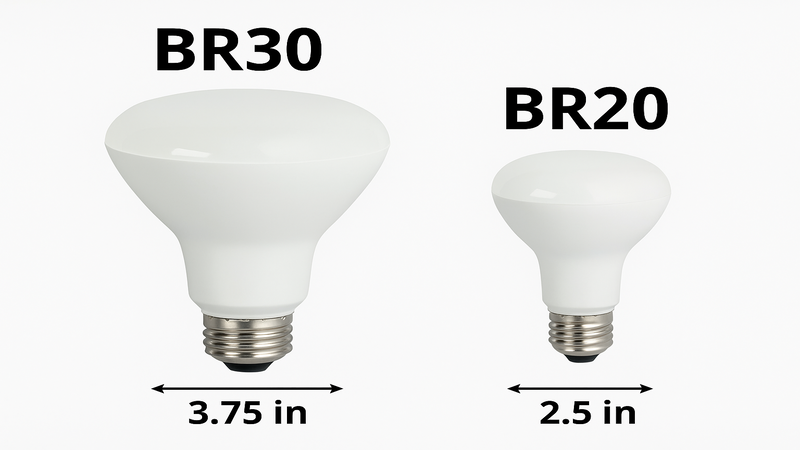
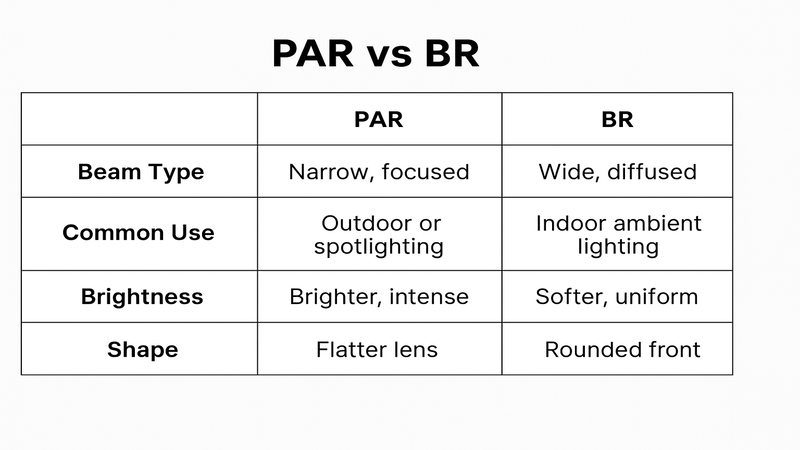
So, if you need to highlight something, opt for PAR, and if you want to light up the entire space, choose BR. The table below will further help you in understanding the difference between these two types:
| Feature | PAR | BR |
|---|---|---|
| Beam Angles | Narrower around 40° | Wider around 110° |
| Light Focus | Spotlight/ Directional light | Diffused/ Soft |
| Shadows | Crispier | Minimal |
3. Uses
The other main difference between BR30 and PAR38 bulbs is in their intended uses. Parabolic aluminized reflector bulbs are typically used in outdoor lighting fixtures, security lighting, and track lights.
PAR38 bulbs are often wet-rated and thus are safe for outdoor use. BR LED lamps are ideally used indoors.
4. Energy & Features
Par30 vs PAR38 vs BR30 bulbs, all are available in LED versions. The LED version consumes less energy and delivers better lighting compared to the incandescent light bulbs.
We can say that advancements in LED technology have contributed to making PAR and BR even more popular.
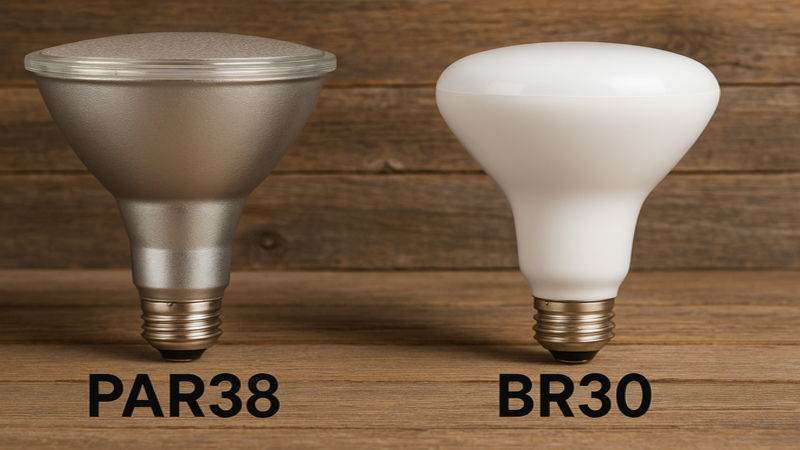
Also, the smart LED bulbs offer dimmable options, are compatible with smart home systems, and offer a high colour rendering index. Higher CRI light bulbs display vibrant and natural colours, and are thus preferred over the low CRI light bulbs.
5. Colour Temperature
Colour temperature refers to how cool or warm the light appears to the human eye. PAR and BR light bulbs come in a wide range of color temperatures (i.e., from 2200K–6500K).
- Warm White (2700K–3000K): Offers a soft and cozy glow that’s perfect for creating a relaxing atmosphere in living rooms, bedrooms, and other lounge spaces.
- Cool White (3500K–4100K): Offers a clean, bright light that produces enough visibility without being harsh. Best for use in the kitchen and bathroom lighting, where clarity and focus are important.
- Daylight (5000K–6500K): Close to natural sunlight, ideal for task lighting, garages, and areas that require high lumens and color accuracy.
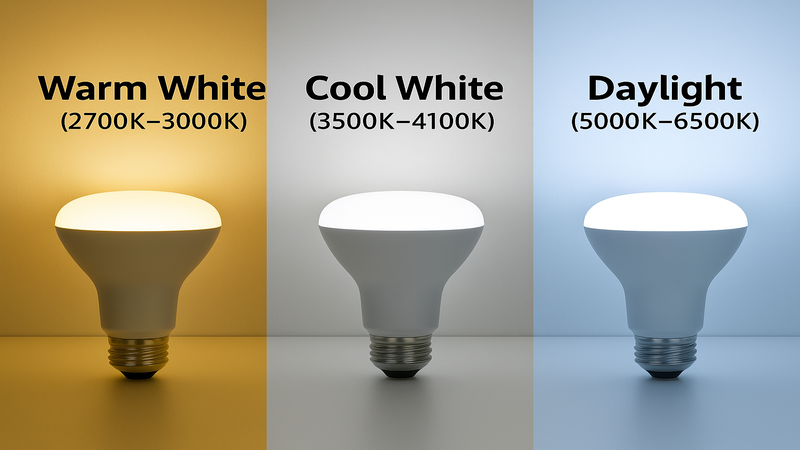
Both PAR and BR bulbs come in different colour temperature ranges; you need to choose the one with the color temperature that best suits your requirements.
BR30 vs PAR38: Which One Should You Choose?
Choosing the right bulb type is a simple task, but a crucial one. With BR30, PAR38, A19, and more options available, choosing the right bulb can be tricky.
To make the right decision, one needs to consider multiple factors, including the lighting need, base type, voltage requirement, and fixture compatibility.
PAR30 and BR LED lamps are both excellent sources of light. The following points will help you in identifying the right type of bulb for your needs:
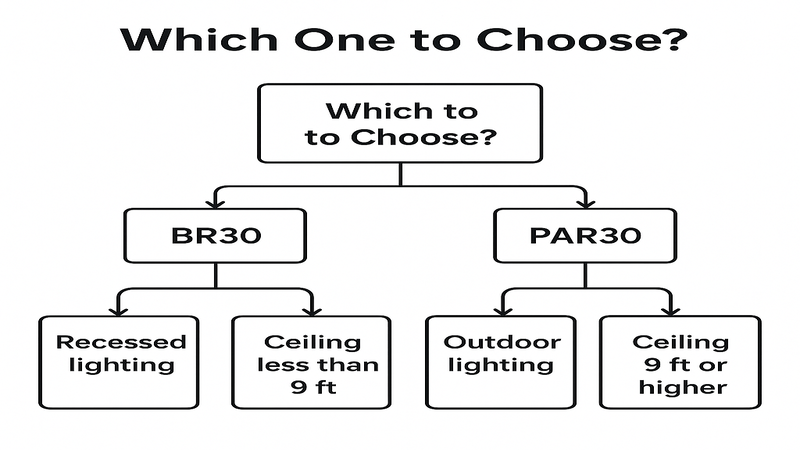
1. Recessed or Outdoor Fixture
For recessed or indoor fixtures, BR light bulbs are ideal as they offer a wide beam that illuminates the whole area softly. BR light bulbs work well in living rooms, some chandeliers, and recessed lighting.
In case you want a light bulb for your outdoor lighting fixtures, then PAR30 bulbs are your go-to choice. PAR bulbs are often water-resistant, durable, and can function well in outdoor settings. The narrow light beam produced by these bulbs is great for security lighting.
2. Brightness Requirements
In case you need brighter light or want to highlight any artwork using light, then parabolic aluminised reflector bulbs are the best option. These bulbs offer more brightness as compared to BR light bulbs.
In case you need moderate or soft lighting, then you should choose BR bulbs. These bulbs typically offer wide and uniform light to illuminate the whole place.
3. Beam Type
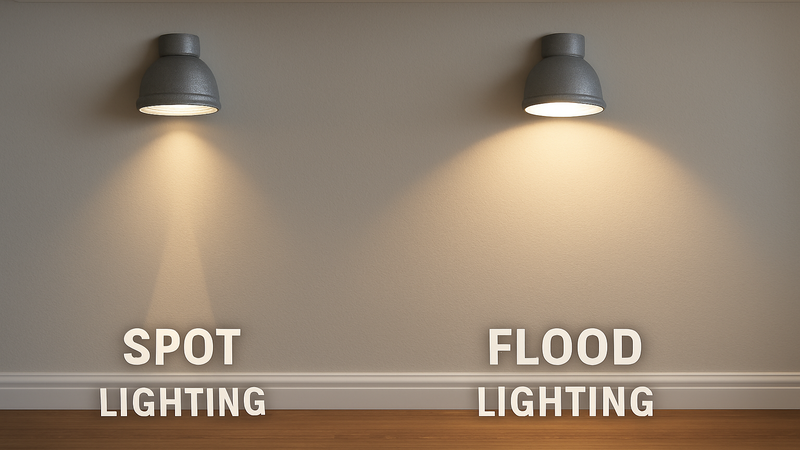
As discussed before, choose PAR light bulbs for focused lighting, whereas if you need soft lighting, then you should opt for a BR light bulb.
4. Ceiling Height
If your ceiling height is less than 9 feet, then you should choose the BR30 bulb, as the wide beam produced by the bulged reflector lights up the whole area softly.
However, if your ceiling height is more than 9 feet, then you cannot choose BR light bulbs. The PAR bulbs offer narrower spot lighting, thus function well in areas where the ceiling is higher than 9 ft.
Conclusion
Both the PAR30 and BR30 light bulbs are ideal sources of light. Though the same in size, these bulbs differentiate from one another based on the beam they produce. PAR bulbs produce a narrow beam, whereas BR LED bulbs produce a wider beam.
Both these bulbs have LED versions available, which are more energy efficient as compared to incandescent lights and halogen bulbs.
While comparing different bulbs, including E26 vs BR30 vs PAR 38, we can say that all these bulbs have special features and are a great source of light, but they suit different requirements.
Risun Corp: A Trusted Partner For All Lighting Needs
Looking for a reliable partner for your retail or commercial lighting needs? Well, no need to look further. Risun Corp, with years of experience, is here to meet all your lighting needs.
No matter whether you need lighting solutions for your house or for your business, our staff is skilled to cater to all your requirements.
So what are you waiting for? Reach out to us now to get a quote for your wholesale requirements and let us take part in your business and give your a boost.
FAQS
Q1. What is the difference between PAR38 and BR30?
The main difference between these two bulb types is in terms of their light beam and diameter. The PAR38 bulb has a diameter of 4.75 inches, and it produces a narrow and intense light beam.
The BR30 bulb, however, produces a wider and softer light beam and has a diameter of 3.75 inches. PAR38 suits a high ceiling, while BR30 is ideal for standard recessed fixtures.
Q2. Can I use a BR30 bulb in a PAR30 fixture?
Even though the bulbs are the same in size, it is not advised to use a BR30 bulb in a PAR30 fixture. It is always recommended to match the light bulb with the fixture type, i.e., to use BR30 bulbs only in BR30 fixtures.
Q3. What does PAR38 mean on a light bulb?
PAR38 is a bulb code that explains the size and shape of the bulb. The PAR on light bulbs indicates that the shape of the bulb is a parabolic aluminised reflector, whereas the 38 refers to the diameter of the bulb in eighths of an inch.
Ever wondered what the difference is between MR16 and GU10 bulbs? Well, you are not alone; most people buying the light bulb ask this exact question, so that they can choose the one that best suits their needs.
The MR16 and GU10 bulbs may appear similar, but they are technically different. Here in this guide, we will explain the differences between MR16 and GU10 to help you make the right choice.
MR16 and GU10 at a Glance (Comparison Table)
A simple comparison of MR16 and GU10 light bulbs is given below to help you figure out the right one for your commercial or residential property.
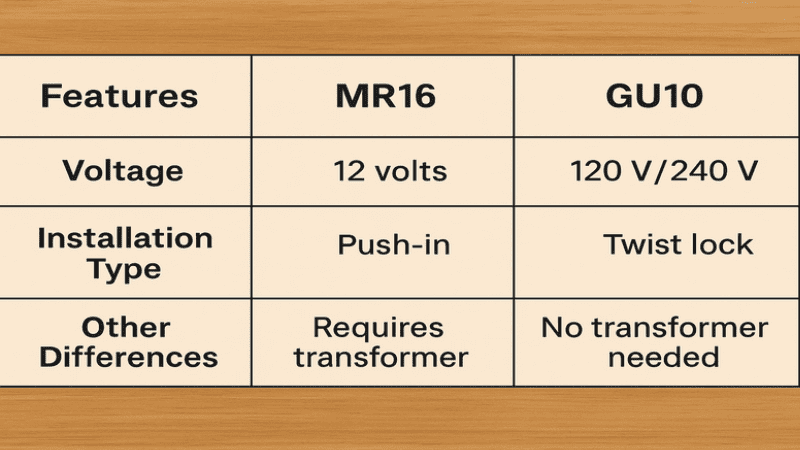
| Feature | MR16 | GU10 |
|---|---|---|
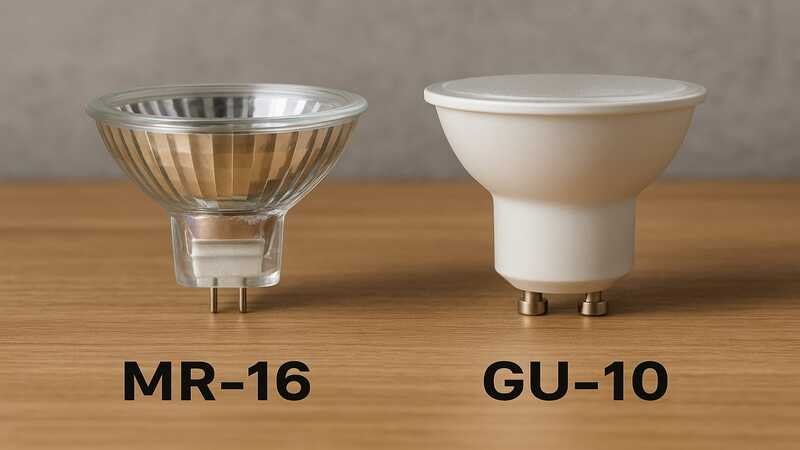
| Base Type | The MR16 bulb features a GU5.3 (2-pin-push-in) base type. | The base type of this light bulb is GU10 (twist-lock) |
| Voltage | These bulbs run on low voltage. 12V is enough for MR16 bulbs. | These bulbs operate at a line voltage of 120V / 240V. |
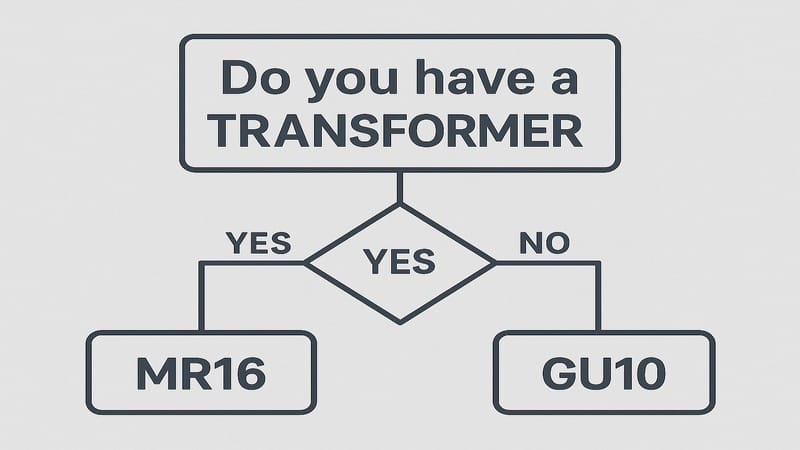
| Needs Transformer | Yes | No |
| Installation | Installing this bulb type is complex | This bulb type can be installed easily |
| Typical Applications | MR16 is used in track lights and spotlights | GU10 is also used in track lights and spotlights. |
| LED/Smart Compatibility | Moderate Compatibility | Good Compatibility |
What Is an MR16 Bulb?
In MR16, MR stands for Multifaceted Reflector, referring to the internal design that controls light direction. The “16” refers to the bulb’s diameter, measured in eighths of an inch, i.e., 16/2 equals 2 inches.
The base of the MR16 bulb is a GU5.3 base type (with a 2-pin connector). These bulbs operate on low voltage, i.e., 12 V; hence, these bulbs need a transformer to convert the actual voltage (i.e., 120V or 240V) to 12V.
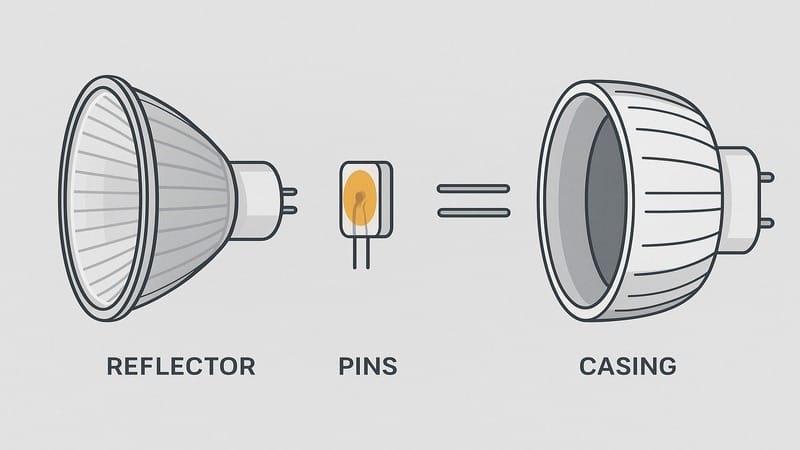
These light bulbs are used in indoor lighting fixtures, i.e., recessed downlights, retail displays, art galleries, and track lighting, and where focused lighting is required. LED MR16 bulbs can function with MR16 fixtures.
However, it is important to note that when switching to MR16 LED alternatives, ensure transformer compatibility is checked, as not all transformers are intended to be used with LEDs. Make sure to choose a transformer that suits your MR16 LEDs.
Our MR16 smart bulbs are now becoming popular. These lighting options offer automated control, scheduling, and colour tuning. However, they must be paired with a compatible low-voltage transformer to function properly
What Is a GU10 Bulb?
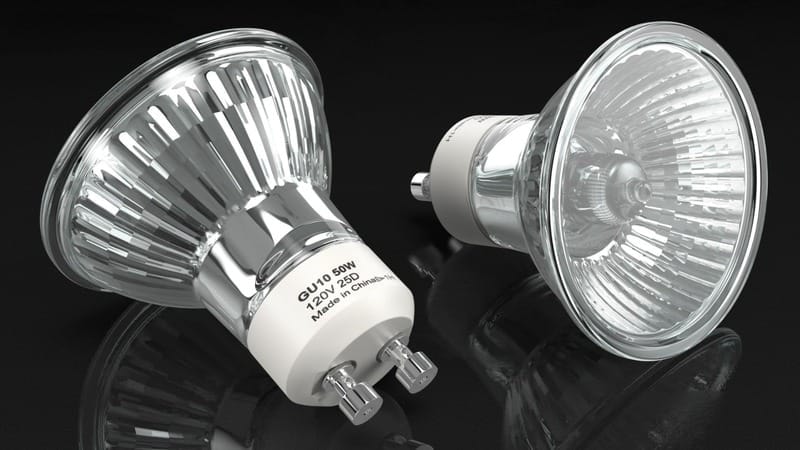
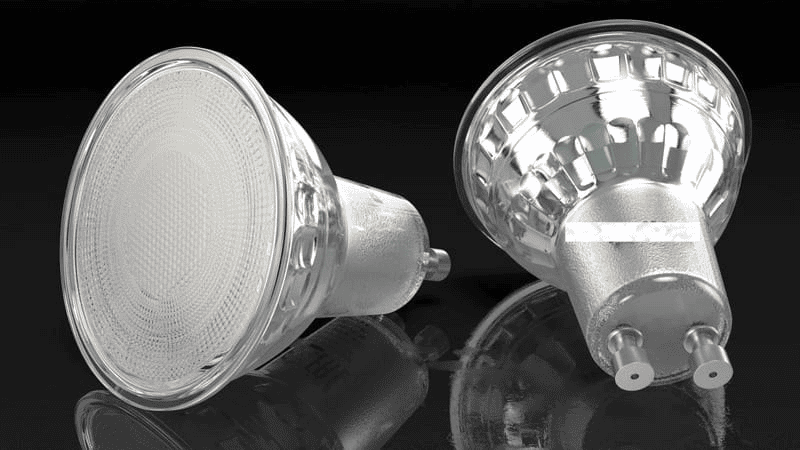
The GU in GU10 refers to general use; this indicates that these bulbs are commonly used as a general lighting source. The GU10 bulb has a twist-and-lock bi-pin base; whereas 10 indicates that the difference between the two pins is 10mm.
MR16 has a push-in base with two pins, which push the MR16 bulb into the socket. Whereas GU10 features a twist-lock base, owing to the base type, GU10 bulbs are easier to install.
These halogen bulbs operate directly on the main voltage, i.e., 120 V or 240 V; this is the reason why these bulbs don’t need any transformer to operate. The ease of installation adds to making GU10 a popular choice for homeowners, electricians, and commercial lighting fixtures.
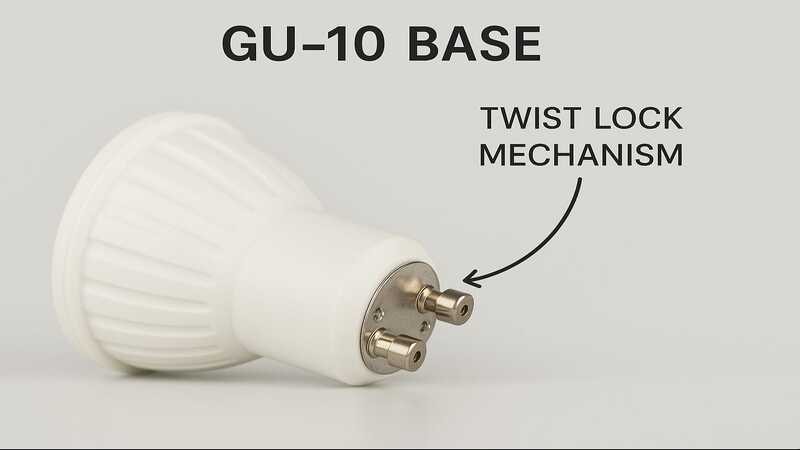
GU10 bulbs, with their small size and focused lighting beam, are popularly used in ceiling spotlights, track lighting, kitchen, and hallway fixtures.
Also, you can directly replace GU10 bulbs with GU10 LED lighting alternatives. GU10 operates on the main voltage and doesn’t need any transformer or external LED drivers.
5 Key Differences Between MR16 and GU10 (In Detail)
The key differences between the mentioned types are as follows:
1. Base Type: GU5.3 vs GU10 Halogen Bulbs
The base is the part of the bulb that connects it to the lighting source. MR16 and GU10 differentiate from one another based on their base type.
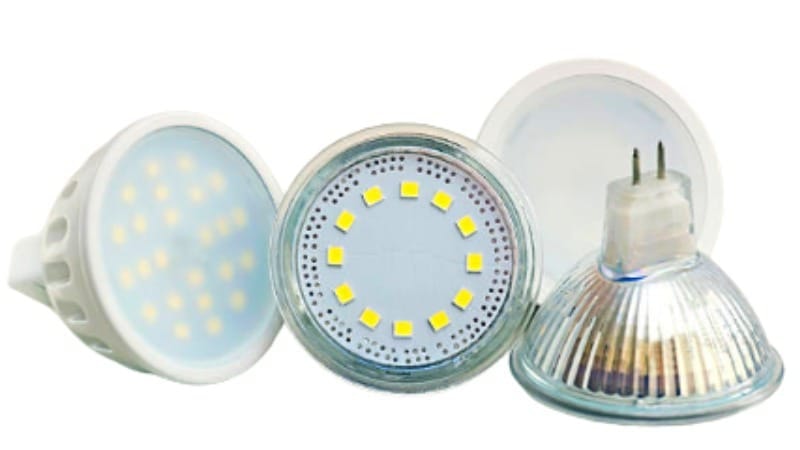
MR16 bulbs use a GU5.3 base, which features two thin pins that push into the socket. Installing these bulbs is a bit tricky.
GU10 bulbs have a twist-lock base, with two short, thick pins spaced 10 mm apart. They fit safely into the socket, making installation simpler, especially in ceiling fixtures.
Note that the bases are not interchangeable, so make sure to check your fixture before purchasing any light source.
2. Voltage: Low vs Mains
The other thing that differentiates these types is the voltage they run on. MR16 bulbs need low voltage to operate, i.e., 12V is enough for these light bulbs to operate. However, GU10 bulbs work on the actual voltage, i.e., 120V in the US and 240V in the UK/EU.
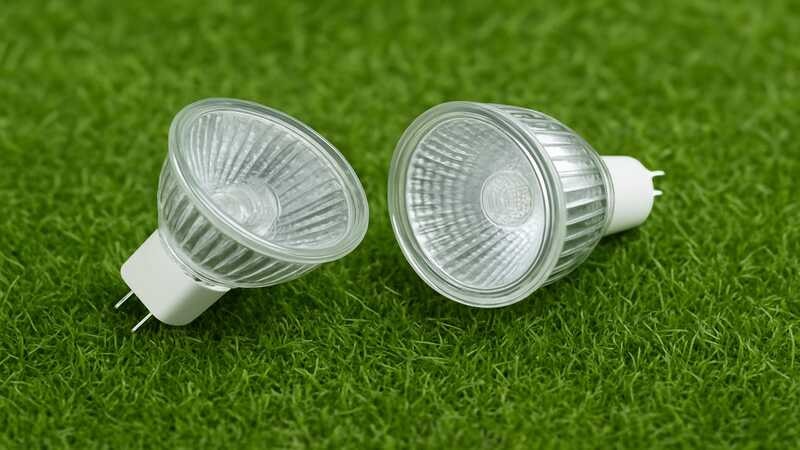
MR16 bulbs need a transformer to reduce the main voltage; however, GU10 bulbs do not need one. If you are looking to switch to LED alternatives soon, it is advised to choose GU10.
3. Compatibility: Fixtures and Fittings
The bulbs may look the same at first glance; however, they cannot be used interchangeably at all. Both these bulbs differ in terms of their base type, voltage, and fixture design.
So, if you are upgrading your lighting from halogen to LED, make sure that the new light bulb type is adjustable with the fixture.
4. Installation Complexity
Installing MR16 is tricky, especially if you are upgrading to LED. On the other hand, installing GU10 is simple and can be carried out within seconds.
5. Smart Lighting Options
Both MR16 and GU10 are available in LED and smart versions. GU10 smart LED light bulbs are commonly used and can be used in place of GU10 halogen bulbs easily.
MR16 bulbs are also available in LED smart options. But as mentioned before, they need a 12V transformer, thus contributing to the complexity of installation. The advanced LED technology further adds to the popularity of these light bulbs.
How to Choose the Right Light Bulb for Your Setup
When choosing the light bulb for your setup, the first thing you need to consider is whether you are working with an existing fixture or installing a new one.
If You Already Have Installed Fixtures:
If you already have the fixture installed, check the base type. If the base type is GU5.3, then it is an MR16 bulb, and if it’s a GU10 base, then the bulb is GU10 type.
- If it’s MR16, check the transformer compatibility with the LED MR16 bulb before switching.
- If it’s GU10, you can easily switch to GU10 LED or smart bulbs directly.
If You’re Renovating or Buying New Fixtures:
In case you are buying or designing a new fixture, then it is recommended to opt for GU10 as it functions with the actual voltage, is simple to install, and needs lower maintenance. Also, GU10 fixtures are compact and thus add to the aesthetics of modern and minimalistic interiors.
Recommended Smart Bulb Upgrades (MR16 & GU10)
MR16 and GU10 light bulbs both have smart options available. Smart MR16 bulbs offer app control, assistant support, and dimming features.
The drawback is that they require a compatible transformer, so one needs to ensure transformer compatibility while installing smart LED MR16 bulbs.
Alternatively, GU10 smart bulbs run on 120V/240V without a transformer. They are easy and quick to upgrade and offer features like voice control, colour changing, automation, and remote control. GU10 smart bulbs are generally recommended for modern setups.
Conlusion
While choosing a light bulb, always ensure to check your fixture’s base type and voltage needs. MR16 needs an added external source for balancing voltage and energy efficiency, while GU10 connects directly to the power source; thus, it is ideal for quick and easy upgrades.
No matter whether you’re choosing MR16, GU10, or any other type of light bulb, always choose a reliable supplier to get benefits in the long run.
Transform Your Lighting Experience with Risun Corp
At Risun Corp, with over a decade of lighting expertise, we offer high-quality GU10 and MR16 bulbs. Our staff is experienced and skilled enough to meet your unique retail or wholesale requirements.
No matter whether you want lights for your homes or high-quality yet cost-effective lighting solutions for your business, Risun Corp can meet all your needs.
Contact our team to request a bulk quote today and give us a chance to improve your business.
FAQS
Q1. What is the difference between MR16 and GU10 LED downlights?
The main difference between these LED downlights is that the MR16 uses a 2-pin GU5.3 base and requires a 12V transformer, while GU10 has a twist-lock base and runs directly on 120V or 240V main power.
Q2. Are GU10 LED bulbs being phased out?
No, GU10 LED light bulbs are not being phased out. They remain popular due to their compatibility with the main voltage. Ease of installation further adds to the popularity of these light bulbs.
However, with the availability of energy-efficient, eco-friendly, and technologically advanced products, people do give GU10 bulbs a second priority.