
Fluorescent tubes are used as a staple in commercial and residential settings. T5, T8, and T12 are commonly used in different spaces due to their distinct characteristics.
But which one is best for your space? This guide will explain the difference between T5 and T8 fluorescent tubes. Also, explain T12 vs T8 to help you make an informed choice for lighting solutions.
What Does “T” in T5, T8, T12 Mean?
A fluorescent tube is a gas-discharge lamp that produces visible light. These fixtures are available in various sizes. The letter “T” indicates their tubular shape.
The accompanying number refers to the size of the bulb. It is the diameter of the bulb in eighths of an inch. The diameter of the tube influences how much light it produces and the fixture’s size.
| Tube Type | Diameter (Inches) | Description |
|---|---|---|
| T5 | 5/8" | Slender and compact |
| T8 | 1" | Standard commercial size |
| T12 | 1.5" | Older, bulkier design |
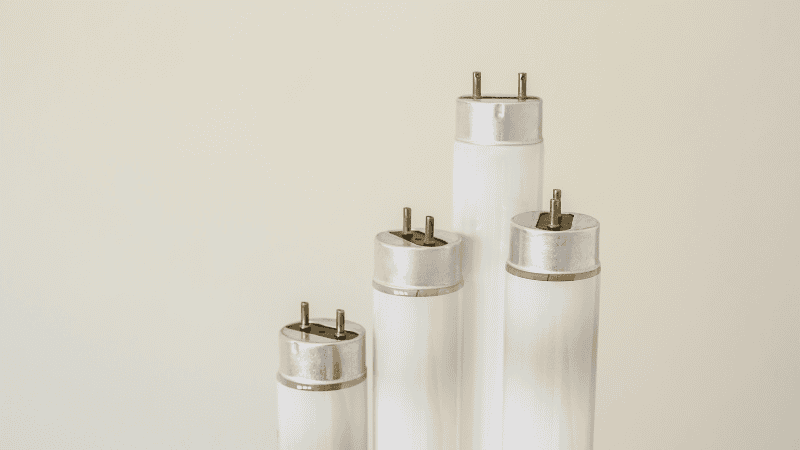
The diameter of the fluorescent lighting directly affects fixture compatibility, light output, and energy efficiency. The pin spacing varies by type. It affects which fixture the tube fits. For instance, a T5 tube’s slim design is used in tight or recessed fixtures.

The electrical difference or required watts for a tube shows its efficiency and ballast requirements. Each type of tube operates with a specific kind of ballast, magnetic or electronic.
A ballast is an electrical device that controls the current for the safe operation of the tube. It also prevents overheating or flickering of the lighting fixture. You can’t use a different tube if the bulb and ballast aren’t compatible. So, the main difference between the fluorescent tubes lies in tube diameter, efficiency, and ballast compatibility.
T5 Tubes: Features, Benefits, and Use Cases
T5 fluorescent fixtures are the most modern and efficient option. Their compact diameter of 5/8” and high lumen-per-watt output make them a popular choice where space is limited and efficiency is crucial.
Key Features:
The T5 slim shape is designed to operate in a limited space. It is highly efficient, typically emitting 110 lumens per watt. T5 operates on an electrical ballast, which reduces flicker and improves performance. It is available in 14W to 80W to fulfil different lighting needs.

Benefits:
T5 tubes are highly energy efficient. It is ideal for reducing operating costs in commercial settings. They can last up to 30,000 hours under optimal conditions.
Their high CRI (Color Rendering Index) improves visibility. In addition, T5 tubes are available in high-output (HO) options. It is suitable for high-ceiling spaces or any location that demands bright, intense lighting.
Drawbacks:
Among various benefits, T5 tubes have some drawbacks. They have a higher upfront cost than older T8 and T12 fluorescent lamps. T5 requires compatible fixtures and ballasts, which are mostly not suitable for old retrofit without full replacement.
Use Cases:
T5 fluorescent fixtures are mostly used in limited spaces or where high-intensity light is required. It can be used in office buildings, retail stores, display lighting, classrooms, laboratories, and warehouses with high ceilings.
The difference between T5 and T8 bulbs is that T5 lights are suitable for energy-efficient systems. Their advanced fluorescent lighting technology and compact size maximize performance.

T8 Tubes: Features, Benefits, and Use Cases
T8 tubes are one inch in diameter as compared to T12’s one and a half inches. It has become a popular choice in lighting retrofits. Because of their balance of cost and efficiency, they are used as an alternative to older T12 models.
A T8 bulb is designed to operate at 32 watts and works best with an electronic ballast. An electronic ballast is an electrical device that controls the current.
Key Features:
T8 tubes are compatible with both electronic and magnetic ballasts. Their versatility in color temperature makes them suitable for commercial and residential settings.
Benefits:
T8 tubes offer good energy savings compared to T12 due to their efficiency in converting energy into light. The lumen output is approximately 2,600–3,000 lumens for a 32W tube. T8 lasts up to 24,000 to 30,000 hours, depending on the manufacturer and operating conditions.
As compared to T5, it is affordable and easily available, which is why it is more popular for both commercial and residential use. It saves energy than the older T12 bulbs.
Use Cases:
Due to their long span, energy-efficient T8 is widely used in offices, commercial buildings, warehouses, retail spaces, and also in some residential areas.

Drawbacks:
T8 tubes are slightly less efficient than T5. The fixture compatibility requires ballast updates.
When choosing between fluorescent T8 and T12, T8 is typically the more energy-efficient and long-lasting. They offer immediate performance and cost benefits. Their compatibility with electronic ballasts also makes them a straightforward solution for modernized lighting.
In the discussion of T8 vs T5, T8 bulbs are typically selected when budget constraints are more pressing, but efficiency still matters. They’re especially useful in scenarios that don’t require the ultra-slim size of T5 tubes.
T12 Tubes: Features, Drawbacks, and Use Cases
These are the least efficient among the three tube types. In addition to the diameter, T12 tubes also tend to be less energy efficient. A T12 tube typically operates at 40 watts, compared to a T8’s 32 watts. A T12 bulb is designed for a magnetic ballast, which is why it consumes more energy.
In T12 fixtures, the pins are often larger than the pin spacing found in T8 fixtures. If the number printed on your existing tube says F40T12 or F34T10, you’re likely dealing with a T12 or a transitional variant.

Use Cases:
Due to low energy efficiency, it results in high energy bills and is now being phased out. Still, T12 fixtures can be found in old industrial buildings, commercial settings, and retrofit-unfriendly locations.
Pros:
One of the few advantages of T12 fixtures is that they are the least expensive in the trio. It is suitable for older spaces where new retrofit installations are not possible or are very high in cost.
Cons:
While T12 bulbs are cheaper to install, but not efficient in the long run. The diameter and the really old design of T12 tubes make them less efficient.
In T12 fixtures, the old technology of gas discharge and phosphorescence is used to produce light. It causes more energy consumption and results in high electricity bills.
It requires frequent replacements due to a shorter life span. Many people switch from T12 to LED to save on costs and reduce maintenance.
The main difference between T8 and T12 is in power consumption and longevity. T12 fixtures use more electricity, emit less light per watt, and require more frequent replacements.
T12 tubes are inches, and the T5 models are the slimmest at just 5/8 inch.
While some facilities continue using T12 for budget reasons or compatibility with old fixtures, however, most modern lighting standards recommend transitioning to T8 or T5 for better light quality and long-term cost savings.
Comparison Table: T5 vs T8 vs T12 Tubes
It is essential to understand the difference between T5, T8, and T12 tubes when planning retrofits. With this side-by-side comparison table of T5 vs T8 vs T12, you can visualize the performance differences. It enables you to make smarter purchase decisions.
| Feature | T5 | T8 | T12 |
|---|---|---|---|
| Diameter | 5/8" | 1" | 1.5" |
| Efficiency | High | Medium | Low |
| Lifespan | Long | Medium | Short |
| Cost | Higher | Moderate | Lower |
| Use Case | Modern/commercial | General use | Older settings |
T12 vs T8: Why It’s Time to Upgrade
If you are still operating T12 systems, now is the time to upgrade to T8 tubes to reduce electricity use and costs with improved light quality.
The difference between a fluorescent T12 and T8 tube is in size, efficiency, and ballast type. In the comparison of T12 vs T8, T8 wins in every category: efficiency, brightness, and cost over time.
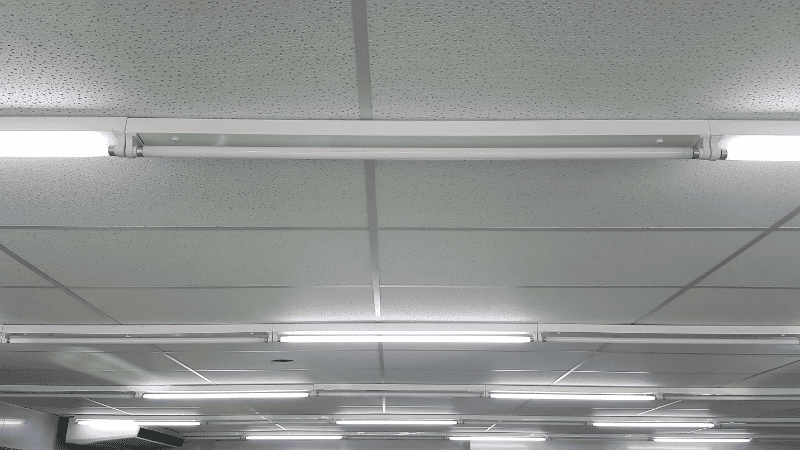
T12 tubes are now being phased out and becoming harder to find. So, if you switch to T8, it will keep you ahead of supply challenges while modernizing your lighting system.
T8 vs T5: Which One Is Right for Your Project?
The difference between T8 and T5 bulbs is based on fixture compatibility and application goals. T5 bulbs are ideal for new construction or modern lighting retrofits for maximum efficiency. Their high lumen output and compact size make them ideal for high-ceiling or high-precision applications.
T8 tubes are a more budget-friendly solution, especially when upgrading older T12 fixtures without a complete overhaul. They integrate into existing systems easily. To decide which lighting option is right for you, evaluate your lighting layout, energy goals, and existing infrastructure.
Conclusion
After understanding the difference between T5 vs T8 vs T12, now it’s time to make a smart business move by upgrading your fluorescent lighting.
With the rising energy costs and growing focus on workplace safety and comfort, switching from T12 to T8 or considering a move to high-efficiency T5 lighting makes financial and operational sense.
Want to take the next step toward optimizing your lighting setup? Switch to the tube that meets your performance, budget, and energy needs.
Perfect partner for Brighter Your Needs and Project
At Risuncorp, we deliver high-quality lighting systems, including fluorescent tubes. We focus on lighting that reduces energy use, improves visibility, and fits within budget constraints.
Ready to see how our lighting solutions can brighten your business? Contact us today for a free consultation or to request a product catalogue.
Do you install bright lights, but the room still feels dim? For effective and smarter lightning decisions, it’s essential to understand lux vs lumens.
It helps you to decide which lighting fixture is better for your warehouse, office, or retail space lighting. Lumens and lux are both terms used to measure light in different ways. Our guide will help you clarify the confusion.
What is a Lumen?
Luminous flux measures the total visible light emitted by a source, which is measured in lumens. So, lumen (lm) measures the total amount of visible light emitted from a source, regardless of direction. In simple words, it means the total quantity of light your fixture produces.
In everyday life example think of turning on a hose. The total amount of water coming out is like lumens. It doesn’t matter where it goes.
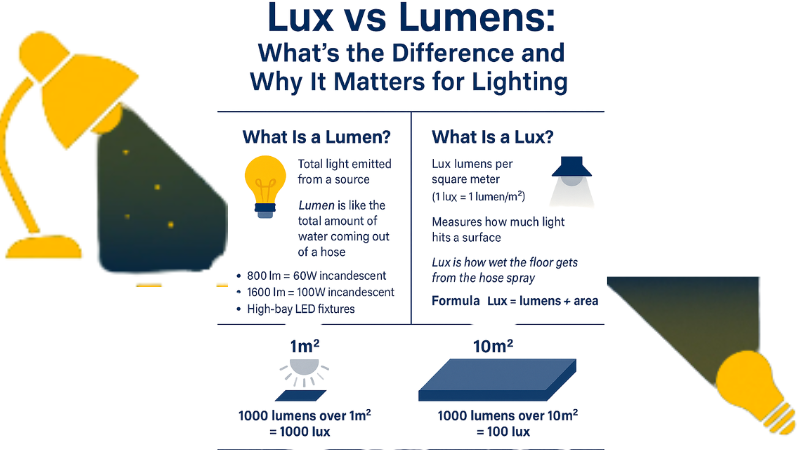
Common bulb lumen outputs:
- 800 lumens = 60W incandescent bulb
- 1600 lumens =100W incandescent
- High bay LED fixtures exceed 20,000 lumens
Buyer’s Tip: If you’re evaluating commercial lighting options, pay close attention to luminous flux or efficacy, measured in lumens per watt (lm/W). This metric tells you the luminous efficacy of a fixture and how it converts electrical energy into visible light.
For example, a high-performance LED fixture with 130 lm/W delivers significantly more light than one with 90 lm/W, even if both consume the same power. This is why lumen output and lm/W are essential considerations for outdoor lighting, large facilities, and energy-conscious buyers.
What is a Lux?
Lux (lx) is a unit that measures illuminance. It is the amount of light that falls on a surface. Technically, it is specified as one lux = one lumen per square metre (1 lm/m²).
If a light emits 1,000 lumens and is spread evenly over 10 square meters, the surface will receive 100 lux. If lumens are like water coming from a hose, lux is how wet the floor gets. The more concentrated the water, the wetter the spot, just like more focused light increases lux.
To measure lux, you can use this formula:
Lux = Lumens ÷ Area (m²)
With this light measurement formula, you can decide how much lux is needed in a specific area. Lux is critical in environments where lighting impacts performance, safety, and comfort, such as office workstations, warehouses, manufacturing lines, laboratories, and inspection stations.
For optimal visibility and safety of workplaces proper lux level is essential to follow the OSHA light illumination requirements for different applications.
Difference Between Lumen and Lux
Visual Example:
A 1000-lumen bulb:
- In a 1 m² room = 1000 lux
- In a 10 m² room = 100 lux
Lumen remains the same no matter how much area or distance of a place. On the other hand, distance and area greatly affect lux, even when lumens stay the same.
Top 7 Factors Affecting Lumen Output
Lumen output is not always the same. Several factors affect the luminous intensity. Two lights with the same wattage or look cannot produce the same brightness. Here are the factors that you should keep in mind for high illumination:
1. Wattage
It is a usual concept that the higher wattage means more light. But it is limited only up to a point. To determine brightness, check the luminous flux emitted rather than just the wattage. A 100W incandescent and a 100W LED use the same energy, but the LED lights produce way more lumens.
2. Efficiency(lm/W)
Efficiency (lm/W) shows how well a light turns power into brightness. A 130 lm/W fixture produces more light output than one with 90 lm/W. For example, a 2000-lumen light covers more area than a 1000-lumen one. This is important for larger areas or commercial lighting, where energy costs matter.
3. Type of Light Source
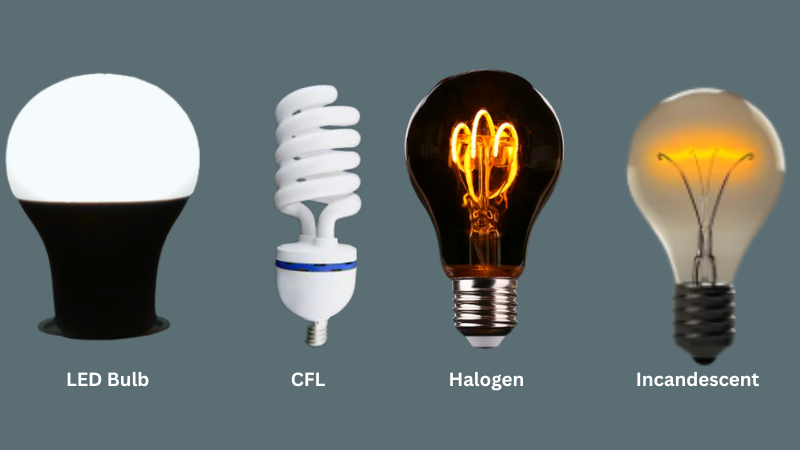
Not all bulbs produce the same luminance. Different light types produce different lumen levels:
- LEDs: LED Bulbs created with LED technology emit the highest lumen output and are energy efficient.
- CFLs: CFLs produce moderate lumens and are less efficient than LEDs.
- Halogens/Incandescents: Low lumens, more heat, and energy waste
4. Light Direction and Optics
Fixtures that are designed to focus light on a center point emit more lumens than others. Reflectors, diffusers, lens angles, and light distribution can direct light more effectively or even waste it. A light with a focused lens in a certain direction is brighter because more lumens hit the target.
5. Fixture Design and Build Quality
Well-designed fixtures let more light escape. Poor-quality housing or materials can block or absorb light. It cut down the lumen output. In commercial settings, this affects both brightness, color accuracy, and efficiency.
For color accuracy, check if the fixture lists Rf values based on IES TM-30-18, a modern standard that goes beyond traditional CRI.
6. Operating Temperature
Heat can also affect how much light is produced and reduce lumen output, especially in LEDs. If the fixture doesn’t cool properly, the light can dim faster over time. Lights with good thermal management keep lumen levels stable.
7. Aging and Lumen Depreciation
All light sources dim over time. LEDs usually last longer, but over time, they also lose brightness slowly. A spec like L70 means the fixture will drop to 70% of its original brightness after a certain number of hours (e.g., 50,000 hrs).
Tip: Always check actual lumens, not just wattage or “equivalent” ratings.
How to Convert Between Lumens and Lux
If you want to convert lux to lumens or lumens to lumens, this can be achieved by a simple formula:
- Lux = Lumens ÷ Area (m²)
- Lumens = Lux × Area (m²)
For example, if you want 500 lux in a 20 m² room (500 × 20 = 10,000 lumens), you will need 10,000 lumens. With this calculation, you can decide the right lighting for barbershops, showrooms, warehouses, your workspace, or any area where precise illumination matters.
Recommended Lux Levels for Common Spaces
| Application | Recommended Lux |
|---|---|
| Hallways & Corridors | 100 – 200 lux |
| General Office Work | 300 – 500 lux |
| Detailed Drawing / Drafting | 750 – 1,000 lux |
| Warehouses (low activity) | 100 – 200 lux |
| Warehouses (detailed work) | 300 – 500 lux |
| Retail Spaces | 500 – 800 lux |
| Classrooms | 300 – 500 lux |
| Hospitals (General) | 300 – 500 lux |
| Hospital Operating Rooms | 1,000 – 10,000 lux |
| Residential Living Rooms | 100 – 300 lux |
| Kitchen General | 150 lux |
| Kitchen Working Area | 400 lux |
| Bathroom | 150-300 lux |
| Stairs | 100-150 lux |
| Inspection & Quality Control | 1,000+ lux |
Choosing the Right Lighting Option for Your Space
To choose the right lighting for your space, you need to keep several factors. Here is the step-by-step guide for your convenience:
Identify Your Space and Its Purpose
First, identify the type of your space. If it is an office, warehouse, retail store, or workshop. The lighting needs vary depending on how the space is used and the level of visual tasks performed.
Use Lighting With the Recommended Lux Level
Find the appropriate lighting standard for your space from the above lux chart. A lux meter can also identify your needs. It measures light intensity and brightness, which the human eye can’t do.
Calculate the Total Lumens Needed (lux × square metre)
To find the total lux value for your space, multiply the recommended lux rating by the total area in square meters. This gives you the total number of lumens your lighting system provides (e.g., 500 lux × 20 m² = 10,000 lumens).
Calculate How Many Fixtures You Need
Divide the total lumens required by the lumen output of a single fixture. If one fixture emits 2,000 lumens, then you will need 5 to meet a 10,000-lumen requirement. This will help you to decide the lighting requirements for a warehouse, showroom, or any other area.
Check Technical Specs
A light fixture’s technical specs affect its performance. Check the technical specs before purchase:
- CRI (Color Rendering Index): It will identify the color accuracy of a fixture. Select a fixture with 90+ CRI.
- Beam angle: It will identify the spread of light. Use a narrow beam angle for task lighting and a wide beam for general lighting.
- IP rating: It shows a fixture’s moisture and dust resistance.
- Color temperature: Color temperature in Kelvin identifies the feel and appearance of light of a fixture.
- Energy efficiency: How much energy a light consumes, generally in watts.
These factors help you choose lighting large or small area. For optimal lighting solutions, work with your supplier’s lighting engineer for better results.
Common Applications of Lux and Lumens in Real Projects
Better lighting needs proper lux and lumens levels. Lux and lumens requirements for different spaces are different:

- Photography & Videography: Good lighting is essential for clear images. For indoor scenes, 100-200 lux is sufficient, and for well-lit outdoors, go for 10-50 lux. Aim for high lumen levels for better lighting.
- Hospitals: Surgical rooms require 1000 lux for clarity. Patient areas typically need 300 lux to create a calm, comfortable atmosphere.
- Warehouses: These environments require high-lumen fixtures. Warehouse lighting needs wide, even distribution with minimal glare, which reduces eye strain and maintains workplace safety.
- Classrooms: Classrooms’ lighting must be balanced. Too bright can cause strain, and dimming reduces focus. A target of 300–500 lux supports visibility without fatigue.
Tips for Better Lighting Choices (Even If You’re Not a Lighting Pro)
- Consider lumens to understand the actual light output. Ignore watts because they only tell the consumed energy, not how many lumens the light will be.
- Use the beam pattern angle and light distribution strategically. A narrow beam is ideal for spotlighting or high ceilings. A wide light beam angle works best for general area coverage.
- Aim for high CRI and the right lux levels for industrial areas to enhance safety. It will help in accurate task performance and reduce eye strain.
Good lighting isn’t just functional for your retail space. It highlights products and boosts sales.
Conclusion
Now that you know, lumen and lux are both essential for smart lighting design. Calculate the right lux and lumens levels for each space. It will help you create a safer, productive, and visually comfortable environment.
Ready to Design Lighting That Actually Works?
At Risuncorp, we specialize in commercial and industrial LED lighting solutions backed by over 15 years of experience. Our fixtures are engineered for optimal lumen output, consistent lux distribution, and long-term reliability.
Ready to plan your next project? Download our latest product catalog or contact us to request a consultation today and get the right lights and lighting solution you need.
FAQs
Q1. Is 1000 lumens bright enough?
Yes,1000 lumens of brightness is enough for a small indoor 5 m² space.
Q2. How much lux is good for a home office?
Choose a task lamp or overhead light with at least 500 lx for general work. For more detailed tasks, a 700-1000 lux level is essential with proper natural light balance for eye comfort.
Q3. What’s more important: lux or lumens?
Both. Lumens tell you the output. Lux tells you the light’s effectiveness. For lighting design, lux matters more.
Q4. Can I convert lux to lumens?
Yes, you can convert lux to lumens with this simple formula: Lux = Lumens / Area (m²)
Q5. Why do some rooms feel dark even with bright bulbs?
It is because the light isn’t directed where you need it. Low lux levels can cause this even with high lumens.
High-tech 6500K daylight bulbs closely mimic the midday sunlight illumination. These bulbs emit crisp blue-white light, which powers commercial workplaces. Professional buyers like manufacturing facilities, commercial buildings, and retail chains should pay special attention to these LED bulbs for their energy efficiency, durability, and long lifespan.
Key Considerations Before Buying a 6500K LED Bulb
Here are some important things you should consider before buying 6500K light color bulbs:
1. Understand What 6500K Means
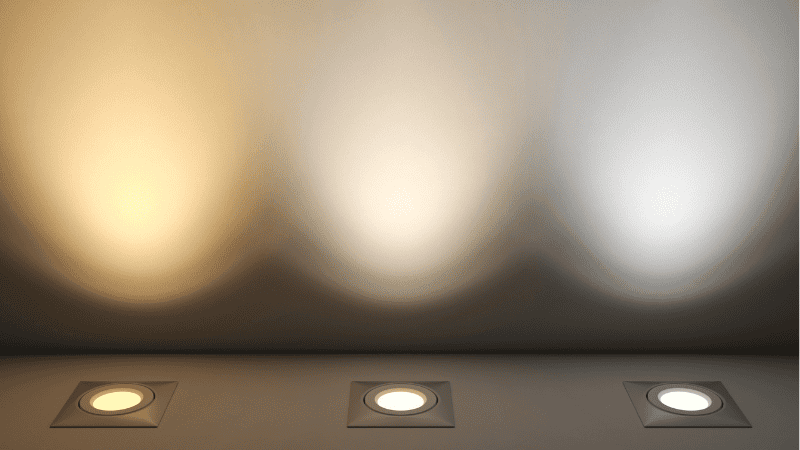
The “K” stands for Kelvin. It measures color temperature. Light color temperature between 2700K and 3000K generates a comforting yellow intensity. Cooler lighting with a bluish appearance appears when you raise the number of photopic units. The 6500K color temperature replicates the exact light quality of noon daylight.
Is 6500K bright? Yes and no. It doesn’t emit more lumens as compared to 2700K and 3000 K. Still, this light appears significantly brighter to human vision. Blue light stands out more to our eyes among other color tones. The apparent brightness quality of warm light works effectively in professional workspaces.
6500K lighting can boost alertness. People using a 6500K lighting system tend to perform better in focus-requiring tasks. The lighting technology is optimal for work activities, yet fails to create relaxing environments.
Bright LED color temperature affects your alertness levels through its wavelength. Your emotions and task execution abilities experience changes under its effect.
| Feature | 2700K (Warm White) | 5000K (Neutral White) | 6500K (Daylight) |
|---|---|---|---|
| Light Appearance | Yellowish, Cozy | Neutral, Clean | Bluish-White, Crisp |
| Best For | Residential, Relaxing | Offices, General Tasks | Industrial, Task-Oriented |
| Perceived Brightness | Lower | Medium | Higher |
| Mood Impact | Relaxing, Calming | Neutral, Focused | Alerting, Energizing |
2. Determine If 6500K Is Suitable for Your Environment
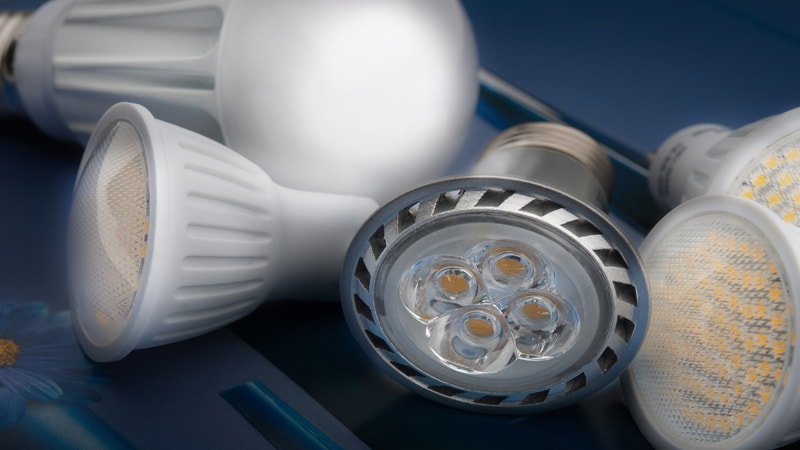
The compatibility of 6500K daylight bulbs varies across unique application environments. Some industrial places need different types of light bulbs to ensure proper visibility during quality checks and assembly work. A 6500K color light is the ideal light bulb for these situations.
- Residential Spaces
Daylight bulbs have a cool hue, and they don’t work well as LED bedroom lights. 6500K LED bulbs are also not suitable for living rooms or dining areas. They create an unfriendly atmosphere.
This goes against the need for relaxation. Utility rooms, garages, and retail stores need this lighting. It provides the bright light required for tasks.
- Office Spaces
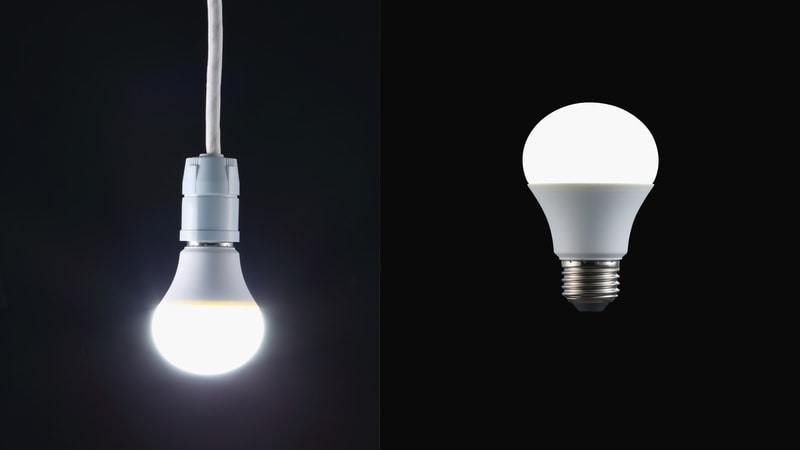
A 6500K light source helps office workers stay focused. This leads to greater productivity and better task performance. Research stated that workers under 6500K bright lighting work attentively with higher concentration levels and perform tasks better.
Businesses must consider both personal preference and glare situations while choosing the right lighting. And switching to 6500K LED lighting in offices can reduce lighting energy costs by up to 60%.
- Creative Spaces
The spaces, like graphic design studios, photography labs, or textile studios, are color-critical environments. The neutral light of 6500k bulbs helps to replicate daylight, giving a cool white beam.
Ultimately, creative spaces prefer to use these bulbs to maximize their potential.
3. Pay Attention to CRI (Color Rendering Index)
Choosing the right Color Rendering Index (CRI) remains critical for most buyers who need daylight LED bulbs. The CRI evaluates how well a light system shows real object colors in relation to daylight illumination. This measurement runs from 0 to 100, with complete accuracy found at one hundred points.
Products brightened up by lights with low CRI values become uncharacteristically pale. And their colors turn incorrect and washed out. Businesses and brands that need exact color accuracy can face significant challenges because of this issue.
A U.S. Department of Energy report investigation on LED light bulbs found that LEDs with a CRI > 90 are suitable for retail or design applications.
4. Consider Light Quantity: Lumens and Lux
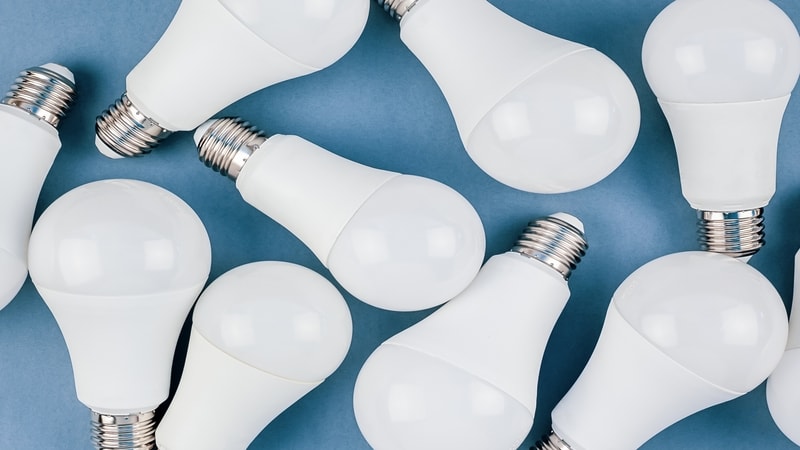
Measuring light in lumens shows that the 6500 K light looks brighter. It is due to its spectral wave configuration. The number of lumens indicates the complete light output emitted by a bulb.
The ratio of lumens to square meters, or lux values, is used to quantify perceived surface brightness. 6500 K-colored light needs higher lux levels. This helps create a comfortable lighting environment and avoids harshness.
High blue light in 6500K makes things bright. However, if the light level is low, it can feel uncomfortable or glaring. Workplaces with 6500K lighting need at least 500 lux. Tasks needing detail require 1000 lux or more.
Lighting design needs engineers to find the right number of bulbs. They must also choose the best locations to ensure adequate lighting in work areas.
5. Avoid Misleading Labels Like “Full Spectrum”
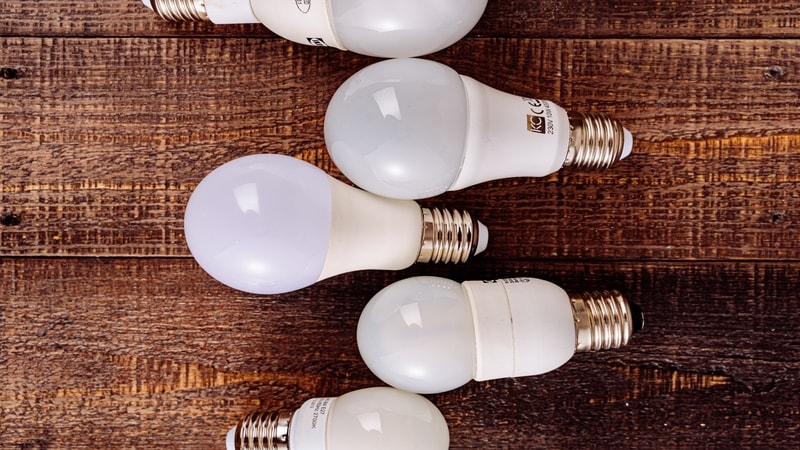
Cool white and natural-looking light specified on bulbs does not always indicate a 6500K rating. Some bulbs may have a 5000K or 6000K rating. Check the exact Kelvin scale rating.
“Full spectrum” often means nothing. It’s marketing talk basically. So, try to look for proper specs instead. Buy from trusted brands. Ask for test reports from sellers. Bulbs of excellent quality must comply with ANSI C78.377 standards.
6. Verify Supplier Quality and Technical Standards
Customer satisfaction from bulk natural light LED bulb purchases depends on choosing suppliers with high-quality regulations and safety protocols.
Verify both ISO and ENERGY STAR (North American version of DLC) certifications. Determine quality management compliance. ENERGY STAR-certified LED lighting uses 75% less energy than incandescent bulbs and lasts 25,000–50,000 hours.
Supply companies must offer IES files and customization services for optical lens design. IES files provide data on light distribution in fixtures. This allows for accurate lighting simulations and delivers optimal coverage.
LED light bulbs have changed the lighting industry. Specific requirements demand custom optical lenses. These lenses change light beam directions and distribution patterns.
7. Calculate the Long-Term Cost of Ownership
To determine real bulb expenses, buyers need to avoid unit price comparisons alone. Initial unit pricing might trick customers by not showing the full cost. Also Include:
- Maintenance costs (labor + bulb replacement)
The longer life of quality daylight LED bulbs decreases replacement costs. It includes both maintenance staff labor and new bulb expenditures.
- Energy savings over 10 years
LED technology proves more energy-efficient compared to conventional lighting systems. These bulbs have a longer lifespan, lasting up to ten years or more.
These LED bulbs are commonly used in commercial real estate. They will produce extensive cost savings through energy conservation despite their initial purchase premium.
- Shipping and tariff considerations
You need to account for long-term shipping logistics when sourcing bulbs. Also, consider possible customs fees when buying large quantities from overseas suppliers. LED costs directly influence product unit prices.
Final Buying Checklist
However, before purchasing, consider the following checklist:
- Color Temperature (6500K is cool & bright)
- Brightness (Lumens, not Watts)
- CRI (90+ for accurate colors)
- Beam Angle (Narrow for tasks, wide for ambient light)
- Dimmability & Fixture Compatibility
- Energy Efficiency & Lifespan
- Price vs. Quality (Avoid cheap, low-quality bulbs.)
Conclusion
Professional or commercial light spaces need more than brightness selection for 6500K LED bulbs. Deep knowledge of the right color temperature and lighting quality matters. Environment-specific task requirements drive the decision-making.
You must shift focus to selection criteria like CRI testing, lux, and safety protocols. Include dependable suppliers and full product cost analysis, not just the base price. A well-informed decision improves productivity, safety, and long-term savings.
Illuminate Your Business with Confidence
Risuncorp’s premium 6500K daylight LED bulbs deliver superior performance. Enhanced engineering ensures exceptional color accuracy and energy efficiency. Are you looking for a lighting disruption solution? Submit a quote today. Discover quality lighting’s transformative impact.
FAQS
Q1: Is 6500K good for the eyes?
The most suitable lighting solution according to eye health standards extends between 4,900 and 6,500 K, and it allows maximum comfort during work tasks.
Q2: What’s the difference between 5000K daylight and 6500K daylight?
The 5000K bulb functions as an optimum neutral source of bright illumination for focused work. The 6500K bulb emits a natural daylight-like spectrum, which is perfect for both alertness and accuracy needs.
Q3: Is 6500K warm or cool?
All whites within the 5000-6500K range fall under the category of ‘cool white.’
The E26 base is the most common standard used across North America for residential and commercial lighting.
But what exactly does “E26” mean, and why is it such a big deal?
This guide walks you through everything detailed about E26 bulbs, including their use, sizes, compatibility, etc.
Importantly, there is everything you want to know for your business, and any question that you are worried about or hesitant.
What Does the “E26” Stand For?
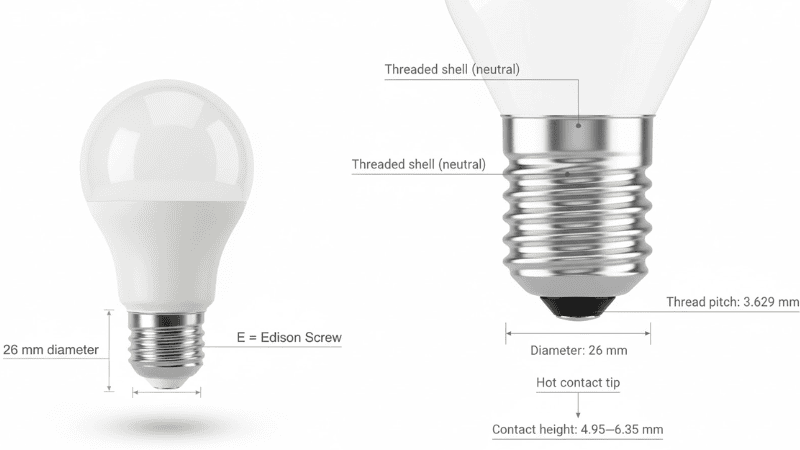
The term “E26” is two simple elements combined into a name. “E” refers to Edison Screw, named after Thomas Edison, the originator of the screw-type base when electric lighting was still in its early stages.
Since then, this screw-type base has been utilised across the globe as a standard agreed upon by everyone, which adds to its widespread acceptance.
The “26” is the base diameter in millimeters. Yes, that’s right—the base of an E26 bulb is 26 millimeters in diameter, or roughly one inch. You can also call it a Medium Edison Screw (MES).
E26 Bulb Shape and Base – What It Looks Like
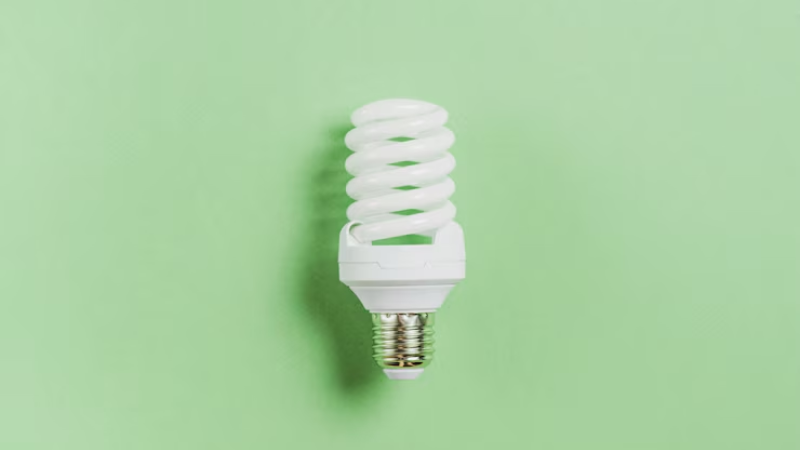
An E26 bulb is identified immediately by its familiar shape. It will have a bulb or warm glass cap and a metal threaded base. It is screwed into sockets in a normal clockwise direction.
Most E26 bulbs will have some sort of marking on or near the base or on the box. It is more convenient for consumers to be able to determine whether the bulb is suitable for their fixtures.
The E26 base itself is threaded for electric connection and has a small, rounded tip on the bottom that makes contact with the centre terminal in the socket.
Typical Types of E26 Bulbs (A19, BR30, PAR38 & Beyond)
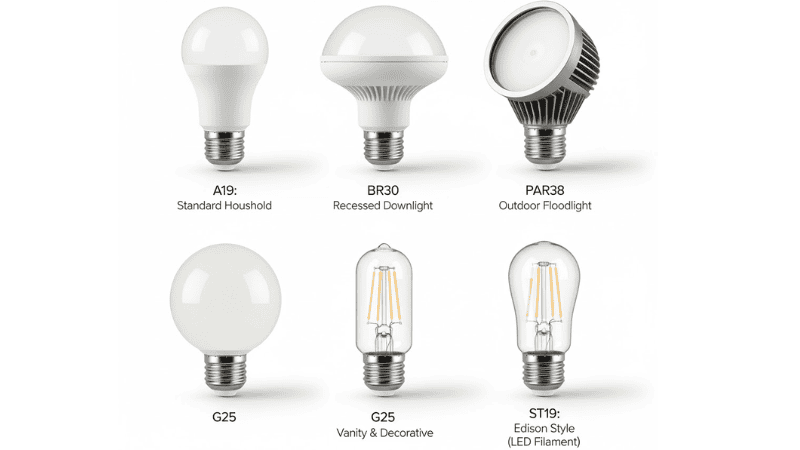
It’s important to understand that E26 refers to the base, not the shape or size of the bulb. Many different types of bulbs can have an E26 base.
Here are the most common types you’ll access:
- A19 – This is the standard pear-shaped bulb used in lamps and ceiling lights.
- BR30 & BR40 – Flat-faced and wide bulbs for magnetic track and recessed lighting.
- PAR38 – Often used in outdoor spotlights and floodlights, and gives directional lighting.
- G25 – Globe-shaped bulbs used in bathroom vanities, retail shop lighting, and decorative setups.
- The ST19 – Stylish retro Edison-style bulbs in kitchen pendant lighting and coffeehouses.
This variety gives homeowners and designers massive flexibility. Whether you’re after soft ambient lighting or sharp directional illumination, you’ll likely find an E26 base bulb to match the task.
How Does an E26 Bulb Work?
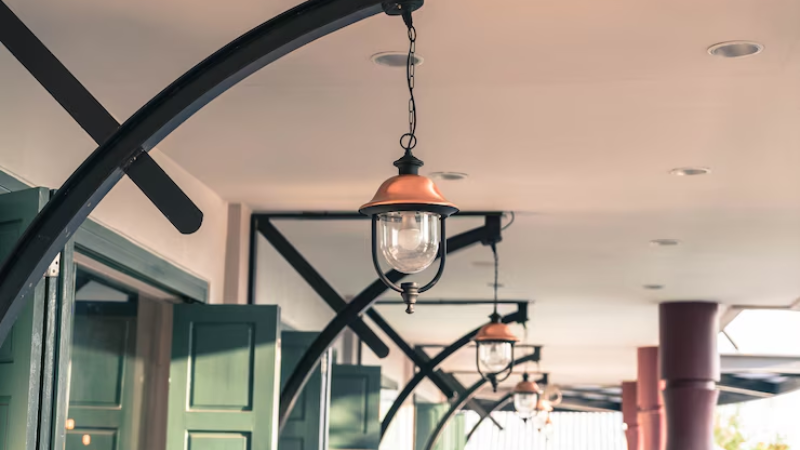
The server of an E26 bulb is beautifully simple. The installation is simply screwing the bulb into a proper socket. When you switch it on, the metal threads at the base nest up against the sides of the socket to create the neutral path.
The small metal contact on the base tip nests up onto the socket’s centre point to create the hot path. These two contact points allow electricity to travel through the bulb. Current travels through a filament (for incandescent bulbs) or semiconductor diode (for LEDs) to create light.
E26 vs E27: Are They the Same?
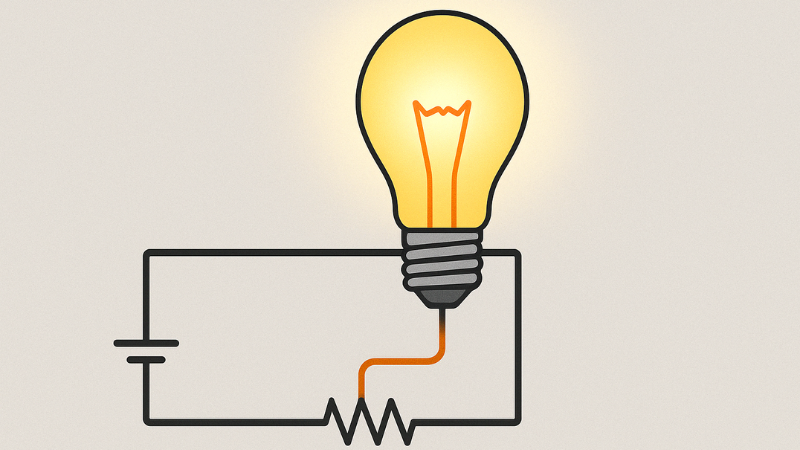
This is probably one of the most frequently asked questions, and it’s not surprising that E26 and E27 bulbs are quite similar. The naming is based diameter in millimetres—26mm and 27mm, respectively. This tiny 1mm difference is usually not significant when thinking about functional compatibility.
The two are, however, used extensively elsewhere:
E26 bulbs are primarily used in North America and operate on 120 volts.
E27 bulbs are used in Europe and other regions operating on 220–240 volts.
The threading is nearly identical, so E26 bulbs can be used in E27 sockets, and vice versa. However, it’s always best to verify voltage compatibility and the Color rendering index to avoid electrical issues. Most LEDs can be replaced in most situations.
A quick compatibility chart can help:
| Feature | E26 (USA/Japan) | E27 (Europe) |
|---|---|---|
| Voltage | 120V | 220–240V |
| Base Diameter | 26mm | 27mm |
| Interchangeable? | Often yes | Often yes |
Where are E26 bulbs applied?
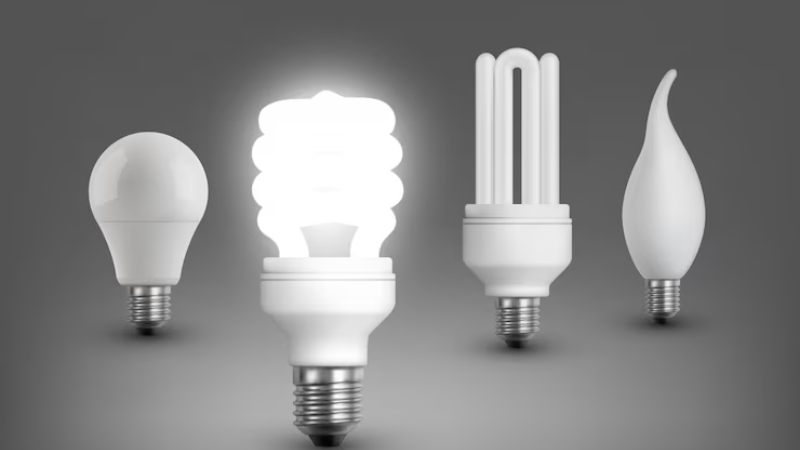
Due to their versatility and perfect light distribution, E26 light bulbs are applied in numerous applications that you can access, both for residential and commercial use.
You can find E26 bulbs in numerous applications, usually in:
- Ceiling fixtures
- Table and floor lamps
- Recessed lighting (cans)
- Pendant lights
- Vanity mirrors
- Retail store lighting
- Outdoor wall sconces and porch lights
Their prevalence in North America ensures that nearly any stock light you can buy at a local hardware store is compatible with the E26 base bulb. It’s the default standard for general illumination.
The Benefits of Using E26 Bulbs
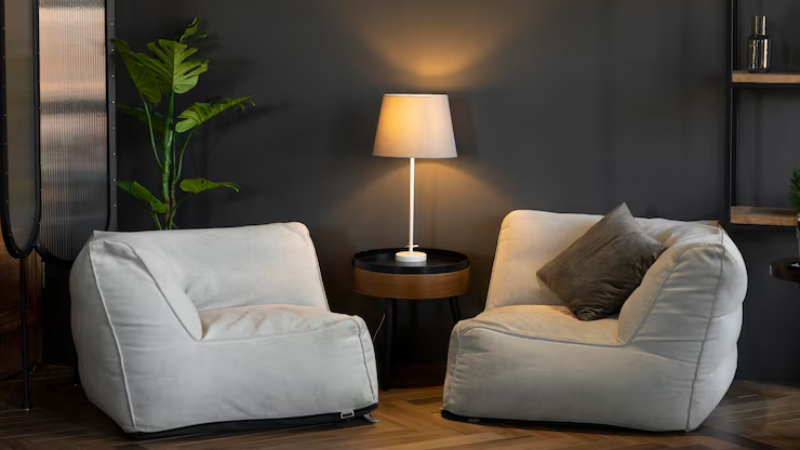
There are many reasons why the E26 base is still everywhere in the lighting industry.
First and most clearly, E26 bulbs are simple to install—just screw them in, and you’re finished. They’re also readily available in many forms, from energy-efficient LEDs to common incandescents to long-life CFLs. Select wisely between LED bulbs and incandescent bulbs for commercial purposes.
Their worldwide popularity means that it’s unlikely you’ll have to hunt down specialty converters or sockets. You can use the same fixture to support various bulb shapes and lighting technologies.
E26 Technical Standards and Dimensions
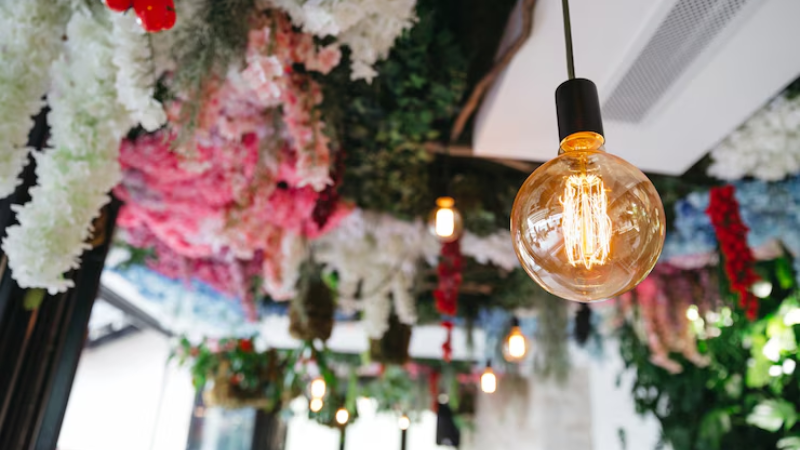
E26 bases conform to the international standard IEC 7004-21A-2, which stipulates the technical dimensions and electrical characteristics of the Edison screw.
The technical dimensions of an E26 base are as follows:
- Base diameter: 26.05mm to 26.41mm
- Thread pitch: 3.629mm
- Contact height: 4.95mm to 6.35mm
- Thread length: about 19mm
These requirements ensure consistency across manufacturers, so you can count on an E26 bulb from one manufacturer to fit tightly into a socket from another manufacturer.
For those interested in viewing more technical data, engineering drawings of E26 bases are available in lighting standards publications and can provide accurate tolerances.
Where to Purchase E26 Bulbs
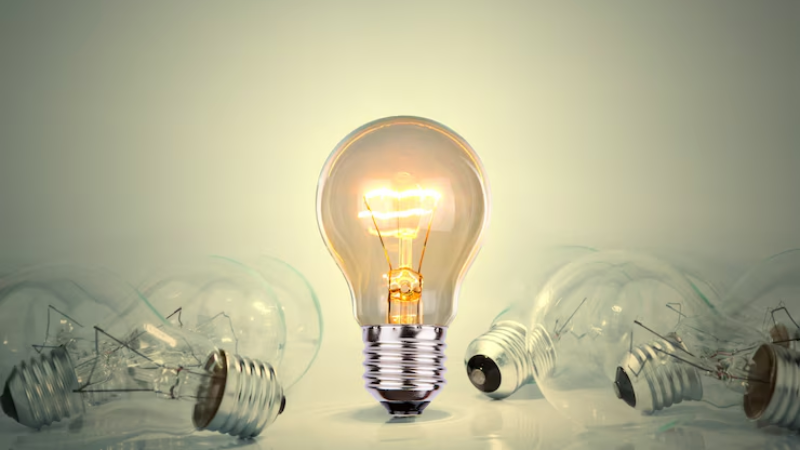
Because they’re so common, E26 bulbs are available at almost any hardware store and lighting store.
If you’re going to need to supply a whole building or multiple stores, it’s well worth approaching suppliers directly to arrange E26 base bulbs on bulk rates. Most will be more than happy to do this for larger projects.
Options include:
Wholesale bulk and high-volume distributors like Risuncorp.
Tips to Select a Good Seller for E26 Base and Light Bulbs
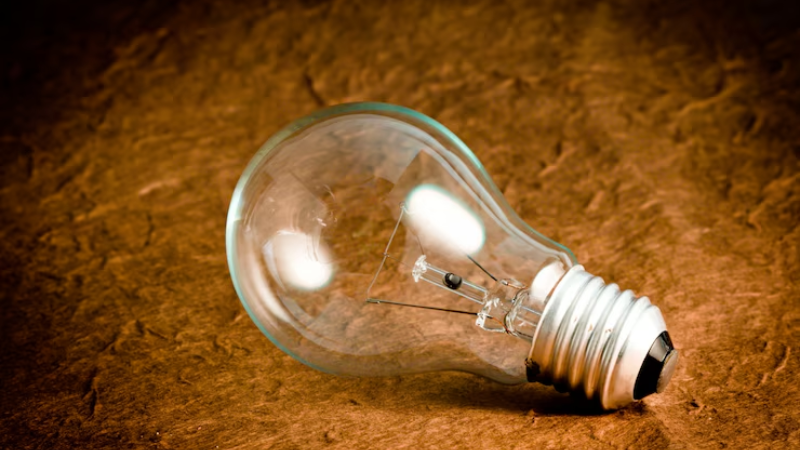
When purchasing E26 bulbs, carefully review their benefits and features. Apart from this, the seller you choose can make a significant difference in terms of quality, reliability, and overall satisfaction in the long run. Here are some tips to assist you in selecting a reliable supplier:
Prioritize Certified Products
Ensure the bulbs meet industry safety and efficiency standards such as UL, ETL, or Energy Star. Reputable B2B suppliers will prominently display these certifications in product documentation or technical datasheets.
Evaluate Supplier Reputation
Review case studies, testimonials, and verified B2B ratings. Look for feedback on product lifespan, lumen output, batch consistency, and after-sales support—all vital factors for large-scale deployment.
Analyze Return & Warranty Policies
Partner with suppliers offering clear, flexible return policies and robust warranty coverage, especially for bulk orders or ongoing supply agreements. This mitigates risk and ensures operational continuity.
Conclusion
If you’re looking for standard lighting solutions, E26 bulbs are a highly compatible choice. E26 bulbs will fit just about any fixture and are easy to install; they come in all manner of light output, color temperature, and shape imaginable.
From relaxation in bed to lighting up kitchen work and outdoor security, the E26 base provides up reliability and versatility in a way like no other.
Partner with Risuncorp for Scalable, Reliable Lighting Solutions
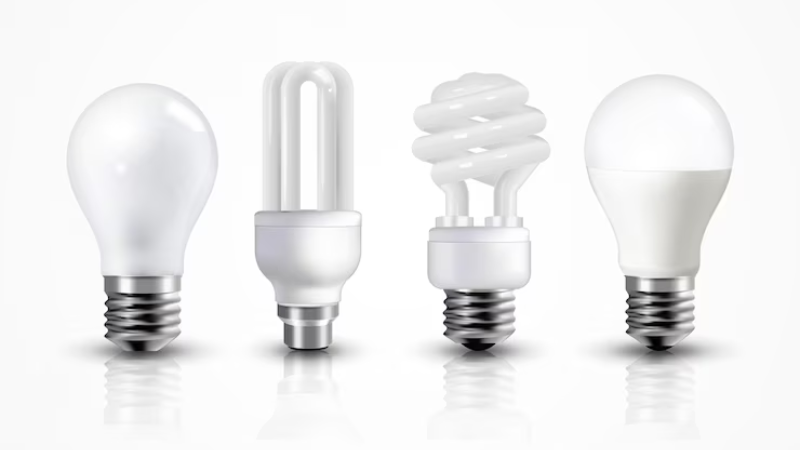
At Risuncorp, we’re dedicated to delivering dependable and high-efficiency lighting components, including a variety of bulb bases, LED drivers, lamp holders, and smart lighting modules. Reach out today to explore how we can tailor a lighting solution that works for your business.
FAQs
Q1. What does E26 mean on a light bulb?
It’s referring to the Edison screw base of the bulb, which is 26mm in diameter. It’s the American standard base shape.
Q2. Is E26 the same as A19?
No, but close. E26 is the base, and A19 is the shape of the bulb. Most A19 bulbs are built on an E26 base, making them suitable for various fixtures.
Q3. Are E26 bulbs interchangeable in Europe?
Not usually. Europe employs E27 bulbs that are very similar but rated for 220–240V. Voltage-compatible E26 LEDs might possibly work.
Q4. Are all E26 bulbs dimmable?
No. Most LED and incandescent E26 bulbs can be dimmed, but always verify the product description before employing them with a dimmer.
Q5. What is the wattage of E26?
There is no standardised wattage—E26 only references the base type. Look for E26 bulbs ranging from as low as 4W (LED) up to 100W+ (incandescent).
Deciding whether to choose a carbon filament light bulb or a tungsten light bulb often confuses buyers. At a glance, these two types of light bulbs may look similar, but the lighting materials used inside make them different.
In this guide on incandescent lighting, we will explain the design and uses of filament bulbs to help interior decorators select the right one. So, let’s start.
What Is a Carbon Filament Light Bulb?
In 1879, Thomas Edison transformed the lighting industry by inventing the famous carbon light bulb. After the introduction of carbon filament bulbs, many European researchers and other inventors made efforts to improve the lighting industry.
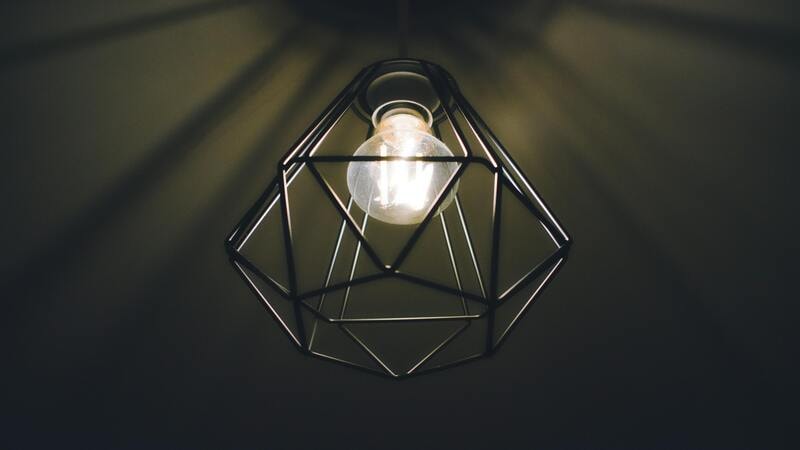
In Edison’s patent, carbon filament bulbs, carbon as the light bulb filament material. Using carbon as filament in early bulbs was a breakthrough in lighting history.
Carbon is a common material in lighting fixtures that glows when an electric current passes through. Carbon thin filament has a good electrical resistance; thus, it works best in general electric devices.
Carbon lamps are known for offering a warm glow and soft light. The ease of use and installation make this innovation of Thomas Edison a popular one.
However, the only issue with these bulbs is that they produce low brightness and have a short lifespan. Despite these limitations, carbon lamps are widely used to give a vintage look to restaurants, homes, shops, and cafes.
What Is a Tungsten Filament Light Bulb?
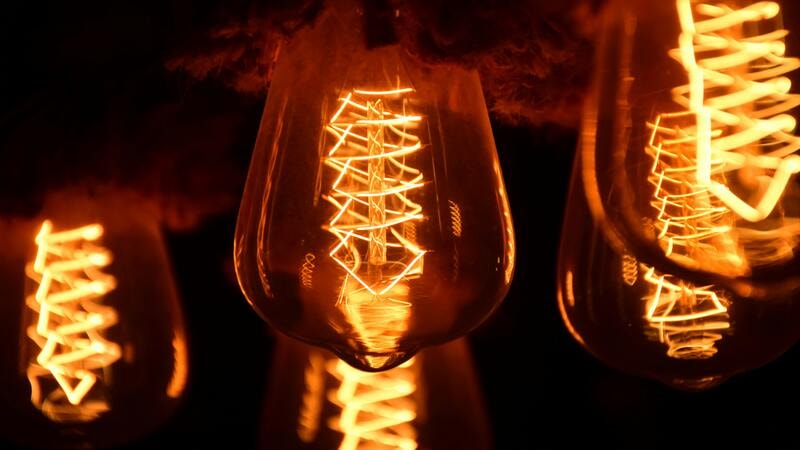
The invention of the carbon filament bulb changed the lighting industry in different ways, and the introduction of the tungsten bulb is the most notable one.
In a tungsten filament light bulb, tungsten wire is used as the lighting material. Tungsten is sturdy and has a high melting point; thus, it can resist high temperatures. The positive temperature coefficient of tungsten lamps makes them better than carbon filament bulbs.
These bulbs were invented in the early 1900s, but due to the efficiency of the tungsten filament, it is still used in many incandescent bulbs.
Tungsten bulbs produce a white light and are practical for everyday use. They are a common source for lighting up warehouses and different residential properties. Additionally, as tungsten is sturdy, these bulbs last longer and are commonly used in various types of commercial buildings.
It is essential to note that these bulbs use a higher voltage compared to other Edison bulbs.
Key Differences Between Carbon and Tungsten Filament Bulbs
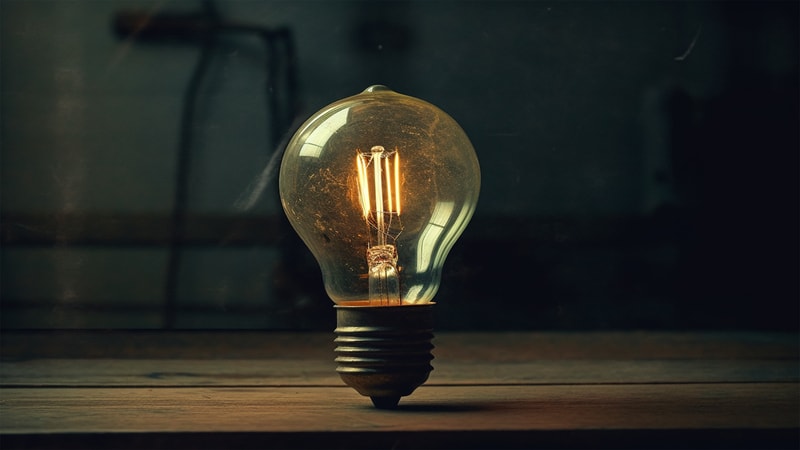
The notable differences between these two types of bulbs are mentioned in the table below:
| Feature | Carbon Filament Bulb | Tungsten Filament Bulb |
|---|---|---|
| Light Color | Warm amber glow | Bright white or yellowish |
| Lifespan | Short (~500–1000 hrs) | Longer (~1000–2500 hrs) |
| Energy Use | Higher | Lower |
| Durability | Shorter lifetime than tungsten filament bulbs | More reliable and durable than carbon filament bulbs |
| Heat Tolerance | Low | Very high, as tungsten has a high melting point |
| Common Use | Vintage décor | General lighting and flood lights |
Why Choose Carbon Filament Bulbs?
Carbon filament bulbs provide a nostalgic and romantic ambience. Homeowners and interior decorators widely use these bulbs to give the space a vintage feel.
These bulbs also create a warm and inviting atmosphere in your home. The ambient and period-correct lighting make this bulb useful in historical settings. As carbon can light up with low voltage, it should be used in areas with low voltage or voltage fluctuations.
Furthermore, the old-school look of this bulb makes it a perfect choice for those looking to restore an old home or design a vintage restaurant. Different types of decorative lighting also use carbon filament bulbs, as they are aesthetically pleasing.
Why Choose Tungsten Filament Bulbs?
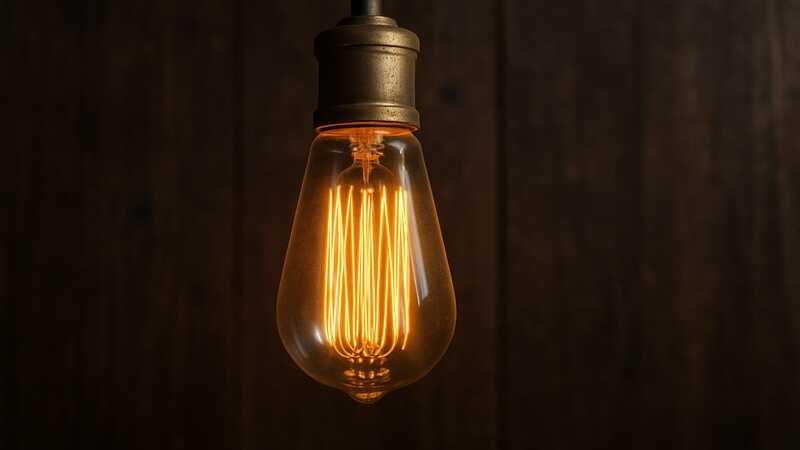
One of the multiple reasons for choosing tungsten filament bulbs includes their high durability, brightness, and efficiency. Tungsten bulbs use less energy than other bulbs. This is the reason behind its widespread use in commercial lighting fixtures.
Some tungsten filament bulbs feature a squirrel cage design. This design improves the look of the bulb while maintaining the same efficiency in terms of light output.
The appealing design of these bulbs makes them ideal to use with exposed sockets, chandeliers, and steampunk-style fixtures.
The 3 Perfect Filament Design Styles From Squirrel Cage to Spiral
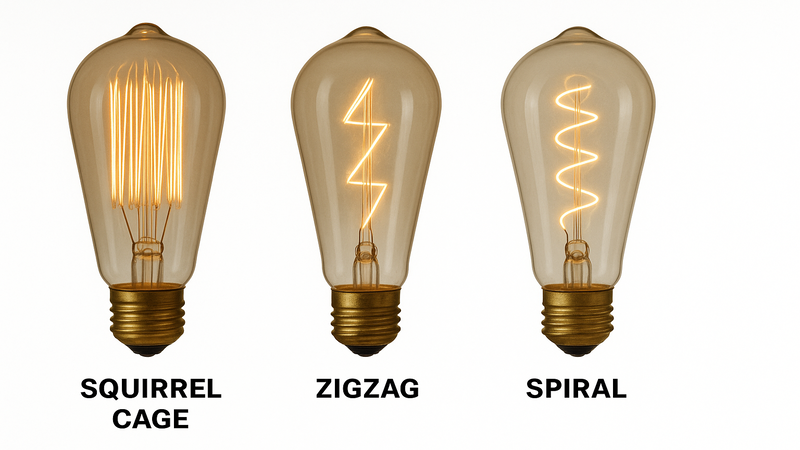
The design in which the filament is placed inside the bulb enhances the look of the bulb. The filament is placed inside the bulb in various styles. Common ones include:
1. Zigzag Design:
The zigzag design bulb, staying true to its name, features the filament running back and forth within the bulb with sharp and angular turns. The filament is spread inside the bulb and adds to its energy.
This style is commonly used to give off cool vibes and is often found in apartments and certain shops.
2. Squirrel Cage Design:
The most common filament design style is the squirrel cage filament. As the name suggests, it features a cage-like pattern with long vertical loops.
This design style is commonly found in carbon filament bulbs. Using bulbs of this design is a perfect lighting idea for upgrading living rooms.
3. Spiral Design:
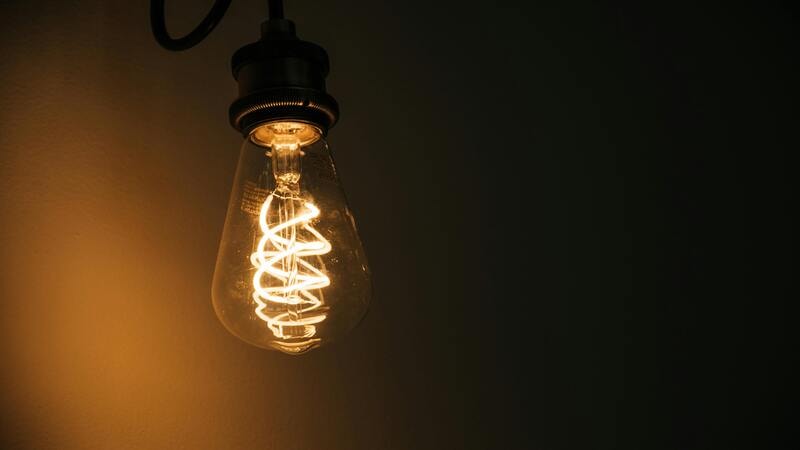
In a spiral design filament bulb, the filament twists like a spring inside the bulb. This bulb creates a dynamic look and is perfect for adding a modern-vintage feel to a space.
Whether the filament is tungsten, carbon, or any other metal filament, the spiral design draws attention.
Note that the filament design enhances the bulb’s overall aesthetic and has nothing to do with efficiency. A spiral design carbon filament bulb offers the same lumen output as a zigzag-styled one.
So, to give your setting a modern and warm look, go for a spiral cage carbon filament light bulb. If you want elegance, choose spiral tungsten light bulbs.
Best Uses for Vintage Filament Bulbs in Modern Lighting
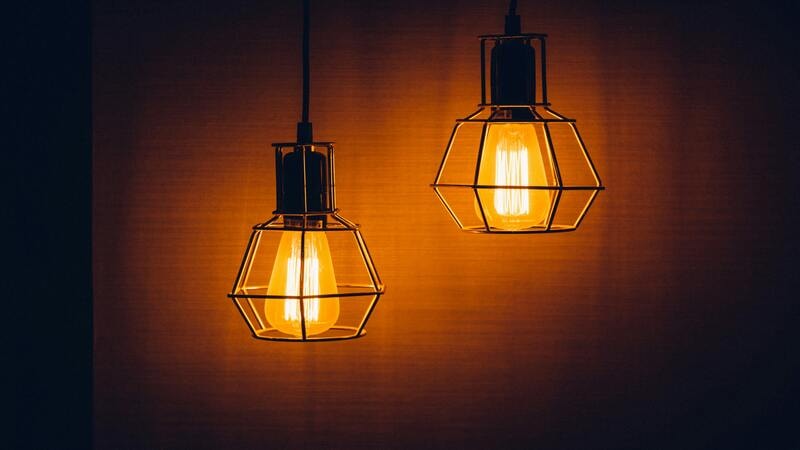
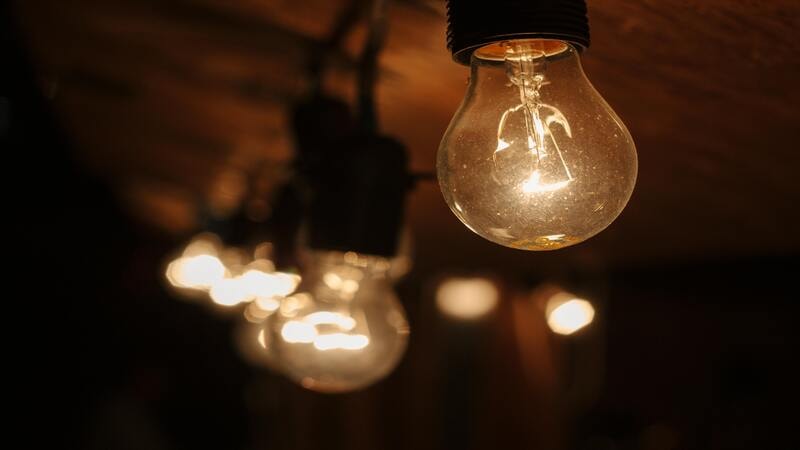
The bulbs used in the past as a lighting source are now being used to add to the aesthetics of the place. The vintage look of these bulbs is linked with improving the overall look of the place.
There are many uses of vintage bulbs in modern lighting; the common ones include:
- Cafes: In cafes and coffee shops, vintage bulbs are used as a lighting source to enhance the customer experience. Vintage bulbs in cafes boost the client’s mood and experience by providing comfort and visual appeal.
- Table lamps: In table lamps, these vintage filament bulbs offer a comfy and inviting glow, while offering enough light for activities like reading and writing.
- Dining Rooms: Mostly, the dining rooms have dim lighting to create a relaxed yet inviting atmosphere. Owing to the features, most dining room chandeliers use these bulbs.
- Decorative Lighting: Trending chandelier styles and scones use vintage filament bulbs due to their attractive look. These vintage bulbs create a warm ambience without being too bright, making them ideal for mood lighting.
Mostly, the places that require less lighting but more aesthetics use vintage filament bulbs.
FAQs
Q1. What are the disadvantages of a carbon filament lamp?
The disadvantages associated with carbon filament bulbs include their lower durability. These bulbs have lower operating hours compared to other bulbs. Also, the bulbs are fragile and can break easily. All these reasons contribute to making these bulbs a less reliable source of lighting.
Q2. What does tungsten do in a light bulb?
In tungsten lighting bulbs, tungsten is a thin wire that acts as a lighting material. Tungsten is a filament that heats up and provides electricity. As tungsten has a high melting point, it can tolerate much heat and is the perfect filament in bulbs.
Q3. Is tungsten better than LED?
LEDS are more energy-efficient than tungsten light bulbs and other filament bulbs. Tungsten does offer warm and inviting lighting, but they are not as energy-efficient as LEDS. In terms of energy efficiency, LEDS are better. But, in some other terms, tungsten can beat LEDS.
Q4. What is the difference between LED and tungsten filament?
The main difference between LED and tungsten is in terms of their electricity production. LEDS use semiconductors to produce electricity, and tungsten filaments use heated wires to produce light. Additionally, LEDS are expensive but last longer than a tungsten filament bulb.
Conclusion: Which Bulb Should You Choose?
Carbon filament bulbs, LED bulbs, and tungsten filament bulbs are all excellent lighting choices. If you want to go for a vintage feel, choose carbon filament bulbs. If your objective is to choose a bulb that lasts longer and offers a nostalgic glow, tungsten filament bulbs are best for you.
Instead of spending time figuring out the right bulb yourself, it’s more effective to rely on a professional lighting supplier who understands your fixture types and lighting needs. A trusted supplier can help you choose the most suitable solution, saving you time, money, and future hassle.
Partner With Risun Corp For Tailored Lighting Solutions
Looking for a reliable partner for your lighting needs? No need to look further! Whether you are a lighting distributor or company, Risun Corp is here to help you with your lighting requirements.
We have over a decade of experience in providing one-stop lighting solutions, including modern incandescent bulbs and tungsten bulbs. Our expert team can cater to all your unique demands.
Contact us today and get some suggestions for your wholesale lighting requirements, and solve your worries.