
Fluorescent tubes are now being replaced with other options as they consume more energy and have a shorter lifespan. Homeowners and retailers have switched to Type A LED tubes as they are energy-efficient and last longer than alternative lighting sources. This article will help you learn about the benefits and types of tubelights. So read on:
How LED Tube Lights Work?
The light-emitting diodes used in LED tube lights are responsible for emitting bright and clean light. Owing to their numerous benefits, they have replaced traditional fluorescent lighting.
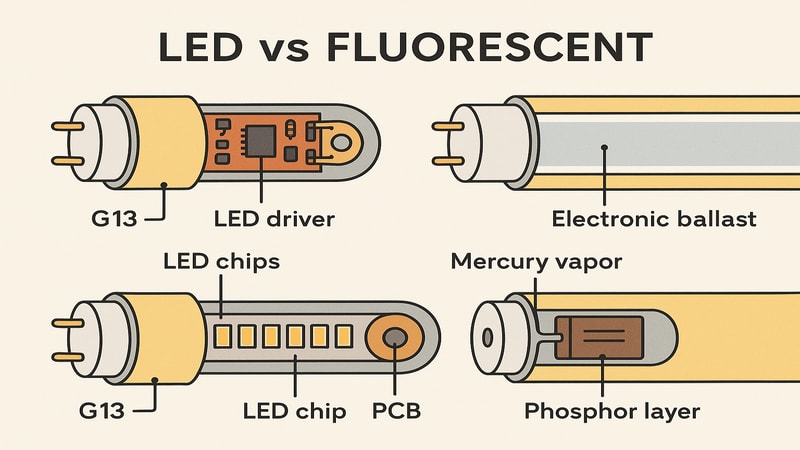
LED tubes are regarded as highly energy-efficient lighting sources because they use 60% less energy than other sources. They can also last up to 50,000 hours, which gives them an advantage over other tubes. Unlike fluorescent tubes, LED lights don’t rely on ballasts or contain toxic mercury.
Also, these lights turn on instantly without flickering. All these benefits make LED lights an excellent choice for business owners. Owing to these features, LED tubes are a common lighting source in offices and other types of commercial real estate properties.
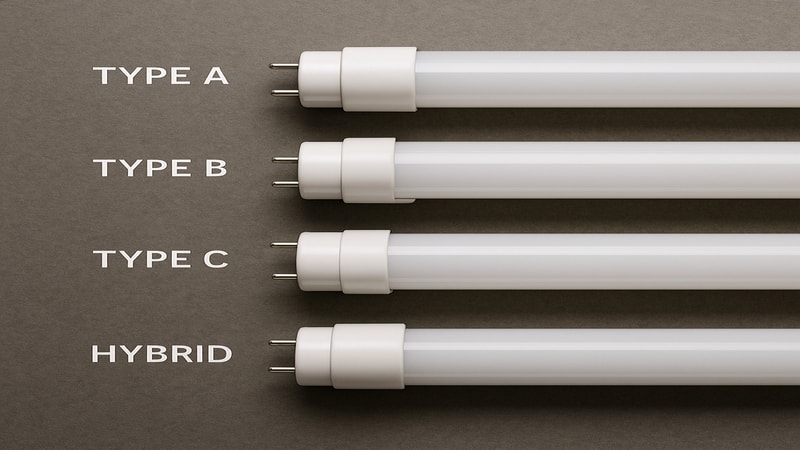
Types of LED Tube Lights Explained
There are multiple types of LED fluorescent replacement tubes; you must choose the one that suits your preference and is compatible with the existing lighting setup.
Type A (Plug-and-Play)
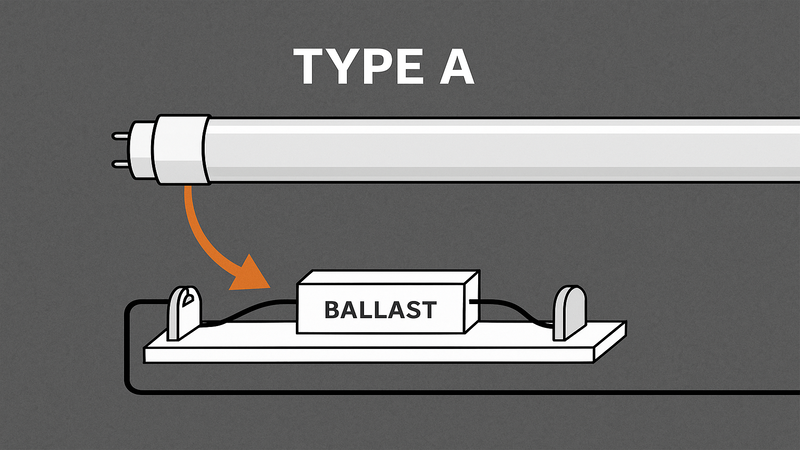
Type A—a simple plug-and-play replacement—is one of the most common tube light types. These LED tubes work directly with the current fluorescent ballast, so no rewiring is needed to connect or install Type A LED tube lights.
The pros of Type A LED tube lights are that they are easy to install and have the lowest downtime. The cons of this type are that ballast compatibility is required, and if the ballast fails, the light will also fail.
Type B (Ballast Bypass / Direct Wire)
Type B tubes don’t work with a ballast, so one needs to remove the ballast and wire the light to line voltage (L/N).
Since this type doesn’t need a ballast, it is more efficient. Type B LED tube lights have the highest operating hours and don’t need frequent maintenance. However, they require complete rewiring and can only be installed by a qualified electrician.
Type C (External Driver)
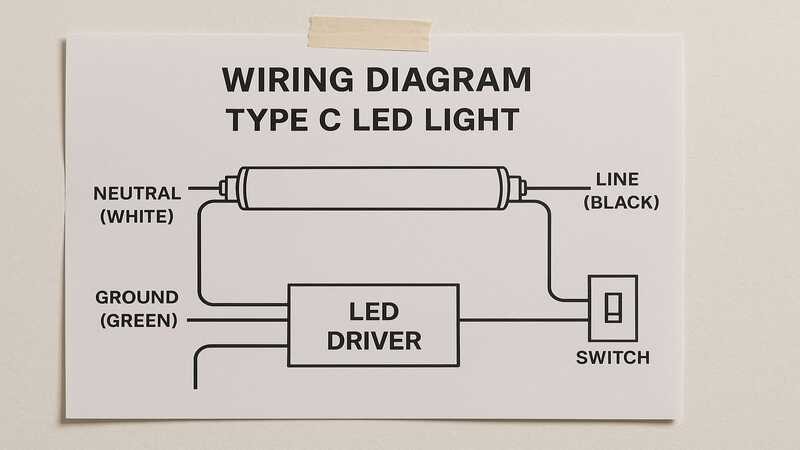
The third type of LED tube light is Type C. Like LED panels and low-voltage lighting, this type uses a separate external LED driver. Type C offers advanced control features, i.e., LED dimming features, which are commonly used in commercial and industrial settings.
The pros of Type C LED tube lights are that they offer dimming features and stable power. However, it is essential to note that this type initially costs more and requires driver installation.
Hybrid (Type A + B)
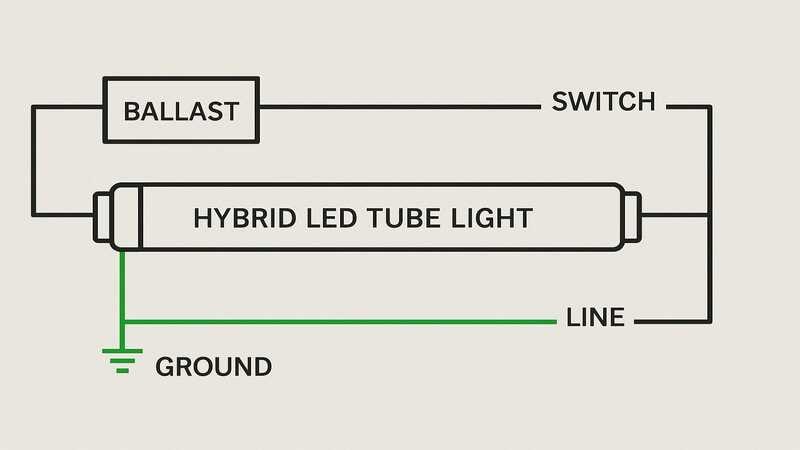
The last type is the hybrid, a mix of Type A and B, i.e., is compatible with a ballast and can be wired directly. This type can be used as Type A initially and as Type B.
The benefits of this type are that it offers higher flexibility and is a one-time investment. However, this type is expensive and does not guarantee compatibility with every ballast type.
LED Replacement for Fluorescent Tubes: Which Type Should You Choose?
Choosing the type of LED replacement for fluorescent tubes is simple but crucial. Procurement managers need to consider several factors to make the right choice. The factors that one needs to consider while selecting the tube are as follows:
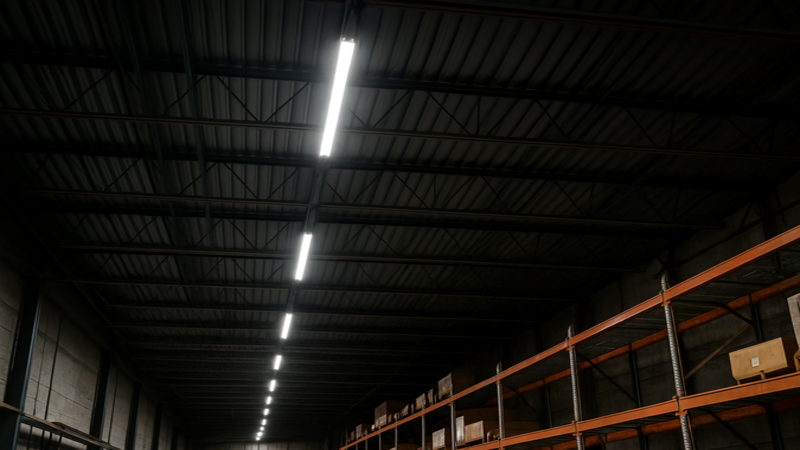
1. Do You Want to Keep Existing Fixtures?
Business owners and DIYers must evaluate whether they want to replace the existing fixtures. If not, then Type A is the best choice for you.
Type A is designed to be used with existing ballasts. To install it, you just need to remove the old tube from the fixture and install the Type A. Type A is the easiest and cheapest to install and is commonly used in residential properties.
In case you can replace the fixture, Type B LED tube lights are the best choice. Type B requires you to remove the existing ballast and is more efficient.
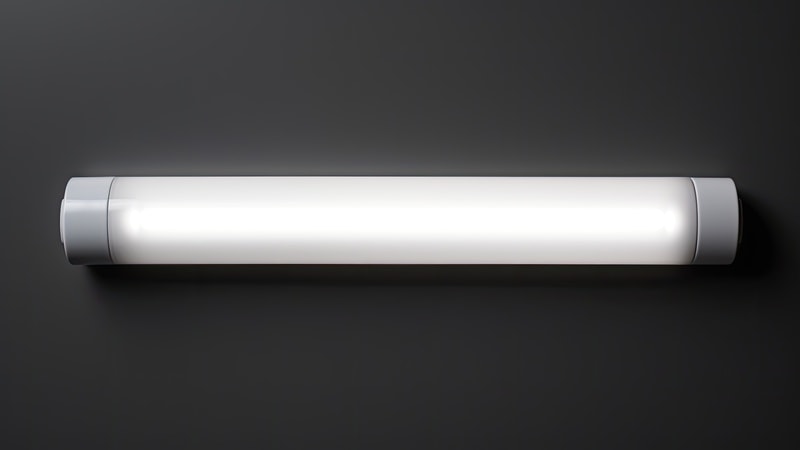
2. Do You Want to Rewire?
Another factor that can help procurement managers decide on the type of LED tube light to choose is whether they want to rewire it.
Type B is ideal if they want to rewire, as it requires removing the ballast and wiring the tube directly to the line voltage. This type is complex to install, but its other benefits outweigh its complexity.
On the other hand, if procurement managers can’t rewire or don’t want to hire someone, they can choose Type A or C LED lights. Type A lights can be installed directly with the ballast, whereas type C requires a separate driver and doesn’t require rewiring.
3. What Is Your Budget?
The budget greatly helps determine the choice of LED light type. If your company has allocated a high budget to the lighting head, you can choose between type B or C LED tube lights. These lights have a higher upfront cost but are reliable and last longer.
Although the initial cost of type B and C tube lights is high, their lower replacement and maintenance costs make them popular.
If you are low on budget or can’t afford to spend much money initially, then Type A LED tube lights are ideal. This tube not only costs less but is also easy to install. You can install it on your own and save on labour costs.
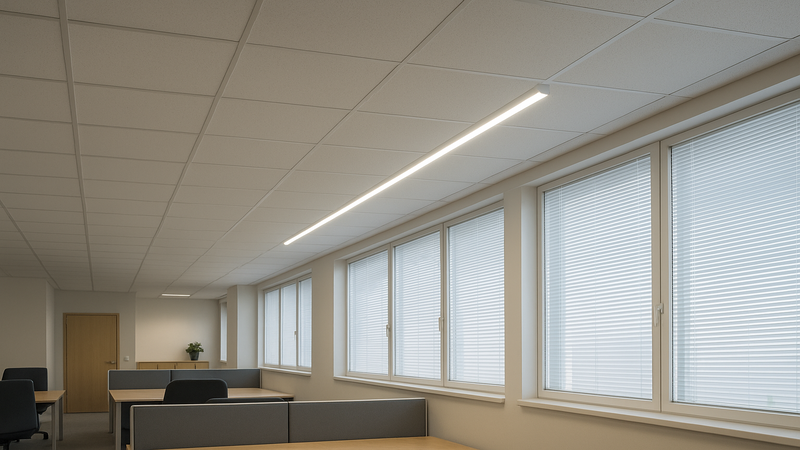
The table below gives a clear view of which type of LED tube light is best for which user and also explains the reason behind this:
| User Type | Best LED Tube Type | Why |
|---|---|---|
| Homeowners | Type A or Hybrid | These types are easy to install, have the lowest upfront cost, and cause minimal disruption. |
| Commercial Retrofits | Hybrid or Type C | Highly energy-efficient and support advanced lighting controls, making them ideal for commercial settings. |
| New Constructions | Type B or Type C | Their high energy efficiency makes them the best choice for newly constructed buildings. |
| Budget-Conscious Users | Type A and Type B | Type A saves on installation costs with no rewiring, while Type B has no ballast and the lowest power consumption, making both cost-effective. |
Lastly, and most importantly, it is highly recommended that you check the fixture type. LED tube lights are generally designed to replace traditional T8 vs. T12 fluorescent tubes and utilise the G13 bi-pin base, common in 4-foot linear fixtures.
T8 tubes are 1 inch in diameter, while T12 tubes are 1.5 inches in diameter. Most LED tubes are compatible with T8 fixtures, but can also fit T12 fixtures. Hence, evaluating the base type and fixture size is crucial to ensure fit and performance.
How do you connect and install LED tube lights (Type-by-type)?
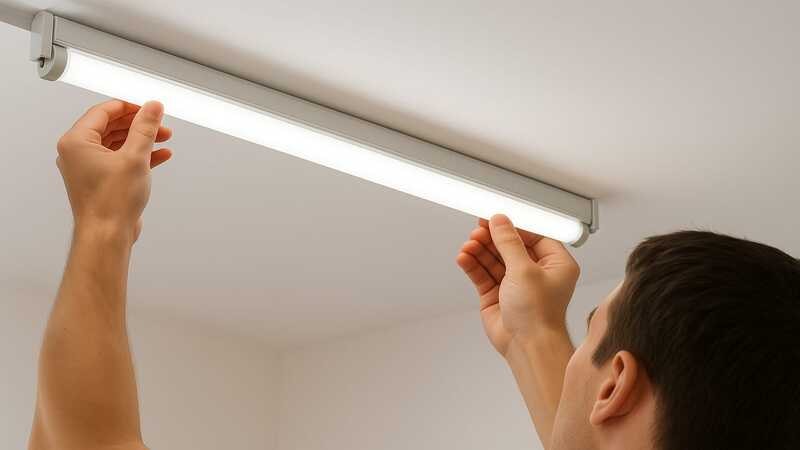
Like the features, each type of LED tube light also differs in connection and installation procedure. A step-by-step guide on LED tube installation is given below:
Type A Installation (Plug-and-Play)
This type of LED light does not require rewiring or installation of the external driver, so it is the easiest to install. All you need to do is follow the following steps:
- Turn off the power both at the switch and the breaker.
- Remove the already installed fluorescent tube.
- Before installing the tube, ensure it is compatible with the existing ballast. The commonly used ballast types are as follows:
- Instant Start (IS) – This type of ballast is most commonly supported by Type A LED tubes.
- Programmed Start (PS) – This type of ballast is widely used in commercial lighting fixtures.
- Rapid Start (RS)— This type of ballast is rarely used, so you need expert advice on compatibility.
- Electronic Ballasts – These ballasts are highly compatible with current LED tubes.
- Magnetic Ballasts—This type is not compatible with Type A tubes, but with some modification, it can easily work with them.
- Connect the Type A LED tube.
- Switch on the power.
- Ensure that the tube is correctly installed and there is no flickering.
Type B Installation (Ballast Bypass)
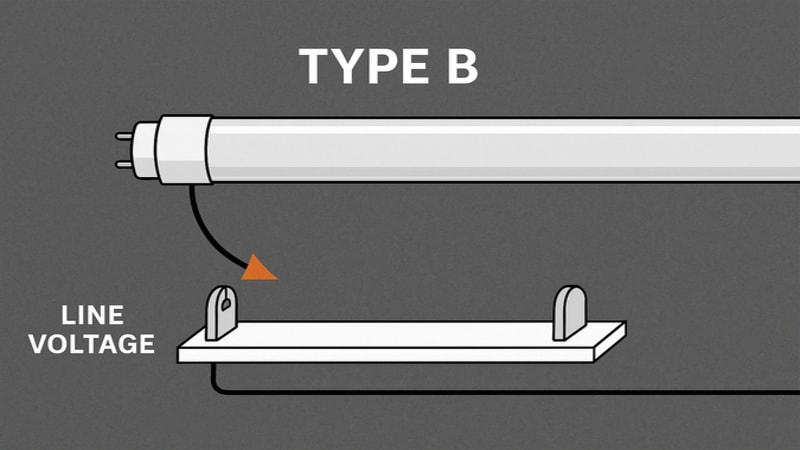
Installation of Type B tubes includes removing the ballast and wiring the tube to direct voltage; they are complex to install. The step-by-step guide for electric contractors on installing the Type B tube is as follows:
- Turn off the circuit.
- Remove the installed fluorescent tube and ballast.
- Use the wiring manual or diagram to connect Line (L) and Neutral (N) to one end.
- Carefully secure the wires not used in the LED light installation to prevent short circuits.
- Insert the Type B tube and test it.
Safety tip: If necessary, use non-shunted tombstones to keep their electrical contacts separate.
Type C Installation
To install the Type C LED tube light, follow the steps given below:
- Safely install the driver near or inside the fixture.
- Link the driver’s input to a power source.
- Connect the driver’s output to the tube light. Use a diagram or manual to ensure you are doing it correctly.
- Test the light, make sure everything is working well.
- Secure driver and lighting.
Tools to Mention
Tools used to install LED tube lights include a screwdriver, a voltage tester, a wire stripper, wire cutters, wire connectors or nuts, electrical tape, UL-listed parts, and safety gear.
Certifications to Mention
Procurement managers and retailers must ensure compliance with specific certifications while buying or installing LED tube lights. The standard certifications any LED tube light must comply with include:
- UL Listed (Underwriters Laboratories): This certification means the product is tested and meets electrical safety standards. UL-listed and certified products are safe to use in homes and workplaces.
- DLC Certified (DesignLights Consortium): This certification ensures the product meets energy efficiency and performance standards. Products that comply with this certification claim to deliver high quality, brightness, and longevity.
- RoHS Compliant (Restriction of Hazardous Substances): RoHS certification ensures that the product does not contain harmful and toxic substances. Products with this certification are environmentally safe and non-toxic.
Benefits of Switching from Fluorescent to LED Tubes
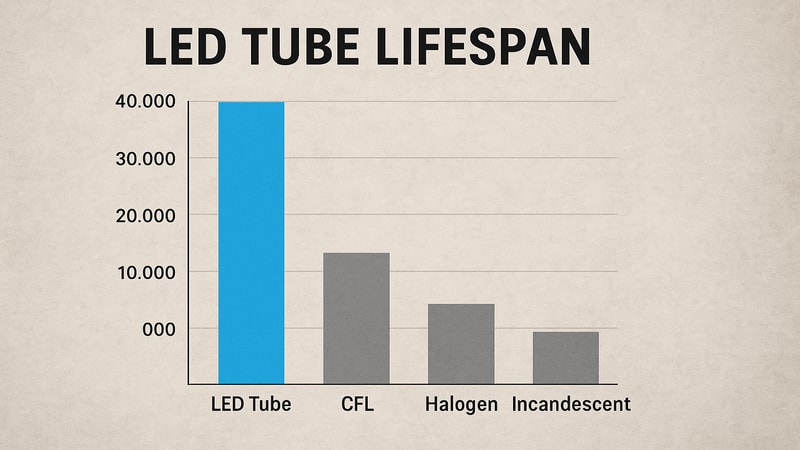
Switching from fluorescent to LED tubes offers significant benefits for businesses, both in the long and short term. Below are key advantages that drive homeowners and procurement managers to choose LED tube lights over fluorescent tubes:
- Energy Efficiency: LED tubes are highly energy-efficient and use 60% to 70% less energy than fluorescent tubes. This reduced power consumption makes LED tubes the best type of warehouse lighting.
- Longevity: LED tube lights have a longer lifespan than other lighting sources. While fluorescent tubes last up to 10,000 hours, LED tubes can operate up to 50,000 hours—five times longer. This longevity reduces replacement frequency; thus, LED lights help save on cost.
- Better Lighting Quality: LED tube lights have a higher Colour Rendering Index (CRI), providing clear and bright illumination. LEDS deliver consistent power output. LED Tube lights are available in various colour temperatures, such as 3000K, 4000K, and 5000K, which reflect warm, neutral, and daylight, respectively. You can easily choose the perfect lighting colour temperature that suits your requirements.
- Environmental Benefits: LED tubes are mercury-free and ROHS compliant, making them easier to recycle and dispose of. LED lights emit less heat and have a lower carbon footprint, thus contributing to environmental sustainability goals. The increasing awareness of eco-friendly products is forcing businesses to switch from fluorescent tubes to LEDs.
Conclusion
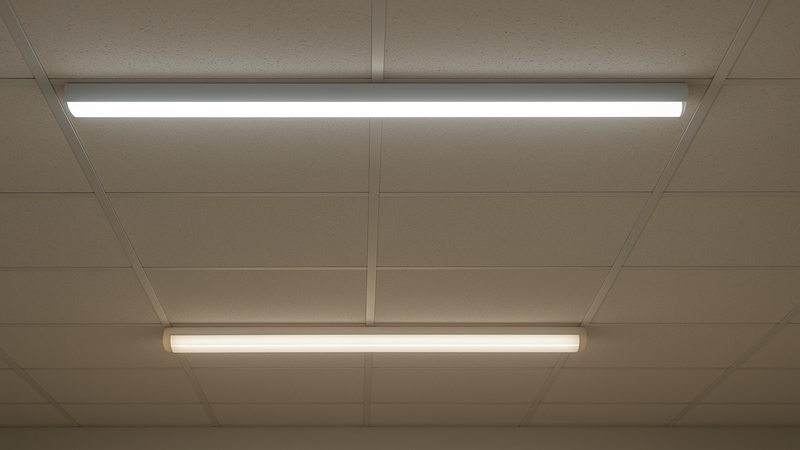
Based on the above discussion, it is fair to say that switching from fluorescent tubes to LED tube lights is a great decision. When replacing tubes, careful consideration should be given to the LED light type.
There are four types of LED tube lights, i.e., Type A, Type B, Type C, and Hybrid. All these types have their distinct features, pros, and cons. This article lets you easily determine the type that best fits your lighting requirements.
Evaluate the existing fixture to make an informed decision. Always choose high-quality LED tube lights and install them carefully to avoid problems later on.
RisunCorp: The Reliable LED Tube Lights Supplier
Looking for a reliable partner to buy LED fluorescent lights for your business? No need to look further! RisunCorp is here to help you with all your LED tube light requirements, whether you are a procurement manager or retailer.
With 14+ years of experience offering one-stop lighting solutions, we can easily meet your wholesale lighting needs. Contact us and get a quote for your wholesale lighting requirements now.
FAQs
Q1. Can I directly replace fluorescent tubes with LED?
The answer to this question depends on the type of LED tube you replace the fluorescent tube with. If you are using Type A, you can directly replace it, as Type A LED tubes are compatible with current ballasts.
If you are using Type B (Ballast-Bypass) LEDS, the answer is no, as you need to remove the ballast and rewire Type B LED lights.
Q2. Can I install LED tube lights in a fluorescent fixture?
You can use LED tube lights in fluorescent fixtures, but certain conditions must be met.
The ballast compatibility must be determined; if the ballast is compatible, then the Type A LED tube lights can be installed in fluorescent fixtures.
Alternatively, you can use Type B LED tube lights with a fluorescent fixture only after eliminating the ballast. Lastly, for Type C, you must install an external, separate LED driver first.
Q3. What are T8 and T5 in a fluorescent tube?
The T8 or T5 is the unique code allocated to fluorescent tubes. The T in this code stands for tubular, which defines the traditional long shape of tube lights.
The numeric digit in the code stands for the tube’s diameter, which is measured in eighths of an inch. For example, a tube with code T8 explains that it is tubular and has a diameter of 8/8 inches = 1 inch = 25.4 mm.
Q4. How do I know if my ballast is T8 or T12?
The easiest way to check the ballast type is to check the label on the ballast or inside the light fixture. Another way to determine the type of ballast is by looking at the size of the tube—T8 tubes are 1 inch in diameter, while T12 tubes are 1.5 inches in diameter.
Also, T12 ballasts are magnetic and produce a humming sound, while T8 ballasts are electronic and produce no sound.
The most common pear-shaped A19 bulbs have illuminated homes and offices for decades. When going to replace a light bulb, it’s difficult to choose between different shapes, sizes, and dimensions.
This guide will simplify what an A19 bulb is, its dimensions, types, and applications, and how you can choose the right one for your needs.
What Is an A19 Bulb?
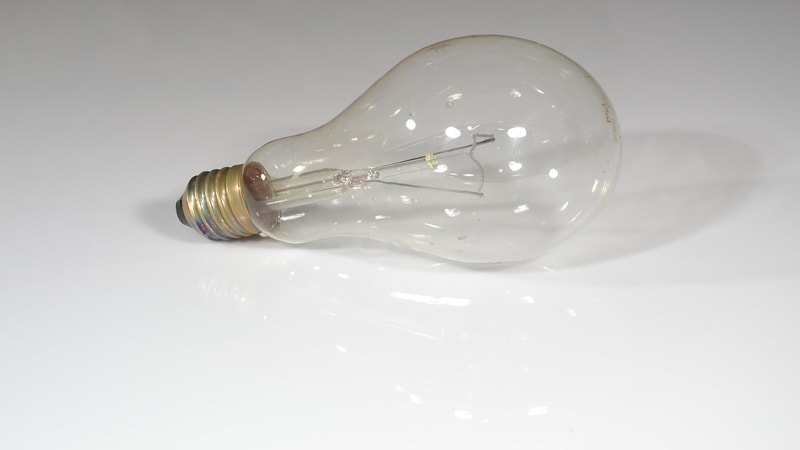
When you think of a light bulb, a simple pear-shaped bulb comes to mind. It is an A19, a standard and traditional light bulb commonly used in homes and businesses.
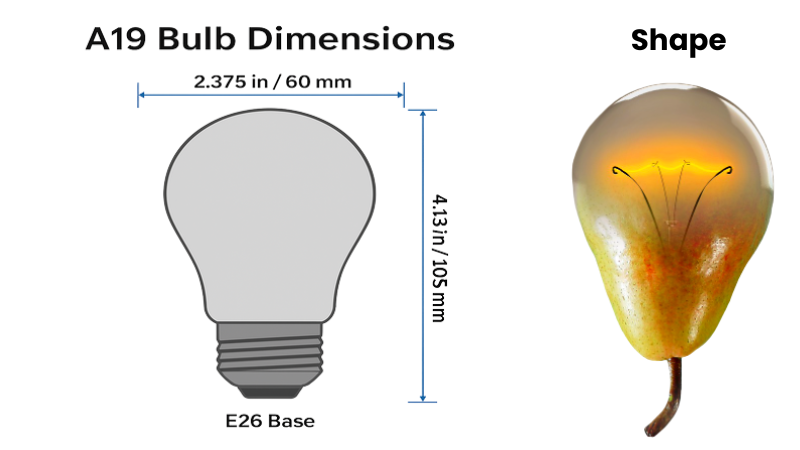
In A19, the term “A” refers to “arbitrary,” which represents the common upside-down pear shape of the light bulb, and 19 refers to its size in 1/8 inch, 19/8 or 2.375 inches at its widest point.
In the beginning, A19 was available in incandescent light bulbs. But now it is available in fluorescent, Halogens, and LED bulbs. These sizes and shapes are mostly used as a staple in table lamps, living room ceiling fixtures, and wall sconces.
A19 Bulb Dimensions Explained
The dimensions of A19 light bulbs indicate their compatibility with the fixture. The standard A19 bulb’s diameter is 2.375 inches (60 mm), and its length is 4.13 inches (105 mm). In countries using the metric system, it’s often referred to as an A60 bulb, where “60” refers to the 60 mm diameter.
According to the NEMA ANSI C79.1 standard, the A19 is defined by its shape and size. It specifies that the standard A19 bulb shape should be “A,” an upside-down pear, and the diameter should be 2.4 inches with the E26 base.
A19 LED Bulbs vs. Incandescent Bulbs
A19 LED bulbs use the most advanced LED technology. Although CFLs are more efficient than incandescents, LEDs now surpass them in performance and safety. Most people are transitioning from the old A19 incandescent bulbs to A19 LEDs.

| Feature | Incandescent A19 | LED A19 |
|---|---|---|
| Wattage | 60W | 9W–10W |
| Lifespan | 1,000 hours | 15,000–25,000 hours |
| Heat Emission | High | Low |
| Energy Use | High | Low |
| Cost over time | Higher | Lower |
Most A19 LED bulbs operate on standard household voltage (120V in the U.S.). A 9W A19 LED bulb produces the same brightness as a 60W incandescent bulb and saves on the electricity bill. Their lifespan is 25 times longer than that of incandescent bulbs, which reduces replacement costs.
LED lights stay cool and emit less heat. These all add up to LEDs’ lower life cycle costs (LCC) with energy efficiency and durability.
A19 Bulb Base Types: What Is E26?
The socket base of a bulb determines which fixture it will fit. Mainly, A19 comes with an E26 base in North America. “E” stands for Edison screw, and “26” indicates the base’s diameter in 26 millimeters. In Europe and Asia, E27 is equivalent to E26, which is 27mm in diameter.
E26 and A19 are completely different types of bulbs. One common thing is that A19 uses an E26 base, but E26 is not equivalent to A19 because it comes in different shapes and sizes. A19 refers to shape, and E26 indicates a bulb with a 26-millimeter diameter.
When selecting a bulb, match the shape and base type to your fixture for proper fitting and function.
Brightness & Wattage Guide for A19 Bulbs
To get the desired ambience and functionality in a space, brightness matters most. Light output is measured in lumens, which is more accurate than watts for judging brightness.
The lumens of the bulb indicate its actual brightness, and the wattage shows the energy used to produce light. You can check this A19 lumens chart for proper brightness in different spaces.
| Incandescent Wattage | LED Wattage | Lumens | Suitable For |
|---|---|---|---|
| 40W | 6W-9W | 450 lm | Bedrooms, reading nooks |
| 60W | 8W-12W | 800 lm | Living rooms, kitchens |
| 75W | 13W-15W | 1100 lm | Bathrooms, workspaces |
| 100W | 16W-20W | 1600 lm | Garages, large areas |
Choosing the Right Color Temperature for A19 Bulbs
The color temperature of a light bulb defines the tone and feel of light. It can be warm white or cool daylight. You can choose white light modes from soft warm tones to crisp cool whites according to your needs. It is measured in Kelvin and affects the mode and functionality of a space.
| Color Temperature | Light Tone |
|---|---|
| 2700K | Warm white |
| 3000K | Soft white |
| 4000K | Cool white |
| 6000K | Daylight/cool blue |
The warm white glow of an incandescent bulb is equal to 2700K color temperature. So, if you want an A19 LED bulb with warm white light color, look for an A19 LED bulb with a 2700K color temperature.
Unlike incandescent and CFL A19, LED A19 emits different color temperatures suitable for different spaces.
- 2700K(Warm White): It indicates a soft, cozy glow, the best color light to create an amazing atmosphere in the bedroom and living room.
- 3000K(Soft White): It is a slightly brighter light suitable for kitchens and bathrooms.
- 4000K(Cool White): A19 LED with 4000K produces a neutral, bright daylight. It is good for workspaces and offices.
- 6000K(Daylight): Emits a bluish, energizing, cool white light. It is suitable for large areas for task lighting and garage lighting.
Are A19 and A60 Bulbs the Same?
Yes, A19 and A60 are the same bulbs in shape and size. They are interchangeable; the difference lies in the measurement used for each term.
- A19 is measured with the imperial system. It indicates a diameter of 19/8 inches (approximately 2.375 inches).
- A60 is measured with the metric system. It indicates a diameter of 60 millimeters.
A19 and A60 refer to the same bulb, but the base cannot always be the same. A19 is commonly used in North America, and A60 is in Europe and Asia.
Where Can You Use A19 Bulbs?
A19 lamps are versatile and create the best ambience in different spaces:
- Ceiling Fixtures: A19 light bulbs easily fit into ceiling fixtures and provide general illumination in rooms.
- Table Lamps: Also suitable for task lighting for reading or working.
- Wall Scones: They create ambience and decorative appeal when fixed in wall scones.
- Bathroom Vanities: It can produce adequate lighting for grooming tasks.
- Outdoor Fixtures: When rated for outdoor use, they can light up porches and patios.
Always check bulb specifications before using them in any space. When using in enclosed fixtures, make sure proper ventilation and heat output are provided to increase lifespan and safety. Also, the manufacturer rated the bulb for outdoor use.
How to Choose the Right A19 LED Bulb
It’s important to choose the right A19 LED bulb for bright and even lighting. You can simply select the best A19 LED bulb with this buying guide:
Step 1: Know the Use
First of all, understand the bulb requirement for your space. Consider the right light bulb shape, size, and base type, which suits your fixture type and complements your space.
Step 2: Choose Brightness
Select a bulb with the appropriate lumens for the room’s function. For example, 450lm A19 LED for bedrooms, 800lm for living rooms and kitchens, 1100lm for workspaces, and 1600lm for large areas.
Step 3: Pick Color Temperature
Decide on the color temperature that suits your space’s ambience. 2700K for bedrooms, 3000K for kitchens and bathrooms, and 4000 K+ for workspaces and offices.
Step 4: Check for dimmability
If your fixture has a dimmer switch, select a bulb that is compatible with it. Usually labelled as “Dimmable” on the packaging.
Step 5: Check Certifications
Choose bulbs certified with Energy Star or UL product certifications for quality assurance and safety.
Step 6: Consider Special Features
If you need smart lighting, you can select bulbs with smart features. With wiz lights, you can take control of lights via voice or select scheduling features with the wiz app. These smart bulbs automate daily or weekly routines like dimming lights at bedtime and turning them on at sunrise
Conclusion
A19 bulbs remain a cornerstone in residential and commercial lighting due to their versatility, efficiency, and familiarity. After understanding its dimensions, base type, brightness, and color temperature, it’s time to take the next step.
Choose an LED A19 if you need energy efficiency or want to create ambience with advanced features. These bulbs offer a reliable and adaptable lighting solution.
Upgrade Your Lighting With High-Quality A19 Bulbs From Risun
At Risun Corp, we specialize in premium quality A19 bulbs and a full range of residential and commercial lighting solutions. With over 15 years of experience, we create lighting solutions that meet quality and safety standards.
Ready to upgrade a space with high-quality bulbs? Contact our lighting experts today for a free consultation or request a quick quote. We’re here to help you find the perfect A19 bulb for any application and improve your business.
Frequently Asked Questions (FAQ)
Q1: Can I replace an incandescent with an A19 LED?
Yes, if the LED bulb is designed with the same base, E26, and standard “A” shape that fits into the fixture.
Q2: Is A19 the same as E26?
No, A19 refers to the standard “A” shape and size of the bulb, but E26 denotes the base type. They are not the same, but related. A19 light bulbs are designed with an E26 base size, but not all E26 bulbs have the A19 shape.
Q3: Can A19 bulbs go in enclosed fixtures?
Yes, if the bulb is rated for enclosed fixtures. Check the manufacturer’s specifications because not all bulbs can withstand the heat buildup that occurs in enclosed fixtures.
Q4: Are A19 bulbs suitable for outdoor use?
Yes, A19 bulbs are suitable for outdoor use if they are designed and labelled as outdoor-rated. Most of the manufacturers designed outdoor bulbs with features that are damp-rated and wet-rated for different environments.
E14 bulbs with small screw bases are the most commonly used bulbs in Europe and beyond. With so many options, it is confusing to choose between LED and halogen, clear or frosted, and dimmable or non-dimmable.
In this guide, we will simplify what is E14 light bulb is, how to choose between shapes and technologies, and where each type performs best for your needs and business.
What Does E14 Bulb Mean?
E14 is a Small Edison Screw (SES) base bulb with a 14-millimeter base diameter. The “E” stands for Edison screw, and “14” is the base diameter in millimeters. This small screw base is mainly used in European light fixtures.
Commonly, E27 bulbs are used in general light fixtures, while E14 bulbs are ideal for smaller, more delicate fixtures. E14 is used in :
- Chandeliers
- Wall sconces
- Oven lights
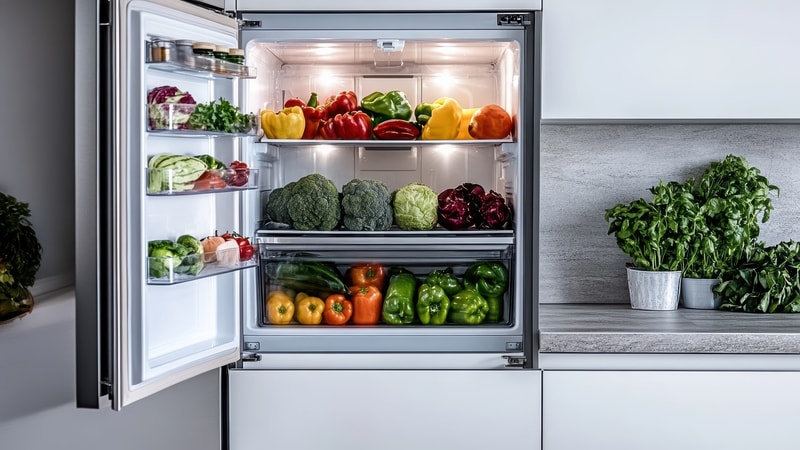
- Refrigerators
- Table and desk lamps
Always check your socket size before purchasing a bulb. E14 does not fit only in specific retrofits.
The Benefits of the E14 Bulb Types and Comparison
E14 bulbs are available in different shapes, finishes, and materials. Each suits different spaces and environments.
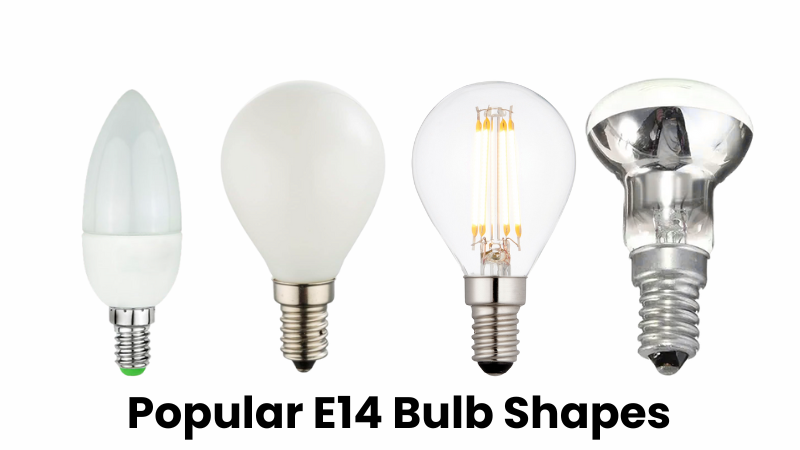
Popular E14 Bulb Shapes and Their Uses
| Shape | Best For | Appearance |
|---|---|---|
| Candle | Chandeliers, sconces | Slim, decorative |
| Globe | Pendant lights, decorative fixtures | Large and spherical |
| Golf glass | Table lamps, appliances | Round and compact |
| Reflector (R39) | Display cases, directional lighting | Focused beam with a reflector back |
Clear vs Frosted Glass
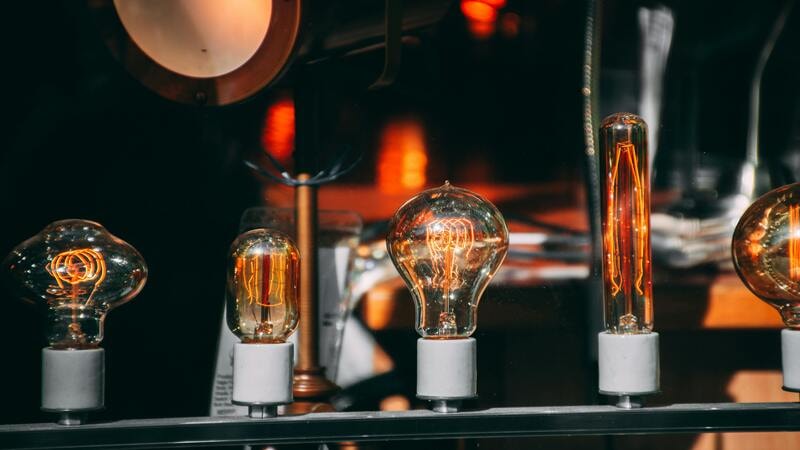
E14 bulbs come in both clear and frosted finishes. Clear glass gives off sharper light, which is ideal for sparkling in chandeliers or decorative lighting. Frosted glass softens the light, reduces glare, and creates a warm, diffused light.
Halogen vs. LED vs. Incandescent: Which to Choose?
E14 bulbs are available in three main lighting technologies.
- LED E14 bulbs designed with LED technology are the most efficient. They use up to 90% less energy with minimal heat, and last 15,000 to 40,000 hours. Perfect for both homes and commercial spaces to cut energy costs.
- Halogen E14 bulbs produce a warm, dimmable light, but they become hot and typically last only around 2,000 hours. They’re mostly used where dimmability is required, but are not energy-efficient.
- Incandescent E14 bulbs are being phased out due to poor efficiency and short lifespan. They produce warm light but consume a lot of energy.
Glass vs Plastic Bulb Housings
A bulb housing type finalizes its use. The glass E14 bulbs are suitable for most applications. However, the plastic housing should not be used in ovens or other high-heat environments. It can melt or warp.
E14 Bulb Base Compatibility: Know Your Fixture
Edison screw base bulbs are not the same. The size and usage differ:
| Base | Diameter | Common Use |
|---|---|---|
| E12 | 12mm | US candelabras |
| E14 | 14mm | EU small fixtures |
| E27 | 27mm | Standard fixture |
Measure the diameter of the bulb base in millimeters with a ruler or caliper. E14 bulbs do not fit directly in E27 sockets; there are adapters available that can fit E14 bulbs in E27 sockets.
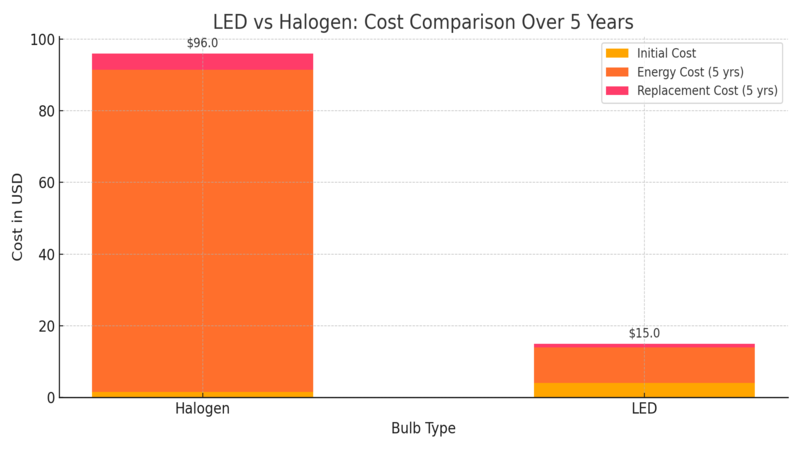
Halogen E14 vs LED E14
If you are still confused about which to choose. This comparison will help:
| Feature | LED E14 | Halogen E14 |
|---|---|---|
| Energy Use | less energy(1/10-1/5 of a E14 halogen) | High energy consumption |
| Heat Output | Stays cool to the touch | Gets very hot—can overheat or burn |
| Lifespan | Lasts 15,000–40,000 hours | Lasts around 2,000 hours |
| Cost Over Time | High upfront cost, but saves more | Cheaper to buy, but costs more in the long term |
| Eco Impact | Mercury-free and recyclable | Less eco-friendly, more waste |
How to Choose the Right E14 Bulb
You can select the right E14 bulbs according to your needs by considering these factors:
Wattage vs Lumen Output
A bulb’s wattage indicates the energy used to produce light; however, lumens are the actual brightness of a light bulb. So, if you need maximum brightness in a space, consider bulbs with high lumens.
| Old Incandescent (W) | LED Equivalent (Lumens) |
|---|---|
| 25W | 250 lm |
| 40W | 470 lm |
| 60W | 800 lm |
A 40W incandescent delivers 470 lumens. An LED can achieve the same brightness using just 3-6 W. So, upgrading your light fixtures to LED from incandescent is very beneficial, especially in B2B settings like hotels, offices, or energy audits, where efficiency matters.
Most LED E14 bulbs range from 3W to 6W, use low energy, and give a high output.
Beam Angle
A light beam angle determines the width or spread of light from a fixture. It is measured in degrees. A narrow beam(30°–60°) of a light bulb emits focused light. It is suitable for desks or reading lamps.
A wide beam (120°–200°) covers a large area and is ideal for ambient or general room lighting. For showroom displays or art galleries, a narrow beam highlights details beautifully.
Room or Fixture Suitability
E14 bulbs come in many shapes, finishes, and materials, but not every type suits every space. Choosing the right bulb for the right environment ensures both performance and safety.
- Chandeliers and Sconces: For chandeliers and sconces, use candle-shaped frosted E14 bulbs for a classic look and a soft, elegant glow.
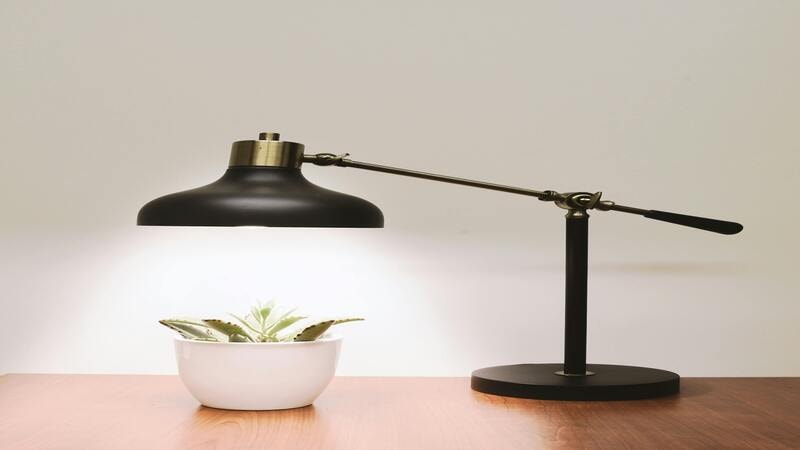
- Desk and table lamps: Prefer globe or reflector-style E14 bulbs for focused light with style.
- Kitchen hoods and tight fixtures: Go for short E14 LED bulbs or heat-resistant halogen versions that can handle enclosed fixtures.
- Ovens or microwaves: Only use halogen E14 bulbs. LED bulbs with plastic housings aren’t safe under high heat.
- Hotels and restaurants: Decorative candle-shaped E14 bulbs in warm white add ambiance to dining areas and guest suites.
- Retail stores: You can benefit from reflector E14 bulbs with targeted beam angles to highlight displays and shelves.
- Office lighting: Color temperature 4000K neutral white E14 bulbs with wide beam spreads are ideal for soft but effective task lighting.
Bulk purchasing tip: Choose E14 LEDs with CE markings and RoHS certifications and a high CRI for professional-grade commercial use.
Color Rendering Index (CRI)
CRI( Color Rendering Index) of a light bulb is the ability to display the color of objects naturally. It is measured on a scale of 1 to 100. For homes and offices, prefer lights with 80+ CRI. The ideal CRI for fashion stores, hospitality, and galleries is 90+.
Dimmability
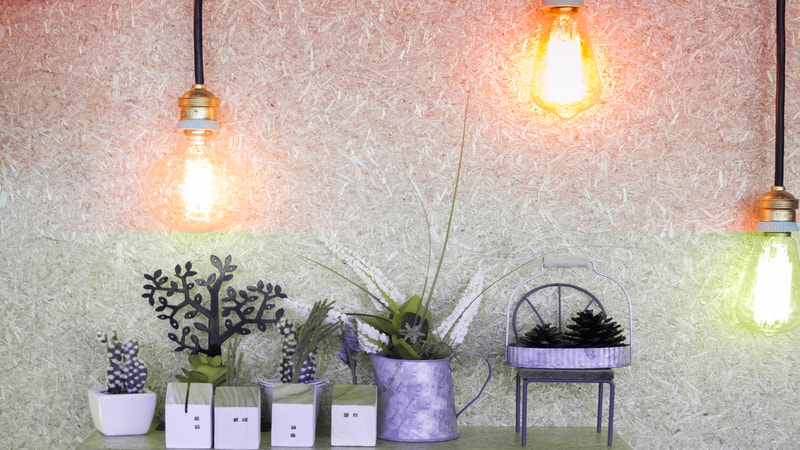
A dimming bulb is preferred in restaurants and smart homes to create a cozy, candle-like environment. But not all E14 bulbs are dimmable. So make sure that your bulb is labelled “dimmable” and that your dimmer switch is compatible with it.
What Color Temperature Should I Choose?
Color temperature indicates the light color and the feel of warmth or coolness of a light. It affects the function and appearance of the light bulb. It is measured in Kelvin. Lower Kelvin values indicate that the lamp produces yellowish warm light, and higher values indicate cool white light.
| Temperature (K) | Light Color | Best For |
|---|---|---|
| 1700–2400K | Extra warm | Bedrooms, restaurants, and dining |
| 2700–3000K | Warm white | General home lighting |
| 4000K | Neutral white | bathrooms, kitchens |
| 6500K | Cool daylight | Offices, garages, task lighting, workshops |
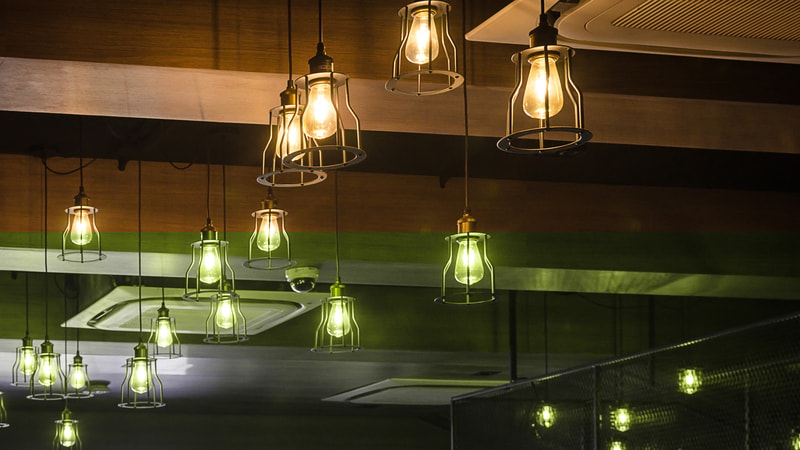
Always match the color temperature with the purpose of the room and the mood you want in the room. Warm color temperature (2700K- 3000K) is suitable for relaxation. High color temperature indicates alertness and is best for task lighting.
Are E14 Bulbs Dimmable?
Yes, E14 bulbs are dimmable. With an E14 dimming bulb, you can adjust the brightness and save electricity when bright light is not needed. Check the packaging because LED bulbs are only dimmable if specified on the packaging. As for halogens, they are mostly dimmable with traditional light switches.
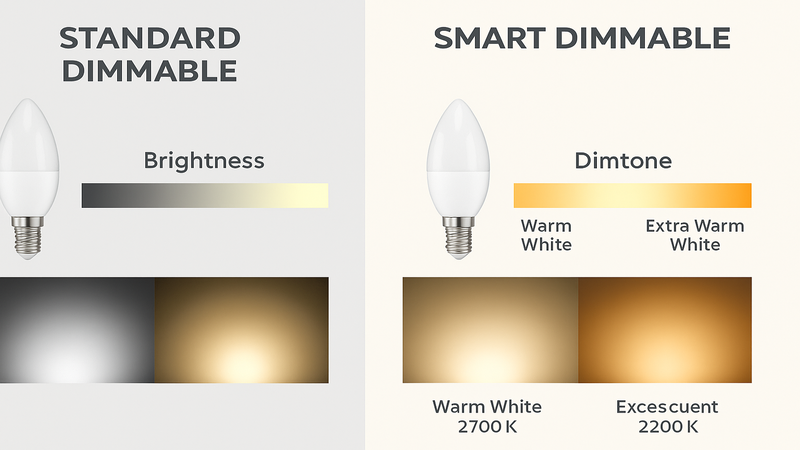
Smart LEDs, such as Philips DimTone technology, dim both brightness and color temperature (from warm white to ultra-warm) via the app or voice assistant.
Conclusion
Now that you understand the key differences in E14 bulb types, shapes, and technologies, it’s time to apply that knowledge.
By choosing the right E14 bulb for homes, offices, hotels, or workspaces, you can enhance efficiency and atmosphere. So pick a bulb that suits your needs and light your space with confidence.
Power Your Projects with Certified E14 Bulbs by Risun
With over 15 years of experience, we at Risun Corp specialize in high-performance, certified E14 bulbs designed for commercial and residential use. We’re trusted by industry professionals for quality, reliability, and innovation.
Ready to upgrade your lighting? Contact us now to get expert advice with a free consultation or download our latest catalog to explore premium E14 solutions built to perform.
FAQs
Q1: Can I use an E14 LED in an oven?
No, LED bulbs are made of plastic and can melt at high temperatures in an oven. Use a high-temperature-rated halogen.
Q2: Can I replace a halogen with an LED E14?
Yes, if the LED is compatible with the size, voltage, and wattage. If your old halogen bulb is dimmable, then make sure that the LED is also dimmable and compatible with the dimmer.
Q3: Is E14 the same as a small Edison screw?
Yes. “SES” (Small Edison Screw) is another name for E14.
Want to upgrade your lighting? E27 LED bulbs use up to 75% less energy than halogen or incandescent options and fit perfectly into existing E27 fixtures.
This guide will teach you how to choose the right E27 LED bulb for style, performance, and long-term savings. So you can transform your home or business with smarter, more efficient lighting.
Let’s start!
What is an E27 Bulb?
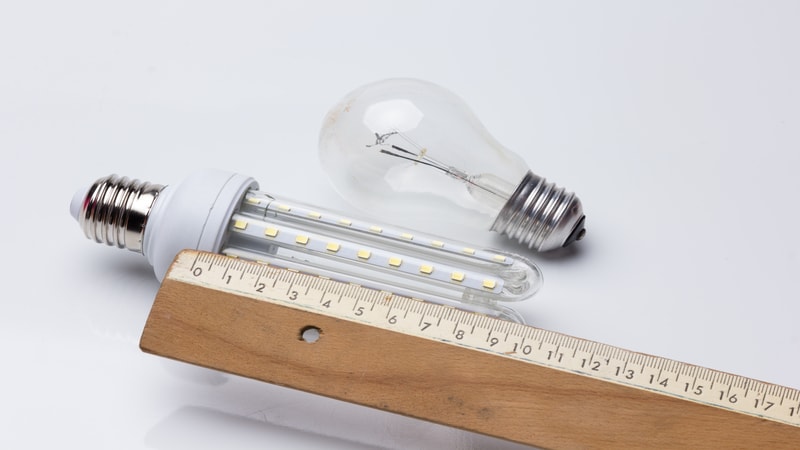
E27 bulbs are designed with a screw base of 27mm diameter. This light bulb is one of the most commonly used bulbs in the world and is also known as Edison Screw or ES bulb. The “E” stands for Edison, and “27” denotes the millimeter measurement of the base.
E27 bulbs are easy to replace and install. Their energy efficiency, compatibility with standard screw-in sockets, and long lifespan make them suitable for every space. Mostly used in all household fixtures and commercial settings like restaurants, hotels, and offices.
How E27 Compares to Other Bases
| Bulb type | Bulb Diameter | Common Use Cases |
|---|---|---|
| E14 | 14mm | Small lamps, chandeliers |
| E22 | 22mm (bayonet) | UK fittings, pendant lighting |
| E27 | 27mm | Most standard fixtures |
Always check your socket type before ordering new bulbs. E27 looks similar to E26 but is slightly different in threading. E27 bulbs are typically used in Europe and are designed to operate at 240V AC. At the same time, E26 is an American standard designed for 120V AC.
E27 LED Bulbs vs Traditional Bulbs
E27 LED bulbs have quickly become the go-to choice for long-lasting, energy-efficient lighting. The traditional incandescent and halogen light bulbs burn out shortly and waste energy as heat, as compared to E27 LED lighting, which lasts longer and stays cool.
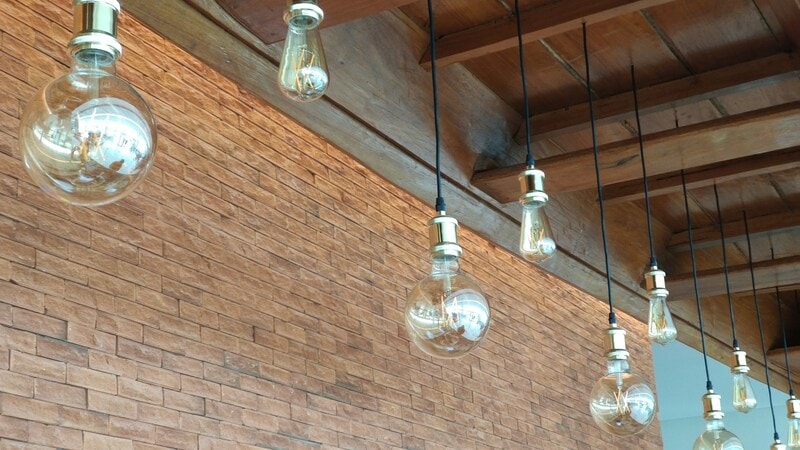
E27 LED lights consume 80% less energy than older bulb types. This saves energy and reduces the carbon footprint.
Another big advantage of E27 LED bulbs is their long lifespan. So this means fewer replacements, less maintenance, and lower long-term costs. It is especially important for businesses or facilities where lighting runs all day.
E27 LED bulbs stay cooler and emit 90% less heat than traditional bulbs. They keep your rooms cooler and safer for enclosed fixtures or heat-sensitive environments.
Comparison Table: E27 LED vs. Incandescent vs. Halogen
| Feature | E27 LED bulbs | E27 Incandescent | E27 Halogen |
|---|---|---|---|
| Lifespan | 15,000–50,000 hours | 1,000 hours | 2,000-4,000 |
| Energy use | ~80% less than other bulbs | Very high | Moderate |
| Heat output | Very low(10% of energy output converted into heat) | High(90% of energy output converted into heat) | High(90% of energy output converted into heat |
| Cost | Higher upfront | Low upfront | Moderate |
| Mercury | None | None | None |
In the long run, E27 LED bulbs are the clear winner. They offer efficiency, durability, and safety. They are most useful in commercial buildings where long hours and cost efficiency matter most.
E27 Bulb Shapes, Sizes, and Styles Explained
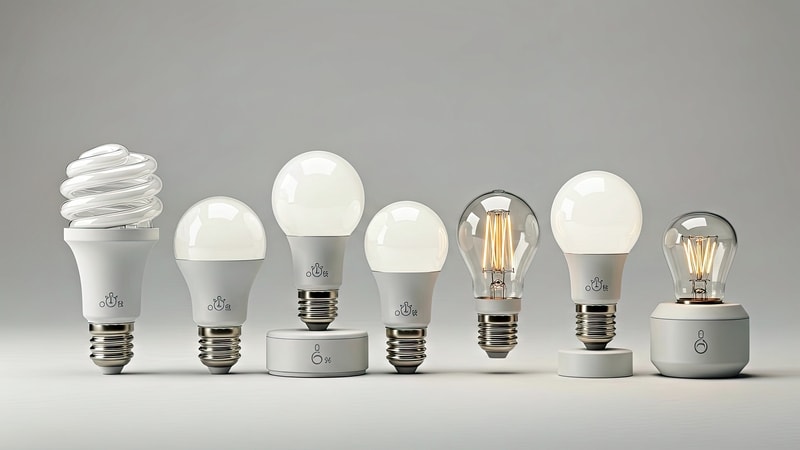
E27 bulbs are available in various sizes and shapes. The right light bulb, the shape, size, and style directly affect the space’s appearance and lighting performance. You can match form with function by the following:
Common E27 Bulb Shapes and Their Uses
- A-shape (A19/A60): This is the most common light bulb shape, round with a slightly pointed top. It is suitable for ceiling lights, table lamps, desk lamps, and general household lighting.
- Globe: It is larger and rounder than the A-shape, with a stylish appearance. Suitable for bathroom lighting(around mirrors), pendant lights, and open fixtures in dining rooms or lobbies.
- Candle: It’s an elegant, slim-shaped bulb like a flame. Used in chandeliers, wall sconces, and decorative light fixtures in hallways or bedrooms.
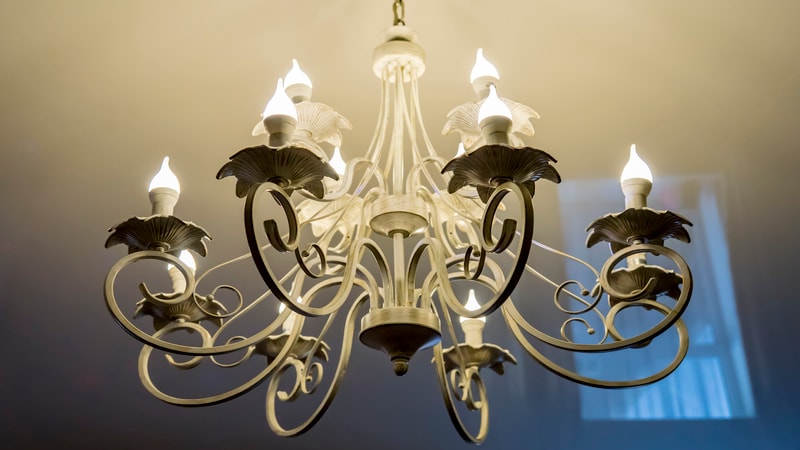
- Tubular/Stick: It is a long and narrow bulb ideal for tight or narrow spaces. Commonly used in fridges, cabinets, under-cabinet lighting, or appliances with small openings.
- PAR & Reflector: These bulbs have a flat lens with directional light. Best for spotlights, outdoor security lights, display shelves, and task lighting in kitchens or workshops.
- Ball (Mini-globe): It is a smaller version of the globe. Perfect for small decorative lighting fixtures, vanity mirrors, and designer lamps.
Finish Options and Styles
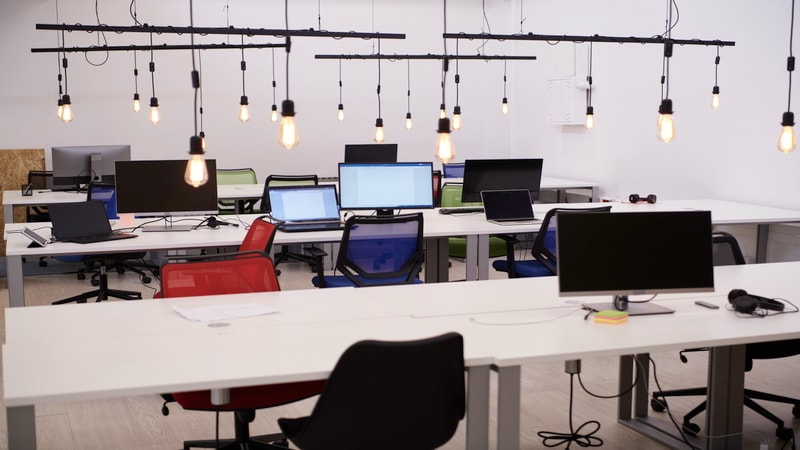
- Clear Glass vs Frosted: The clear glass lights let you see inside and give off a bright, crisp light. It is suitable for vintage or industrial-style lighting where the bulb is visible. The frosted glass softens the light and reduces glare.
- Filament (vintage Edison-style): These bulbs look like vintage-style Edison bulbs, ideal for Cafes, bars, boutique shops, or vintage-themed rooms.
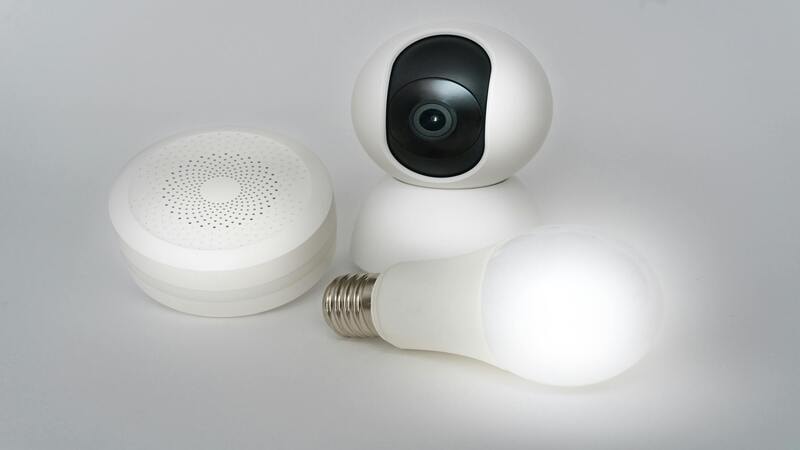
- Smart E27 bulbs: They feature RGB colors, adjustable white tones, and app or voice control for seamless automation.
Tips on Choosing the Right Shape
It’s essential to choose the right shape for optimized lighting in your space. Consider these tips when selecting:
- Match the shape to the fixture’s purpose. Use PAR (Parabolic Aluminized Reflector) for spotlights and globe for open pendants.
- Make sure the bulb is visible or hidden. Filament or decorative glass is suitable for decorative or display lighting.
- Align bulb style with your decor. For vintage spaces, use filament bulbs; for modern spaces, use frosted or smart bulbs; with a minimalist look, go for clean lines and simple shapes.
How to Choose the Right E27 LED Bulb
It is not only the socket size to determines the perfect E27 LED bulb. Some other factors that can help you find the right light bulb are covered in the following step-by-step guide:
Step 1 – Understand Lumens vs Watts
Mostly, there is a misconception in the understanding of watts and lumens. When you purchase an LED bulb, lumens must be considered because they indicate the brightness output of an LED bulb. A quick comparison of the lumen to watt:
| Incandescent Wattage | LED Equivalent | Lumens |
|---|---|---|
| 40W | 6-9W | 450 |
| 60W | 8-12W | 800 |
| 100W | 15-20W | 1600 |
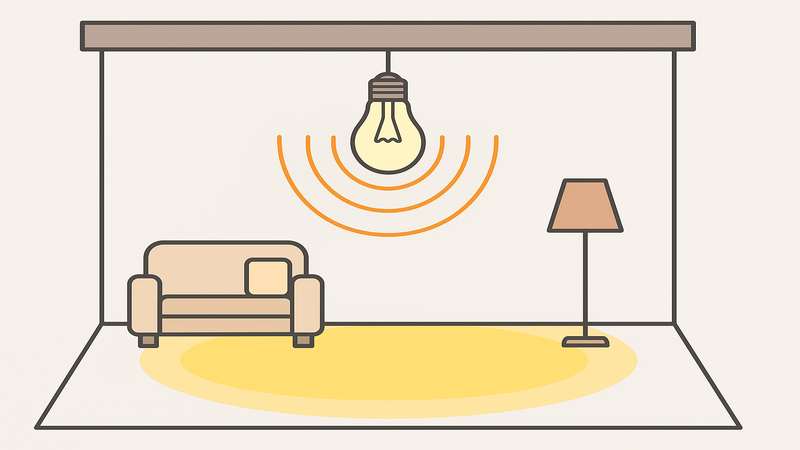
Always choose lumens according to the room size and lighting needs. To estimate how many lumens you need, use this simple formula:
Room area (in square feet) × Lumens per square foot = Total lumens needed
Suggested Lumen Levels by Room Type:
- Bedrooms & Living Rooms (ambient lighting): 10 to 20 lumens per square foot.
- Kitchens, Bathrooms, and Hallways: 30 to 50 lumens per square foot.
- Workspaces, Retail, or Task Areas: 50 to 100 lumens per square foot.
Step 2 – Pick the Right Color Temperature (Kelvin Scale)
Choose a light with the right color temperature according to the space. A light color temperature simply affects the mood and function. Here’s a quick chart:
| Color Temperature | Light Appearance | Best For |
|---|---|---|
| 1700–2400K | Candlelight | Bedrooms, restaurants |
| 2700–3000K | Warm white | Living rooms, hotels |
| 4000–5000K | Cool white | Offices, kitchens |
| 6000K+ | Daylight white | Workshops, retail |
Step 3 – Choose Dimmable or Non-Dimmable
Some E27 LED light bulbs offer dimming functionality. With this, you can adjust the brightness to suit the mood or activity. This is ideal for bedrooms, living rooms, or restaurants for soft and bright lighting when needed.
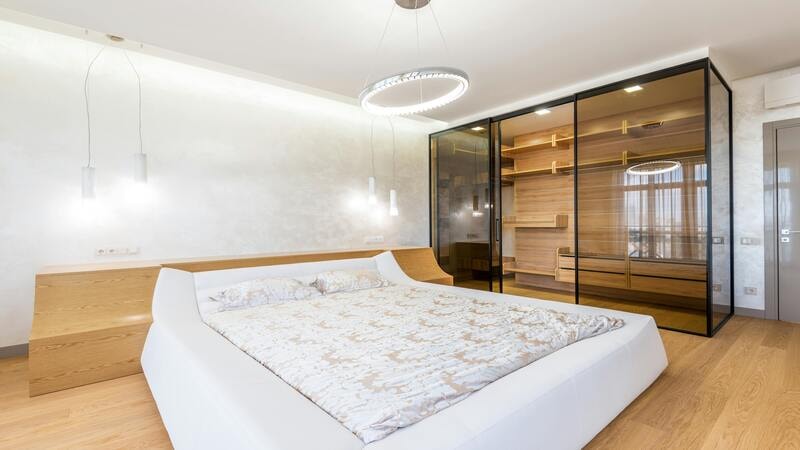
Note: Not all dimmers are compatible with LED bulbs. Before buying, check if your existing dimmer switch supports LED dimming technology to avoid flickering or malfunctioning.
Step 4 – Check for Compatibility & Fit
Make sure your lighting fixture supports the E27 screw base. Also, take note of the bulb’s physical size. Some enclosed fixtures require a slimmer bulb shape for proper ventilation and fit.
Step 5 – Evaluate Special Features
Modern E27 bulbs come with advanced features to enhance functionality:
- CRI (Color Rendering Index): Choose bulbs with a CRI of 90+ for color accuracy. This will display the true colors in retail, design studios, or makeup areas.
Smart Features: Consider bulbs with smart features such as voice control, app integration, motion sensors, or RGB color-changing for more convenience and customization.
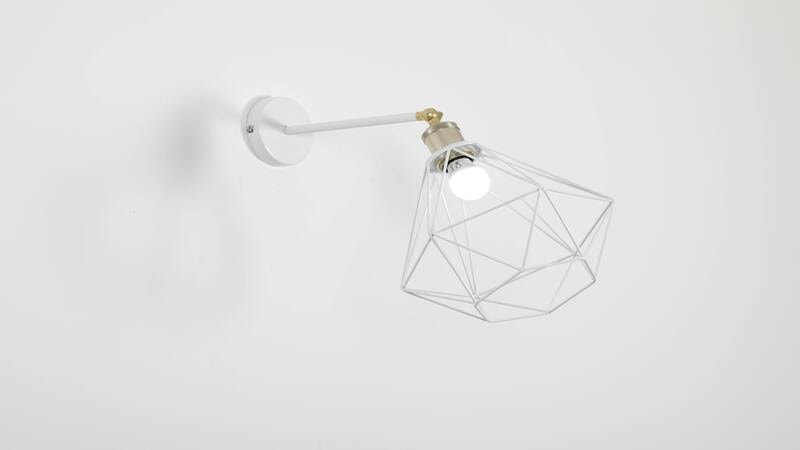
How to Replace and Install an E27 LED Bulb
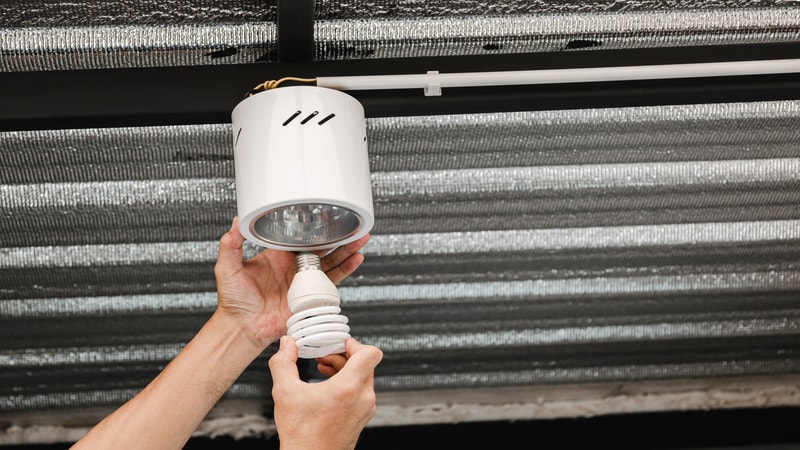
You can replace and install an E27 LED bulb easily by following these steps:
Step 1: Turn off the power button at the switch or breaker. If the old bulb is incandescent or halogen, let it cool.
Step 2: Unscrew the old bulb by rotating it counterclockwise.
Step 3: Screw in the new LED bulb gently until snug.
Step 4: Turn the power back on and test the light.
Conclusion
A right E27 LED bulb can enhance the appearance and feel of a space, a home, or a commercial building. From brightness and color temperature to style and smart tech, there’s an ideal bulb for every fixture and function.
With different shapes and a standard base, it is an ideal bulb to replace the old halogens or incandescent fixtures without installing the new retrofits.
Light Up Smarter – Shop E27 LED Bulbs from Risun Corp
With over 15 years of experience, we at Risun Corp supply high-performance lighting products for both residential and commercial spaces. Our E27 LED bulb range combines energy efficiency with modern style and smart compatibility.
Ready to upgrade your lighting? Browse our full catalog or contact our lighting specialists to request a quote today and improve your business.
FAQs
Q1: What does E27 mean in a bulb?
E27 stands for Edison screw base bulbs with a 27mm diameter. It is the most commonly used bulb in the world.
Q2: Are all E27 bulbs the same size?
The base is standardized to 27mm. The bulb shapes and sizes can vary, such as A19, globe, candle, tubular, etc.
Q3: Are E27 LED bulbs dimmable?
Yes, most E27 LED bulbs are dimmable. These bulbs come with the “Dimmable” label on the packaging.
Q4: How long does an E27 LED bulb last?
Typically, it lasts 15,000-50,000 hours. The lifespan depends on the use and brand quality.
Q5: Can I use an E27 LED in an old lamp?
Yes, it can be used if the socket fits and the input voltage is compatible with the LED fixture.
Q6: Is E27 the same as a standard screw-in?
Yes, E27 is the standard screw base in many regions of the world.
Q6: What’s the difference between E26 and E27?
E26 works on 120V and is used in North America, while E27 works with 240V, is the standard screw base bulb used in Europe and many other regions.
Well-lit spotlights and downlights enhance ambiance and distribute even illumination. GU10 bulbs are commonly found in spotlights and downlights.
In this guide, we will explain what a GU10 bulb is, its advantages, and how to select the right bulb for different spaces. We will provide a detailed introduction to each factor and help you choose the right one for your needs and business.
What is a GU10 Bulb?
A GU10 bulb is a twist-and-lock bi-pin base spotlight bulb. The pins are placed 10mm apart at the base.
In GU10 bulbs, “GU” refers to “General Use,” and the 10 shows the 10 millimeter pin spacing. This bulb is designed for a secure and stable connection to use in spotlights and recessed downlights. It is commonly used in businesses and commercial lighting spaces.
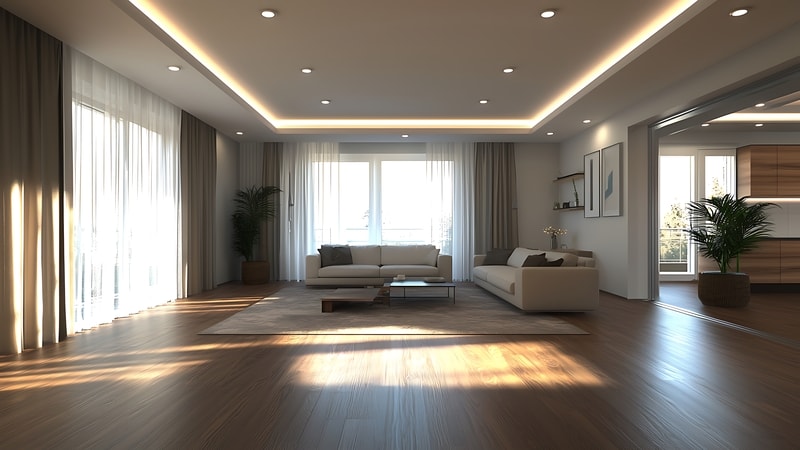
GU10 lamps were available in halogen and compact fluorescent (CFL) formats in the beginning. With LED technology, these lighting options are phased out because they use 75% more energy than LED lighting and produce excessive heat.
LED GU10 bulbs last 25% longer than halogens or CFL bulbs and produce less heat. That’s why GU10 LED bulbs are more commonly used in ceiling downlights, recessed, and track lighting.
In homes, GU10 light bulbs can be used in kitchens, hallways, living rooms, and bathrooms for bright and directional lighting.
GU10 bulbs work directly with standard 240V mains voltage, unlike MR16 bulbs, which only operate on 12V with a transformer. So, they are easy to install, particularly in commercial environments.
GU10 LED vs Halogen: A Comparative Analysis
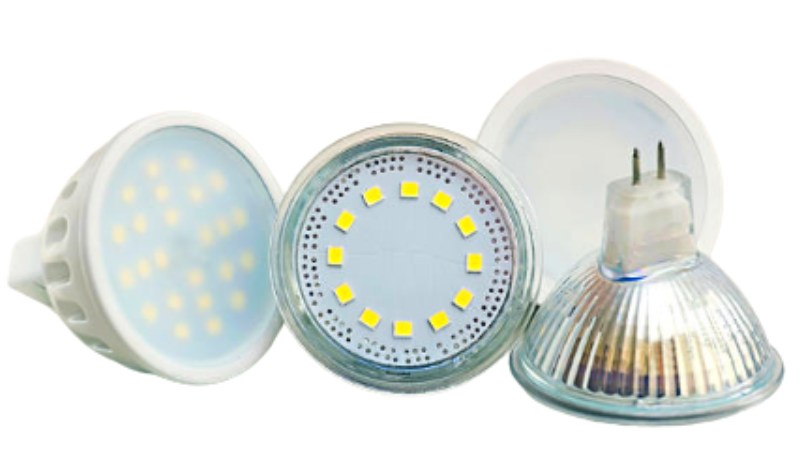
Using halogen GU10s is like running old tech in a high-efficiency world. The whole world is transitioning from halogen to LED bulbs for their benefits.
| Feature | Halogen GU10 | LED GU10 |
|---|---|---|
| Technology | Heated filament | Semiconductor (LED chip) |
| Wattage | 35–50W | 3–6W |
| Lifespan | 2,000 hrs | 15,000–40,000 hrs |
| Heat Output | Very hot(80–90% energy lost) | Low(10-20% of total energy) |
| Energy Cost | High | Low(75% less than halogen bulbs) |
| Light Quality | CRI 100, warm tone | CRI 80–95, warm to daylight tones |
| Upfront Cost | Lower | Higher |
| Long-Term Cost | High (energy + maintenance) | Low (up to 75% energy savings) |
For example, you can save up to $600 to $1,500 per year on energy bills if you shift 200 halogen GU10s to LED versions. The money saved on replacements and maintenance is not included in this.
LED lights last longer, stay cooler, and cut your electricity costs. With time, this adds up to a great return on investment. Plus, you don’t need to change bulbs or deal with overheating issues constantly.
How to Choose the Right GU10 LED for Your Needs
GU10 LED bulbs offer advanced features, including brightness, color temperature, beam angle, and IP ratings. By understanding these specs, you can easily choose the right LED GU10 bulb for your space.
1. Brightness: Lumens vs Wattage
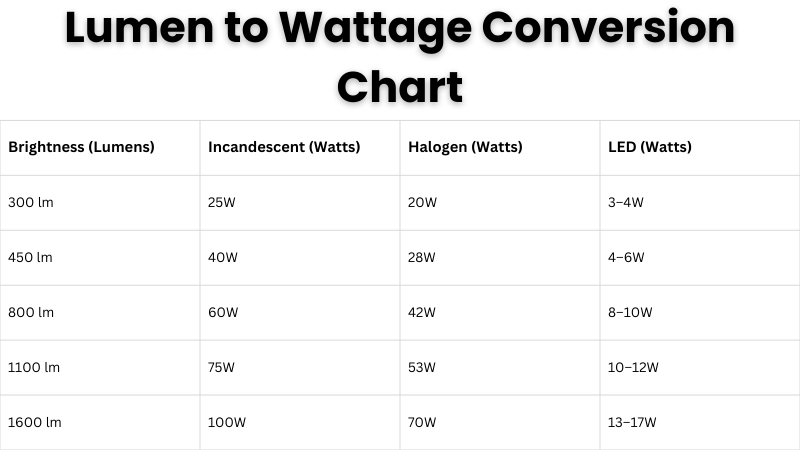
Lumens are the actual brightness of a bulb. The wattage is the energy used to produce light. So, if you are switching from halogens to LED bulbs, consider the lumen level for better lighting.
| Halogen Wattage | Equivalent LED Lumens |
|---|---|
| 35W | ~300 lm |
| 50W | ~500 lm |
The recommended lumen for retail spaces is 400- 600lm. For offices where precise lighting is required, 500- 700lm is essential.
2. Color Temperature (Kelvin)
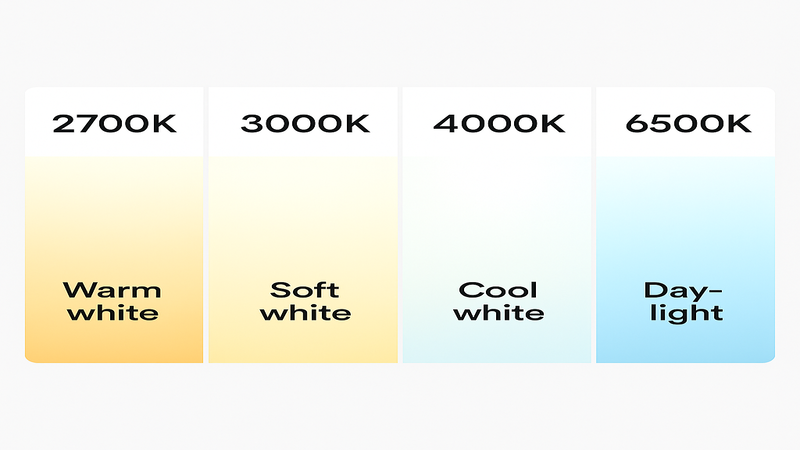
Color temperature defines the tone of the light bulb. It is measured in Kelvin. Low Kelvin values of a bulb, 3000K, produce yellowish and warmer light. High Kelvin values, 6500K, indicate that the bulb produces bluish-white and cooler light. Color temperature affects the ambiance of a space.
| Kelvin | Light Tone | Best For |
|---|---|---|
| 2700K | Warm yellow white | Hospitality, lounges |
| 3000K | Soft white | Retail, reception areas |
| 4000K | Neutral/cool white | Offices, classrooms |
| 6500K | Daylight(bluish white) | Warehouses, garages |
High color temperature (4000K–6500K) is essential for focus and visual accuracy. It is ideal for workspaces. Warm white tones (2700K–3000K) create a relaxed, welcoming atmosphere. It is for perfect retail spaces and displays.
3. Beam Angle
The light beam angle is the distribution of light spread from a light bulb. It is measured in degrees. It determines the covered area and luminous intensity of bulbs.
| Beam Angle | Lighting Style | Best For |
|---|---|---|
| 24°–36° | Focused/Narrow beam | Spotlights, artwork, display areas |
| 60° | Medium beam | General office lighting |
| 100° | Wide beam | Ambient lighting in large spaces |
Use narrow beams (24°–36°) for task or accent lighting. Wide beams (60°–100°) for general coverage in commercial settings.
4. Dimming Capability
GU10 is available in dimmable and non-dimmable bulbs. With a dimmable bulb, you can adjust brightness levels from high to low.
Always check the compatibility of dimmable bulbs with your dimmer switches. Trailing-edge dimmers give smooth and flicker-free performance.
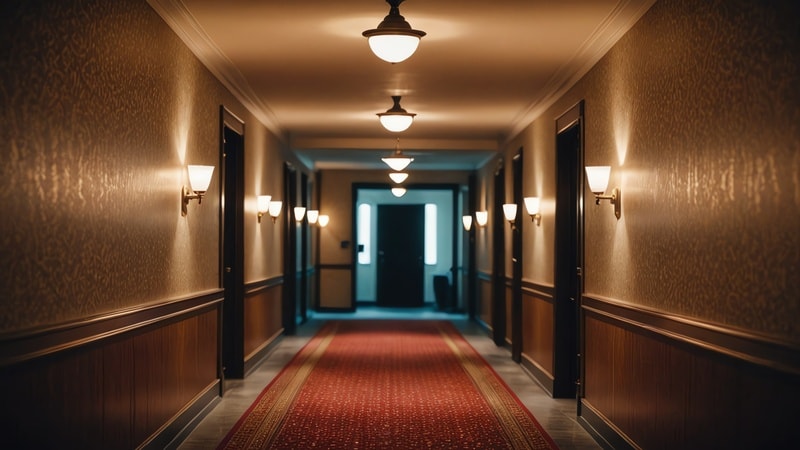
Some advanced GU10 LEDs have dim-to-warm features. These light bulbs shift color temperature from 2700K to 2200K with a decrease in brightness. It helps to create a cozy, candlelight-like atmosphere. It is perfect for hospitality settings, restaurants, or residential lounges for warmth and comfort.
5. IP Ratings: Environmental Protection
The International Electrotechnical Commission (IEC) has set Ingress Protection (IP) ratings. IP ratings of a bulb tell its resistance to dust and moisture. IP-rated bulbs are important when you choose lighting for humid or exposed environments.
| IP Rating | Protection Level | Best Use |
|---|---|---|
| IP20 | Indoor only(basic) | Office, conference room |
| IP44 | Splash-resistant | Restrooms, kitchens |
| IP65 | Waterproof | Outdoor signage, garages |
6. Commercial Area
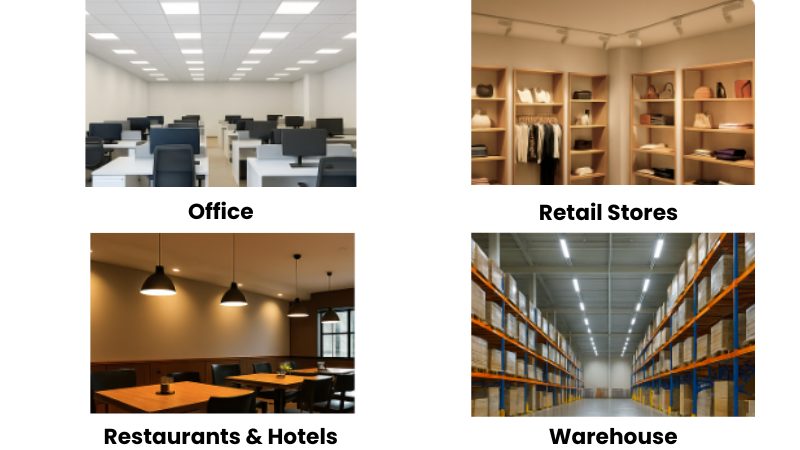
GU10 LED bulbs are used to cut energy costs and get precise lighting in commercial settings. Important specifications for different commercial environments are:
Office Spaces:
For offices, use lights with 4000K color temperature. A wide beam angle of 60° is suitable for broad and even coverage. Anti-glare light bulbs reduce eye strain.
Retail Stores:
In retail stores, use GU10 LED light bulbs with 3000K color temperature. CRI (Color Rendering Index) should be 90+ for accurate product display.
Restaurants & Hotels:
Choose GU10 LED spotlights with 2700K color temperature. It will complement the warm and cozy environment of restaurants and hotels. Use Dimmable GU10 LEDs for ambiance control with a soft tone.
Warehouses:
Warehouses need bright and clear lighting for visibility and safety. Choose GU10 LED bulbs with a 6500K color temperature for maximum brightness. High-lumen output lights illuminate large spaces effectively.
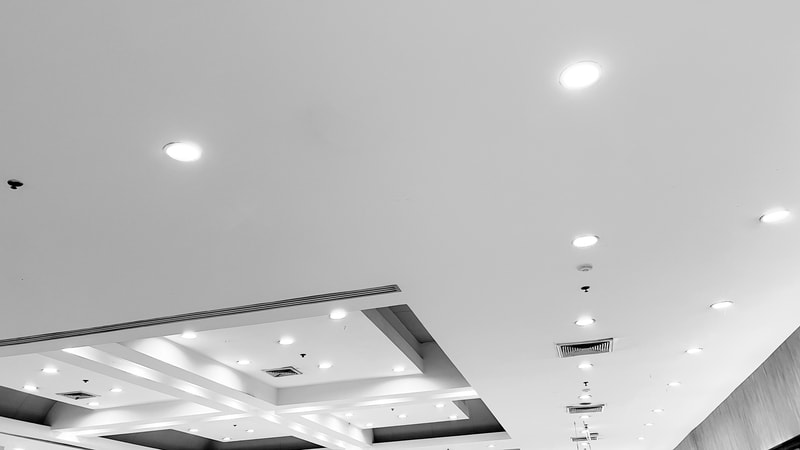
The bulbs must have an IP65 rating to resist dust and moisture for a long lifespan.
7. Streamline GU10 LED Selection
To select GU10 LED bulbs for commercial projects or bulk installations, consider some key points.
- Use consistent specifications across all fixtures. Color temperature, beam angle, and watts should be the same to simplify maintenance and replacements.
- Make a plan for brightness, color temperature, beam angle, and dimming requirements for each space.
- Set up a labeling or coding system to organize bulbs by specifications. In this way, you can restock and track light bulbs easily.
Conclusion
GU10 LED bulbs are the most advanced choice for downlights and spotlights. When selected and installed correctly, they deliver long-term savings, improved lighting quality, and reduced maintenance.
Always match the bulb’s specifications (wattage, beam angle, IP rating, and dimming features) with your space’s needs. With so many options, GU10 LEDs provide flexible lighting solutions for almost any business environment.
Light Smarter and Save More with Risun GU10 Bulbs
At Risun Corp, with 15 years of lighting expertise in the commercial sector, we specialize in high-performance GU10 bulbs, including LED bulbs. Our bulbs are designed for energy efficiency, durability, and premium light quality.
Want to upgrade your space? Contact our team to request a quote or schedule a free lighting consultation today!
FAQs
Q1. What is a GU10 Bulb?
GU10 is a general-use bulb with a 10mm bi-pin base. The pins at the base are 10mm apart with a twist-and-lock design. It is commonly used in track lighting, recessed ceilings, and display lighting.
Q2. GU10 Bulb vs. GU10 Lamp: Is There a Difference?
No, “GU10 bulb” and “GU10 lamp” refer to the same type of bulb. The term “bulb” is commonly used in the U.S., and “lamp” is used in Europe. GU10 identifies the base type, which can be used with halogen, CFL, or LED technologies.
Q3. Why choose LED GU10 bulbs over halogen?
LED GU10 bulbs have many advantages over halogens. They consume 80% less power and last up to 25,000+ hours. LED bulbs emit less heat and are safer for enclosed fixtures. Also, it is available in various designs, sizes, styles, and colors for flexible lighting designs.
Q4. How to replace a GU10 bulb?
To replace a GU10 bulb, make sure the bulb is turned off to avoid an electrical hazard. Now, twist and rotate the bulb counterclockwise to remove it. Take the new bulb and align the pins, and twist clockwise. Do not force the bulb; GU10 pins align via twist, not push.
Q5. Are all GU10 LED bulbs dimmable?
No, only bulbs labeled “dimmable” have the dimming ability. Always check the packaging for the label and also the compatibility with your dimmer type.
Q6. Why does my GU10 LED bulb flicker?
GU10 LED bulbs can flicker due to faulty dimmer switches, low-quality LED drivers or components, loose wiring, and voltage fluctuations.